A no-pull dog harness costs $35 on average in 2026, ranging from $15 for a basic nylon step-in to $90 for a reinforced, dual-clip training model. That sticker price almost never covers the leash, and a lot of owners end up sizing up or down after the first fitting, which means a second purchase before the harness ever gets used correctly.
- A no-pull dog harness costs $35 on average in 2026, with a $15 to $90 range depending on build.
- Front-clip and dual-clip designs cost more than basic back-clip harnesses but stop pulling faster.
- Large or strong-pulling dogs generally need the $45 to $90 tier for reinforced hardware.
- Shop and Bark carries no-pull harnesses across the budget-to-premium range, not just one price point.
Why this matters
The price tag on a no-pull harness tells you almost nothing about whether it will actually stop the pulling. A $20 harness with the right clip placement often outperforms a $60 harness with the wrong one, and picking based on price alone is how owners end up buying twice in the same year. Before comparing no-pull dog harnesses by cost, it helps to know which features you're actually paying for.
How much does a no-pull dog harness cost?
Pricing splits into three tiers based on clip design, materials, and hardware quality. Here's the breakdown for 2026:
| Tier | Price range | Best for |
|---|---|---|
| Budget nylon, single clip | $15-$25 | Small or calm dogs, occasional walks |
| Mid-range, front-clip | $25-$45 | Most dogs, everyday walking |
| Premium, dual-clip/training-grade | $45-$90 | Strong pullers, reactive dogs, working walkers |
The jump between tiers isn't padding for the brand name. It's clip count, hardware material, and how much reinforced stitching goes into the chest strap where the pulling force actually lands.
Budget no-pull harnesses: $15 to $25
These are basic step-in or buckle harnesses with a single back clip and lightweight nylon webbing. They're fine for small dogs that don't lean hard into the leash.
- Pros: cheap, lightweight, easy to put on
- Cons: back-clip design does little to redirect pulling, plastic hardware wears within a season of daily use
- Verdict: Buy for small or low-energy dogs under about 25 lbs. Skip if your dog leans into the leash on every walk.
Mid-range no-pull harnesses: $25 to $45
This tier is where front-clip designs start showing up, along with padded chest straps and adjustable sizing at multiple points. It's the price band most dog owners land in.
- Pros: front clip redirects pulling motion instead of just resisting it, padding reduces chafing, adjustable straps fit a wider range of body shapes
- Cons: padding compresses over months of use, poor sizing at this tier can still cause armpit rub
- Verdict: Buy for most dogs. This is the sweet spot for everyday no-pull walking without overpaying for features you won't use.
Premium, training-grade no-pull harnesses: $45 to $90
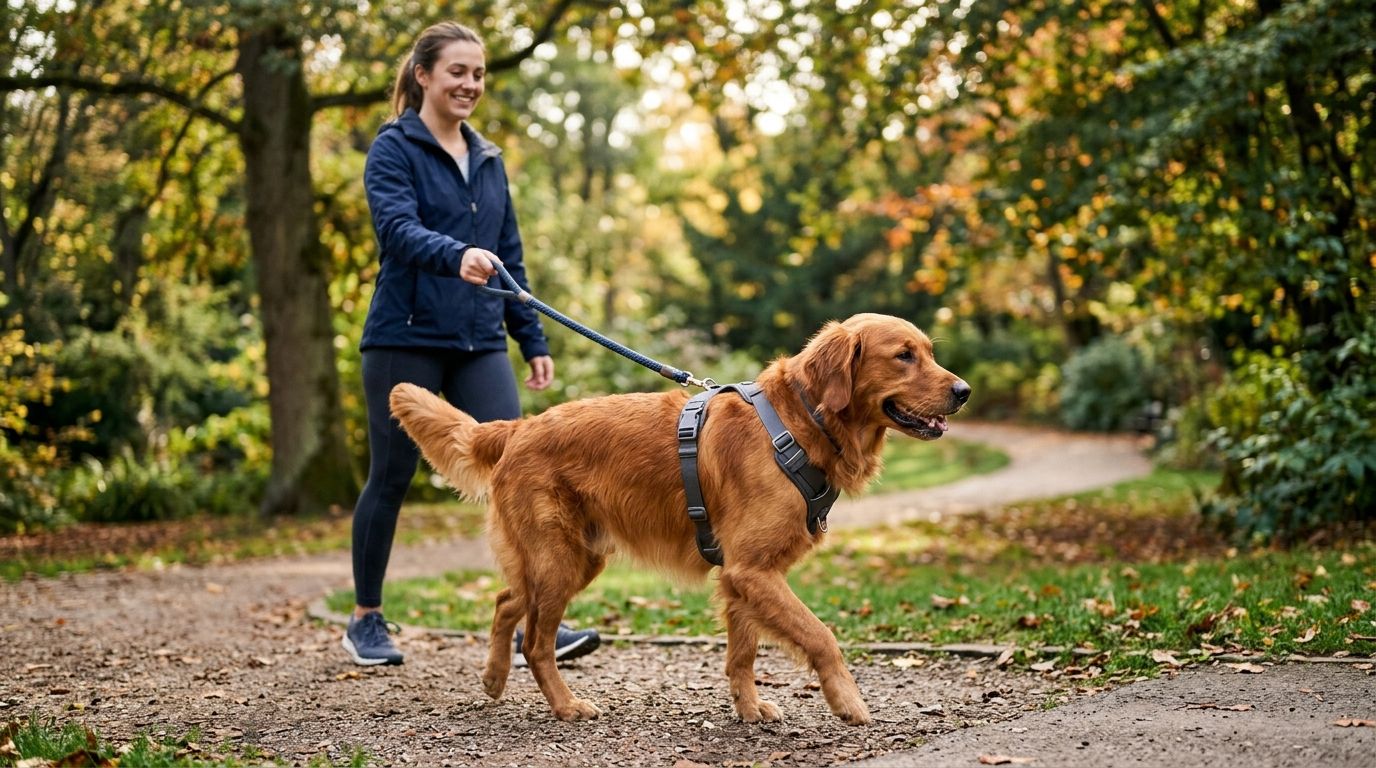
At the top of the range, harnesses add dual clip points (front and back), metal D-rings instead of plastic, reinforced stitching along stress points, and sometimes a top handle for quick control. This tier shows up most often in guides for reactive dog owners and professional walkers managing multiple dogs at once.
- Pros: holds up under sustained pulling force, dual clips let you switch attachment points mid-walk, better long-term hardware durability
- Cons: bulkier fit, higher cost, overkill for a mellow small dog
- Verdict: Buy for strong pullers, reactive dogs, or anyone walking dogs professionally. Hold off if your dog already walks on a loose leash most of the time.
Compare no-pull harnesses by price
See budget, mid-range, and training-grade options ranked side by side.
Why no-pull harness cost varies
- Clip configuration — a single back clip costs less to manufacture than a front clip or dual-clip design
- Material and padding — basic nylon webbing is cheaper than neoprene-lined chest padding
- Hardware quality — plastic side-release buckles wear faster than welded metal D-rings, and metal costs more
- Size range and reinforcement — harnesses built for large, strong-pulling dogs need heavier stitching, which raises the price
- Added features — reflective trim, a top handle, or a seatbelt loop all add cost without changing the core pulling mechanic
Are no-pull harnesses worth the extra cost over a regular harness?
Yes, for dogs that actually pull. A $25 to $45 front-clip harness noticeably cuts leash tension compared to a basic back-clip harness or flat collar for a dog that lunges or leans steadily on walks.
Do large dogs need a more expensive no-pull harness?
Usually, yes. Large or strong-pulling dogs generally need the $45 to $90 tier because reinforced stitching and metal hardware hold up under sustained force that a $15 nylon harness will fray or stretch within weeks.
Does a more expensive no-pull harness mean better quality?
Not automatically. The $45 to $90 tier buys reinforced hardware and dual clip points, but a well-fitted $25 to $35 mid-range harness handles most dogs' daily pulling just as well without the extra bulk.
Owners walking their dog through a structured training routine often start with a mid-range harness and only move up if the loose-leash walking training plan calls for more control than a single clip provides.
FAQ
How much does a no-pull dog harness cost in 2026?
A no-pull dog harness costs $35 on average in 2026, ranging from $15 for basic nylon step-ins to $90 for reinforced, dual-clip training models. Clip configuration and hardware quality drive most of that spread.
What's the difference between a front-clip and back-clip harness price-wise?
Front-clip harnesses typically cost $10 to $20 more than back-clip designs because the chest attachment point needs reinforced stitching to hold up under redirected pulling force. The price difference reflects durability, not just marketing.
Is a no-pull harness better than a collar for pulling?
For dogs that pull, yes — a harness spreads leash tension across the chest instead of the neck, reducing strain and giving you more control. A $25 to $45 front-clip harness outperforms a flat collar for most dogs that lean into the leash.
Do bigger dogs need pricier no-pull harnesses?
Large or strong-pulling dogs generally need the $45 to $90 tier because reinforced stitching and metal hardware hold up under sustained pulling force. A budget $15 harness will fray on a big dog within a season of daily walks.
How long does a no-pull harness typically last?
A well-built mid-range or premium harness holds up through regular daily walking for a year or more before padding compresses or hardware loosens. Budget harnesses in the $15 to $25 range tend to show wear sooner under heavy use.
Can a no-pull harness stop pulling completely?
A no-pull harness reduces pulling by redirecting a dog's momentum, but it doesn't replace training. Pairing a front-clip harness with a loose-leash walking routine gets better results than the harness alone.
What's the best no-pull harness for reactive dogs?
Reactive dogs generally do best with a dual-clip, $45 to $90 harness that offers a front clip for redirection and a back clip or top handle for quick control. Reinforced hardware matters more here than for a calm dog.
Is it worth buying a training-grade harness for a puppy?
Not usually. A puppy's size and pulling habits change fast, so a $15 to $25 adjustable harness makes more sense until growth stabilizes and pulling patterns are clear.
One last thing
The clip point matters more than the price tag. A $20 front-clip harness will often stop pulling better than a $60 back-clip design, because the redirection mechanic — not the dollar amount — controls the leash tension. Check the clip configuration before you check the price.