Padded leather collar wins for everyday wear. Martingale collar wins for escape-prone large dogs. Reflective nylon wins for night walks. Biothane wins for water and mud. GPS smart collar wins for off-leash tracking. These five collar types cover the real range of what a 50-100+ lb dog needs in 2026 — no single collar does all five jobs well, so the right pick depends on your dog's neck, coat, and habits.
- The best dog collars for large dogs split by use case, not by brand — martingale for slippery necks, leather for daily wear.
- A collar under 1.5 inches wide concentrates pulling force and wears out faster on dogs over 60 lbs.
- Martingale collars tighten under tension without choking, which is why sighthound and husky owners default to them.
- GPS collars solve tracking, not leash control — they do not replace a standard collar for daily walks.
Why this matters
A large dog generates far more force on a collar than a 15-pound dog does. A 70-pound Lab hitting the end of a leash at a squirrel puts real stress on stitching, D-rings, and buckle hardware that a small flat collar was never built to handle.
The wrong collar type for a large dog shows up two ways: it slips off during a walk, or it holds but wears the dog's neck fur and skin raw from friction. Both problems are avoidable once you match collar type to the actual behavior — pulling, backing out, swimming, or wandering off-leash.
Shop and Bark carries collars and leashes sized for large breeds, and the picks below reflect what holds up on dogs in the 50-100+ lb range through 2026.
What makes the best dog collar for large dogs
- Webbing width and hardware strength — most trainers recommend 1 to 1.5 inches wide for dogs over 50 lbs to spread pulling force
- Escape resistance — whether the collar can be backed out of by a dog with a narrower head than neck
- Material durability — resistance to water, mud, and odor buildup over repeated wear
- Visibility — reflective or high-contrast material for dawn, dusk, or night walks
- Comfort against coat type — padding and stitching that do not rub short or thick coats raw
- ID tag and GPS compatibility — enough real estate for tags without crowding the buckle
“If two fingers do not slide flat under the collar, it is too tight for a large dog's neck.”
At a glance: best dog collars for large dogs in 2026
| Collar Type | Best For | Standout Feature | Key Limitation |
|---|---|---|---|
| Padded Leather Collar | Everyday wear on large breeds | Molds to the dog's neck shape over months of use | Needs occasional conditioning to resist water damage |
| Martingale Collar | Dogs that back out of standard collars | Tightens under tension without ever choking | Not designed as a training or anti-pull tool |
| Reflective Nylon Collar | Early morning and night walks | Reflective threading catches headlights and streetlights | Reflective coating dulls with repeated washing |
| Biothane Collar | Swimming and muddy trail dogs | Wipes clean in seconds, does not absorb odor | Less broken-in feel than leather over time |
| GPS Smart Collar | Off-leash dogs and escape risk | Live location tracking through an app | Requires charging and a data or cellular plan |
1. Padded leather collar: best dog collar for large dogs worn daily
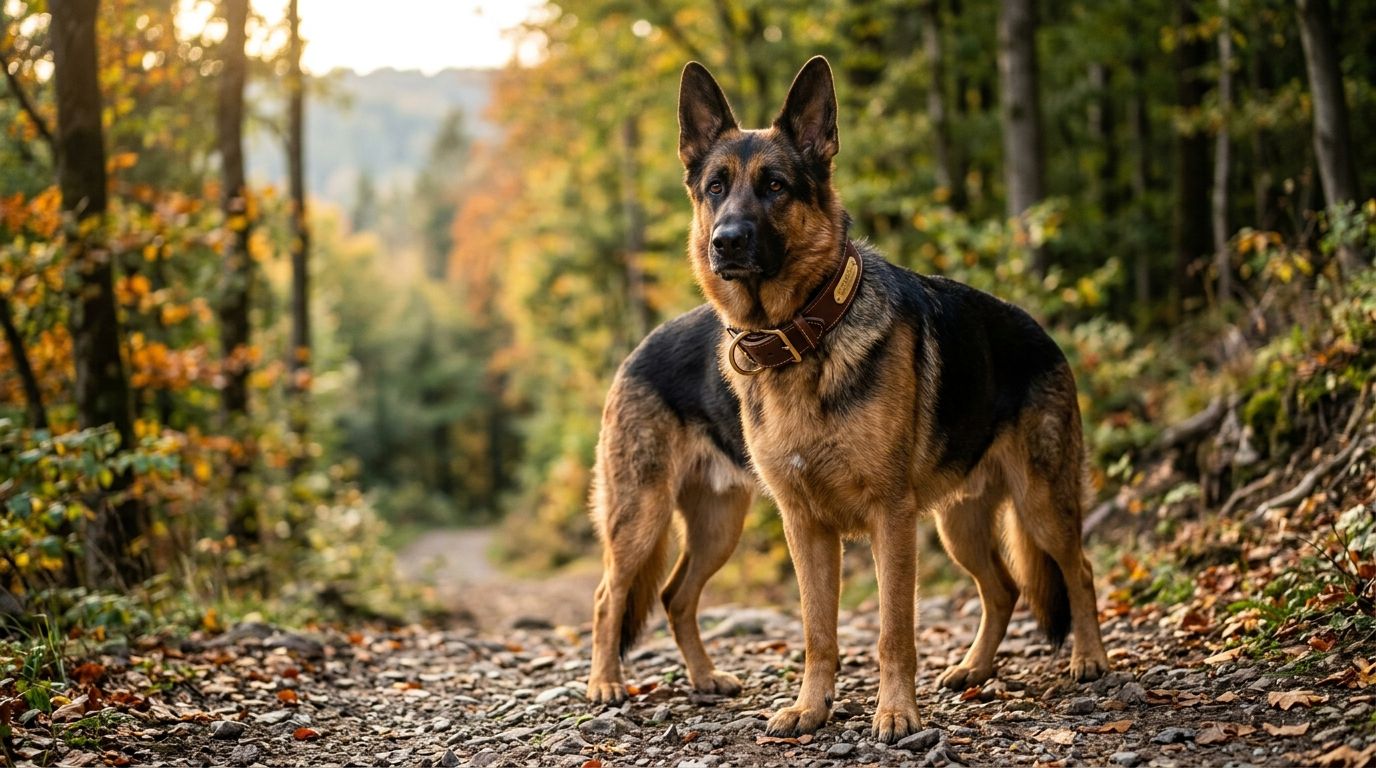
A padded leather collar for large dogs is built from full-grain or bridle leather with a foam or leather-wrapped interior lining. It is the collar most large-breed owners default to for daily walks, ID tags, and general wear because leather softens and molds to the dog's neck instead of staying rigid.
Padded leather collar pros:
- Gets more comfortable with wear instead of degrading
- Holds up to years of daily use with basic conditioning
- Reads as a house-pet collar rather than field gear
Padded leather collar cons:
- Absorbs water and needs drying time after rain or swimming
- Heavier than nylon, which matters on lighter-framed large breeds like Standard Poodles
Verdict: Buy — the default choice for a large dog that walks on leash daily and has no escape-artist history.
2. Martingale collar: best dog collar for large dogs that slip out
A martingale collar for large dogs uses a limited-slip loop that tightens when the dog pulls back, then loosens once the tension releases. It is the standard recommendation for sighthounds, Huskies, and other narrow-headed large breeds that can back straight out of a flat buckle collar.
Martingale collar pros:
- Nearly impossible to back out of when fitted correctly
- Distributes pressure across a wider band than a slip lead
- Does not choke the way a chain slip collar can
Martingale collar cons:
- Requires correct sizing — too loose and it defeats the purpose
- Not built for corrective leash pressure the way a flat collar is used in some training methods
Verdict: Buy — mandatory, not optional, for large breeds with a documented escape history.
3. Reflective nylon collar: best dog collar for large dogs walked at night
A reflective nylon collar for large dogs uses woven reflective thread or a printed reflective strip on a standard nylon webbing base. It is the lightest option in this list, and the one that matters most for dawn or after-dark walks near traffic.
Reflective nylon collar pros:
- Visible to drivers and cyclists in low light
- Dries fast after rain, does not hold water like leather
- Widely available in 1 to 1.5-inch widths sized for large breeds
Reflective nylon collar cons:
- Reflective coating fades noticeably after repeated machine washing
- Stiffer against short coats than padded leather
Verdict: Buy — worth owning as a second collar even if it is not the everyday one, purely for the visibility.
4. Biothane collar: best dog collar for large dogs that swim or dig
A biothane collar for large dogs is a polyester webbing core coated in a waterproof polymer. It behaves like leather but wipes clean instead of soaking through, which makes it the practical choice for retrievers, water dogs, and anything that comes home covered in mud.
Biothane collar pros:
- Does not absorb water, mud, or odor the way nylon and leather do
- Holds up to daily rinsing without cracking
- Keeps its shape through a full 2026 wet season without stretching
Biothane collar cons:
- Feels more like gear than a leather collar
- Buckle hardware can sit stiff against the skin until broken in
Verdict: Buy — the right call for a large dog that swims, hunts, or gets muddy on a regular basis.
5. GPS smart collar: best dog collar for large dogs that go off-leash
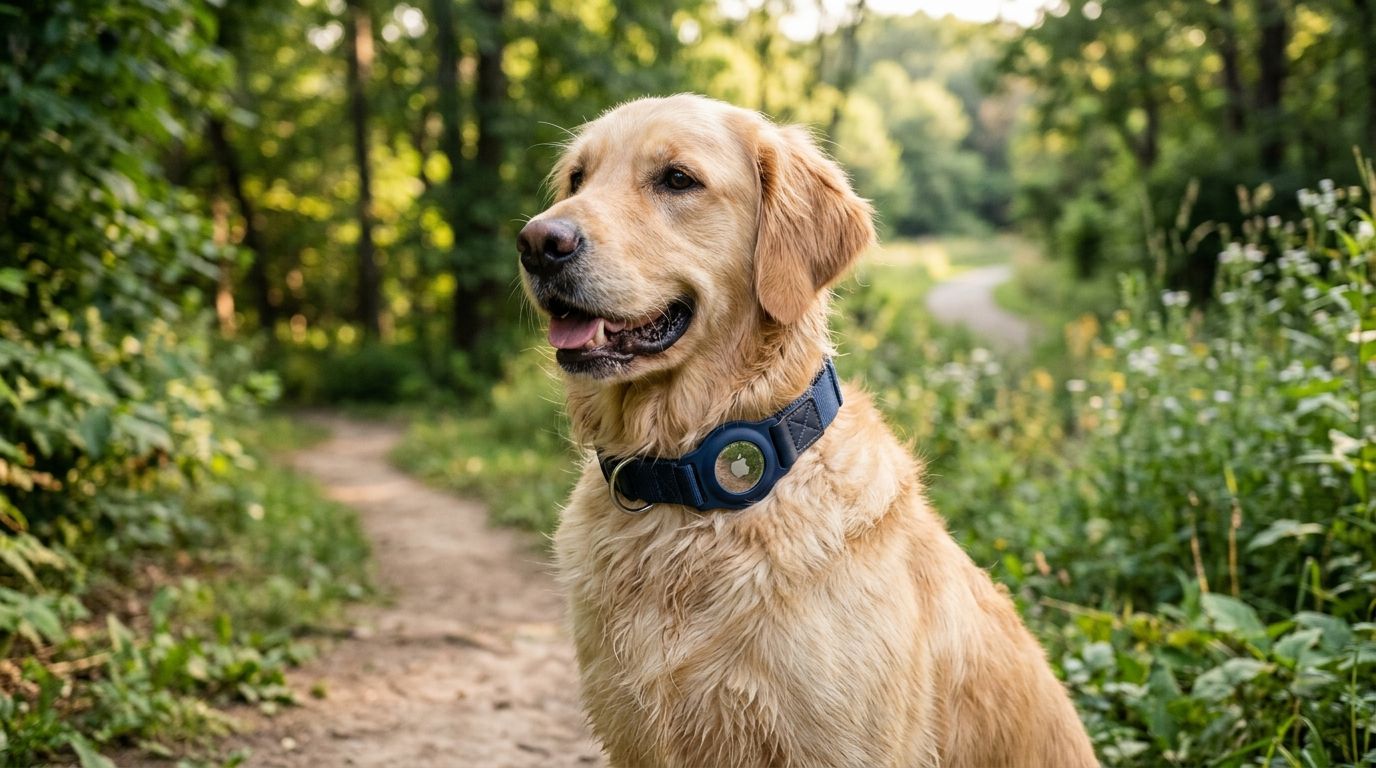
A GPS collar for large dogs pairs a standard collar band with a tracking unit that reports live location through a phone app. It is the only option here solving a different problem than fit or comfort — it solves what happens after the dog is already loose.
GPS collar pros:
- Live location tracking if the dog gets off-leash or out of a yard
- Some models add activity tracking alongside location
- Useful backup for large breeds prone to fence-jumping or bolting
GPS collar cons:
- Needs regular charging, which owners forget
- Ongoing data or cellular plan required for most models
- Does not replace a proper collar or harness for daily leash walks
Verdict: Hold — add it as a layer on top of a real collar, not as a standalone purchase.
How we ranked these collars
Each collar type was scored against the six criteria above: webbing width and hardware strength, escape resistance, material durability, visibility, comfort against coat type, and ID/GPS compatibility. No single collar scored best on all six — that is why this list is a decision tree by use case, not a single winner.
Which dog collar should you choose for a large dog?
If you are not sure where to start, the padded leather collar is the safest daily default for a large dog with no escape history and a manageable leash habit. Switch to a martingale collar the moment a dog has ever slipped a collar, and add a reflective nylon collar as a second option for any walk before sunrise or after dark. Water dogs move to biothane; anything that roams off-leash gets a GPS collar layered on top of whichever collar it already wears.
Shop collars built for large breeds
Browse collars and leashes sized for 50-100+ lb dogs.
FAQ
What is the best dog collar for large dogs in 2026?
There is no single best collar for every large dog in 2026 — a padded leather collar covers daily wear, a martingale collar solves escape risk, and biothane handles water and mud. Pick based on the dog's actual behavior, not a general ranking.
Is a martingale collar better than a flat buckle collar for big dogs?
A martingale collar is better specifically for large dogs with narrow heads or a history of backing out of collars. For a dog that has never slipped a collar, a standard flat buckle collar works fine.
How wide should a collar be for a 70-pound dog?
Most trainers recommend 1 to 1.5 inches wide for dogs over 50 pounds. Anything narrower concentrates pulling force into a smaller area of the neck and wears out faster.
Are leather collars good for large dogs?
Yes, padded leather collars are a strong daily option for large dogs because the leather softens and molds to the neck over months of wear. The tradeoff is slower drying time after rain or swimming compared to nylon or biothane.
Do GPS collars work for large breeds?
GPS collars work on large breeds the same way they do on smaller dogs, tracking location through a phone app. They require regular charging and typically a data plan, and they layer on top of a standard collar rather than replacing one.
How often should I replace a large dog's collar?
Replace a large dog's collar as soon as stitching frays, the buckle hardware loosens, or the webbing shows visible wear at stress points. For a dog that pulls hard daily, inspect the collar every few months rather than waiting for visible failure.
Is a harness better than a collar for large dogs?
A harness is better for leash control on large dogs that pull, since it removes pressure from the neck and spreads it across the chest. A collar is still needed for ID tags even when a harness handles the leash connection.
Can a collar cause neck injury in large dogs?
Yes, a large dog that pulls hard against a collar repeatedly can strain the trachea or neck over time. Dogs with a known pulling habit are generally safer on a no-pull harness for leash walks, with the collar reserved for ID tags.
One last thing
Run the two-finger test on whatever collar a large dog is wearing right now — if two fingers do not slide flat underneath it, it is too tight, and if your whole hand slides under with room to spare, it is loose enough to back out of. Most large-dog collar failures in 2026 trace back to owners skipping this check after the dog's weight or coat changed. For dogs that already pull hard on leash, pair the collar with a no-pull dog harness and keep the collar for ID tags only.