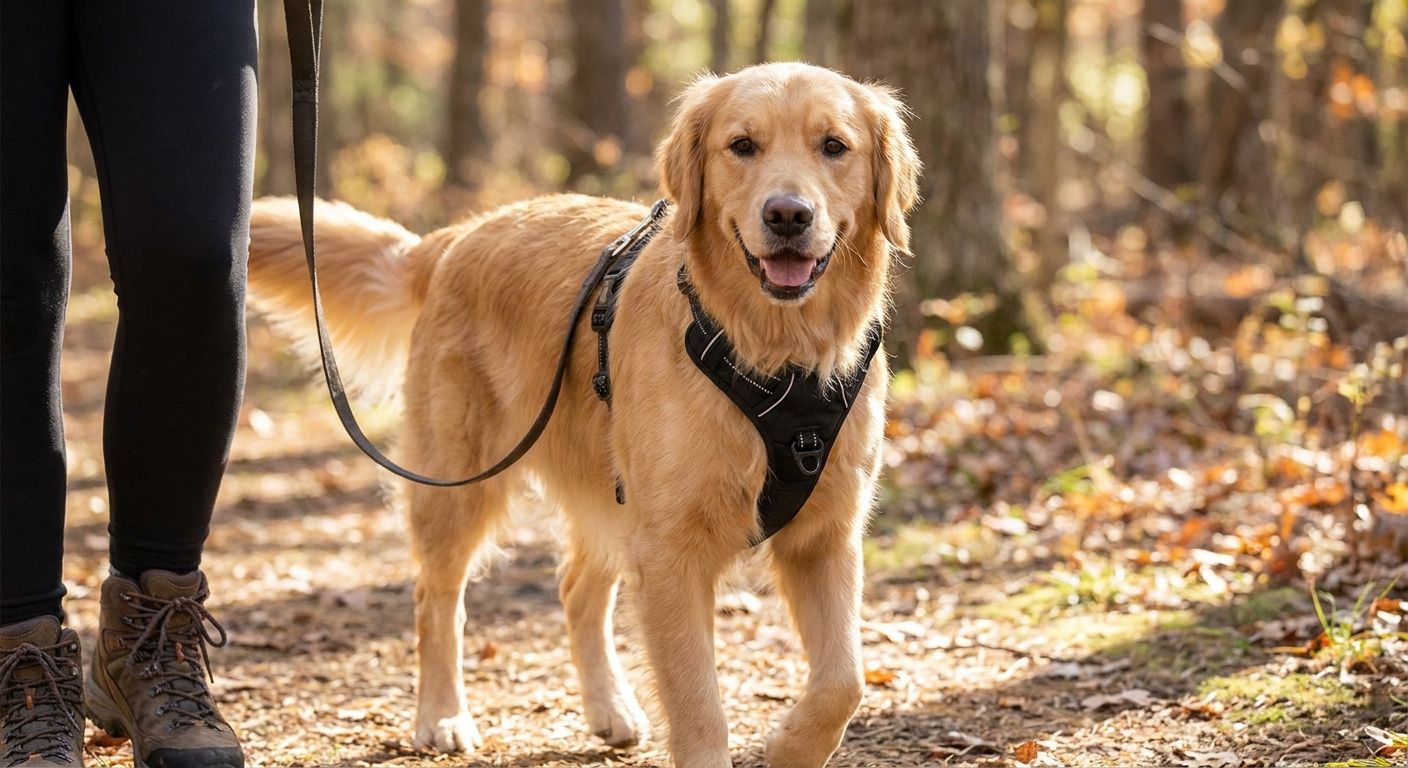
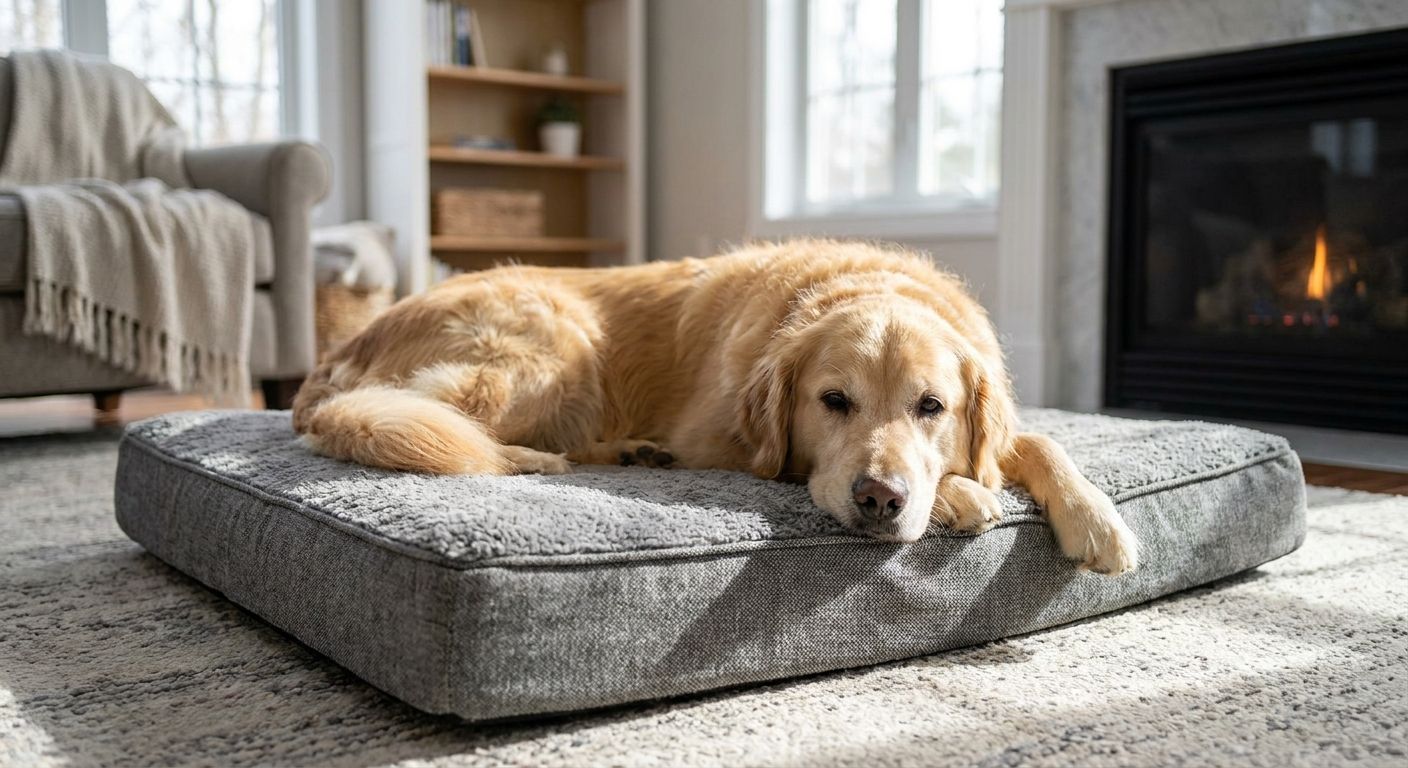
Large and giant breed dogs over 50 pounds put far more pressure on hips, shoulders, and elbows than a 15-pound terrier, and a flat pillow bed does nothing to redistribute that weight. Here's how to pick the best orthopedic dog beds for large dogs in 2026, broken down by the problem each style actually solves.
Best overall for joint pain: high-density memory foam orthopedic bed. Best for hot climates: cooling gel memory foam bed. Best for dogs who lean and nest: bolster orthopedic bed. Best for outdoor use: elevated orthopedic bed. Best for senior dogs and incontinence: waterproof orthopedic bed. Best for arthritis in cold weather: heated orthopedic bed.
- High-density memory foam rated at least 3 lb/ft³ gives large dogs the most consistent joint support in 2026.
- Cooling gel memory foam beats plain foam for large dogs in hot climates because standard foam traps body heat.
- Bolster orthopedic beds suit dogs that like to lean and nest, but the sides eat into usable support surface.
- Waterproof orthopedic beds are the right call for senior large dogs dealing with incontinence or arthritis.
- The best orthopedic dog beds for large dogs need 4+ inches of foam and a non-skid base underneath.
Why this matters
Large and giant breeds — Labradors, German Shepherds, Rottweilers, Great Danes, Mastiffs — are more prone to hip dysplasia and osteoarthritis than small dogs, and that risk climbs with age. A bed that compresses flat within a few months isn't cushioning anything; it's just a rug with extra steps.
The foam layer, not the cover, is what determines whether a bed actually supports a large dog's joints. Shop and Bark carries orthopedic bed options built around the same support principles covered below, and the criteria here apply whether you're shopping there or comparing across brands in 2026.
What makes the best orthopedic dog bed for large dogs
- Foam density — orthopedic support foam is typically rated at 3 lb/ft³ or higher; anything softer compresses under 50+ pounds within weeks
- Thickness — at least 4 inches for dogs 50-90 lbs, more for giant breeds over 90 lbs
- Cover durability — removable, machine-washable covers with reinforced seams hold up to daily use and shedding
- Temperature regulation — gel infusion or breathable mesh matters for dogs that overheat on plain memory foam
- Non-skid base — a rubberized bottom keeps the bed from sliding on hardwood or tile
- Accurate sizing — large-breed beds should measure at least 40x30 inches; giant breeds need 50+ inches
Shop orthopedic dog beds for large breeds
Browse bed options sized for large and giant dogs.
At a glance: orthopedic dog beds for large dogs in 2026
| Bed type | Best for | Standout feature | Key limitation |
|---|---|---|---|
| High-density memory foam | Joint pain, general support | 3+ lb/ft³ foam density | Retains heat in warm rooms |
| Cooling gel memory foam | Hot climates | Gel layer pulls heat away from the body | Gel layer adds bulk and weight |
| Bolster orthopedic | Dogs who lean and nest | Raised sides for head support | Less flat support surface overall |
| Elevated orthopedic | Outdoor and patio use | Mesh platform stays off hot pavement | Less cushioning than foam beds |
| Waterproof orthopedic | Senior dogs, incontinence | Sealed liner blocks moisture | Cover can trap odor if not cleaned often |
| Heated orthopedic | Arthritis in cold climates | Built-in low-voltage heating element | Needs an outlet nearby |
1. High-density memory foam orthopedic bed: best for large dogs with joint pain
This is the baseline for best orthopedic dog beds for large dogs in 2026 — a solid slab of foam rated at 3 lb/ft³ or higher, contoured to distribute weight evenly across hips and shoulders. It's the closest a dog bed gets to a real orthopedic mattress.
High-density memory foam pros:
- Holds its shape under 50-100+ lbs for years, not months
- Reduces pressure on hips and elbows during sleep
- Works for nearly every large breed regardless of activity level
High-density memory foam cons:
- Retains body heat, which can be uncomfortable in warm rooms
- Heavier and bulkier to move between rooms
- Takes up to two weeks to fully expand and off-gas after unboxing
Best for: large dogs with existing joint pain or early arthritis. Verdict: Buy.
2. Cooling gel memory foam bed: best for large dogs in hot climates
Same foam core as the standard option, but infused with cooling gel beads that pull heat away from the dog's body. This matters more for large breeds than small ones — bigger bodies generate more heat against a foam surface.
Cooling gel memory foam pros:
- Noticeably cooler surface temperature than plain memory foam
- Retains orthopedic support properties of standard high-density foam
- Suited to dogs with thick double coats that overheat easily
Cooling gel memory foam cons:
- Gel layer adds weight and cost to manufacture
- Cooling effect fades over the life of the bed as gel disperses
Best for: large dogs in warm climates or homes without central air. Verdict: Buy.
3. Bolster orthopedic bed: best for large dogs who lean and nest
A foam base with raised sides, giving dogs that like to rest their head or back against something a place to do it without losing joint support underneath.
Bolster orthopedic pros:
- Gives anxious or nesting dogs a sense of enclosure
- Doubles as head and neck support for dogs with arthritis in the neck
- Bolster edges help contain loose fur and slobber
Bolster orthopedic cons:
- Raised sides reduce usable flat surface for stretching out
- Not ideal for dogs that sleep fully extended
Best for: large dogs that curl or lean rather than sprawl flat. Verdict: Buy if your dog nests; Skip if they sleep stretched out.
4. Elevated orthopedic bed: best for outdoor and patio use
A taut mesh platform stretched over a metal or PVC frame, keeping the dog off hot concrete or damp ground while still supporting joints better than bare mesh alone.
Elevated orthopedic pros:
- Stays cooler than foam on patios and decks in summer
- Mesh dries fast after rain or hosing down
- Frame keeps large dogs off cold or wet surfaces
Elevated orthopedic cons:
- Less cushioning than a true foam orthopedic bed
- Not ideal as a primary indoor sleeping surface for a dog with significant joint pain
Best for: outdoor time and patio naps, not full-time indoor use. Verdict: Buy as a secondary bed; Hold if it's the only bed the dog has.
5. Waterproof orthopedic bed: best for senior dogs and incontinence
Standard orthopedic foam wrapped in a sealed, waterproof inner liner under the removable cover. Built for older large dogs where joint support and moisture control both matter.
Waterproof orthopedic pros:
- Sealed liner keeps foam dry and free of odor buildup
- Combines full orthopedic support with easy cleanup
- Suited to senior dogs managing both arthritis and incontinence
Waterproof orthopedic cons:
- Liner can trap heat and odor if the cover isn't washed regularly
- Slightly stiffer feel than an unlined foam bed
Best for: senior large dogs with incontinence or arthritis. Verdict: Buy.
6. Heated orthopedic bed: best for arthritis in cold climates
An orthopedic foam base with a low-voltage heating element built in, aimed at large dogs whose joints stiffen up in cold weather.
Heated orthopedic pros:
- Low, consistent heat can ease stiffness in cold mornings
- Combines orthopedic support with warmth in one bed
- Useful for older dogs in unheated garages, mudrooms, or basements
Heated orthopedic cons:
- Requires an outlet nearby, limiting placement options
- Not necessary for dogs in consistently warm homes
Best for: large dogs with arthritis in cold-weather regions. Verdict: Buy if the dog's space runs cold; Skip otherwise.
How we ranked these
Every entry above is measured against the same six criteria: foam density, thickness for large-breed weight, cover durability, temperature regulation, base stability, and accurate large-breed sizing. Beds that skip on any of the first two criteria don't qualify as orthopedic no matter what the label says — a 2-inch foam pad under a 90-pound dog is décor, not support.
“A 2-inch foam pad under a 90-pound dog is décor, not support.”
Which orthopedic dog bed should you choose?
For most large dogs in 2026, the high-density memory foam orthopedic bed is the default pick — it covers joint support for the widest range of ages and activity levels. Swap to cooling gel memory foam if your dog runs hot or lives somewhere warm year-round, and move to a waterproof orthopedic bed once a dog is older and dealing with incontinence alongside arthritis. Bolster, elevated, and heated styles solve specific problems rather than general use, so pick those only when the specific problem applies to your dog.
FAQ
What's the best orthopedic dog bed for large dogs with arthritis?
A high-density memory foam bed rated at 3 lb/ft³ or higher is the best base option for arthritic large dogs in 2026. Add a heated version for cold climates or a waterproof liner if incontinence is also a factor.
How thick should an orthopedic dog bed be for a large dog?
Large dogs 50-90 lbs need at least 4 inches of orthopedic foam, and giant breeds over 90 lbs benefit from 5 inches or more. Thinner foam compresses too fast to keep supporting the joints.
Is memory foam better than regular foam for large dogs?
Yes, for orthopedic use memory foam rated at orthopedic density holds its shape under sustained weight better than standard polyfoam. Standard foam flattens within months under a large dog's body weight.
How long do orthopedic dog beds last for large dogs?
A true high-density orthopedic bed holds its support for several years under daily use by a large dog, while low-density foam beds can flatten within months. Cover durability and washing frequency also affect lifespan.
Can an orthopedic bed help with hip dysplasia in large dogs?
An orthopedic bed won't treat hip dysplasia, but it reduces pressure points that make the condition more painful during rest. Vets commonly recommend supportive bedding alongside other management for large breeds with the condition.
Do large dogs need a cooling bed?
Large dogs with thick coats or those living in warm climates benefit from cooling gel memory foam over plain memory foam. Standard foam traps more body heat against a bigger dog's frame.
How do you clean an orthopedic dog bed cover?
Most orthopedic bed covers unzip and are machine washable on a cold, gentle cycle. Waterproof-lined beds only need the outer cover washed since the liner blocks moisture from reaching the foam.
What size orthopedic bed does a 90 lb dog need?
A 90 lb dog needs a bed measuring at least 40x30 inches, and closer to 50 inches long for dogs that sleep fully stretched out. Undersized orthopedic beds force the dog to curl unnaturally, defeating the point of the support.
One last thing
Memory foam orthopedic beds ship compressed and typically take up to two weeks to fully expand and lose the factory smell — judge the support only after that window, not on day one out of the box.