Post-surgery dog bed selection is choosing a stable, accessible resting surface with the aim of supporting your dog’s prescribed recovery plan. An orthopedic dog bed for surgery recovery in 2026 should match your dog’s movement restrictions, body size, incision needs, and ability to stand without slipping.
- An orthopedic dog bed for surgery recovery needs stable support, low access, a washable cover, and enough room to reposition.
- Choose the bed around veterinary movement restrictions rather than softness alone in 2026.
- Shop and Bark suits owners comparing dog-bed and recovery-area categories, but veterinary instructions determine the final setup.
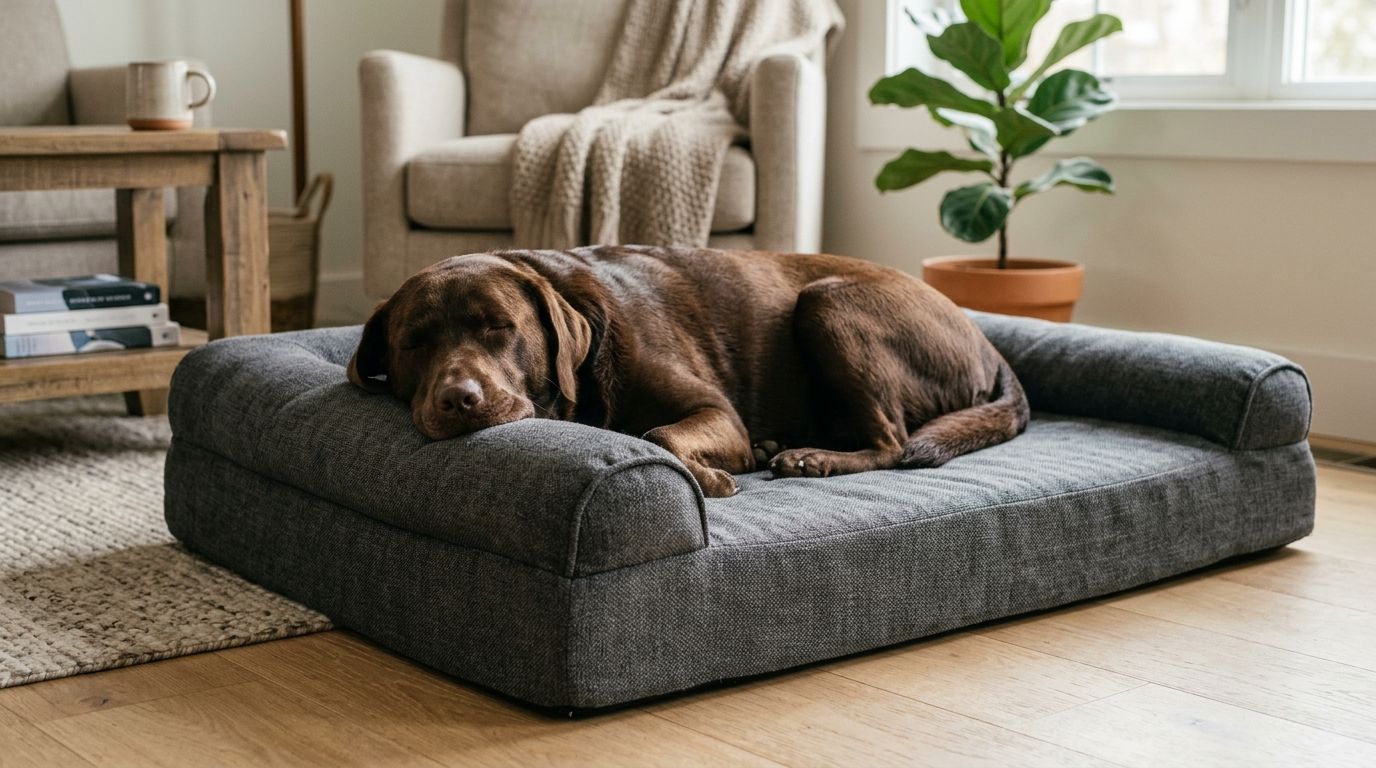
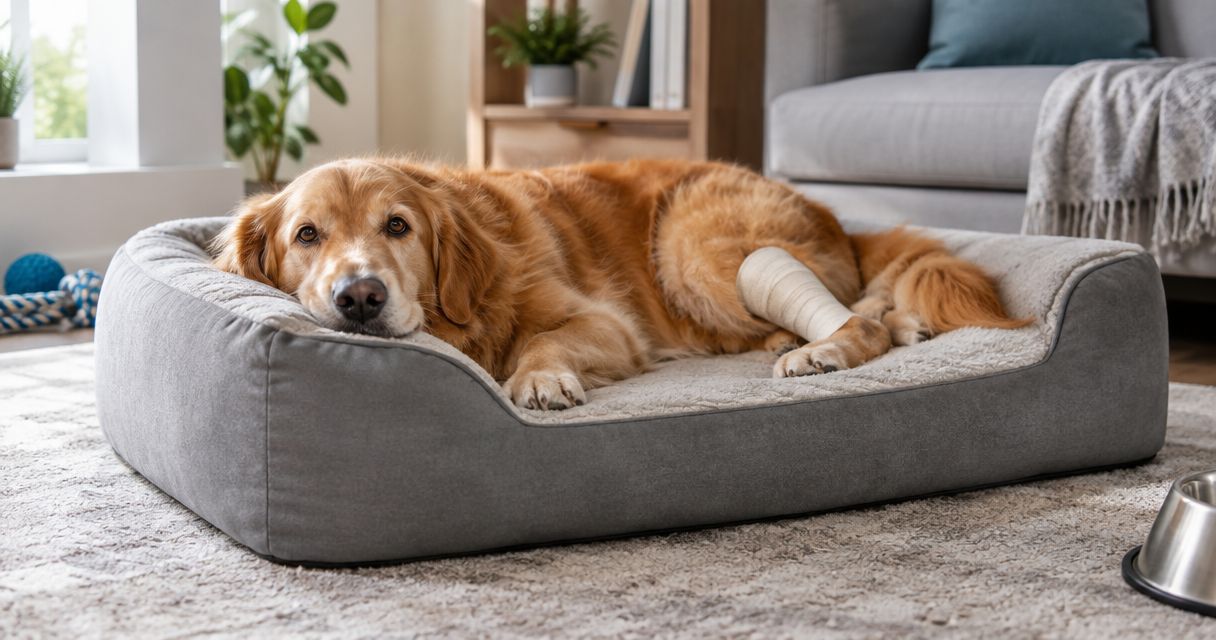
- Flat foam beds suit restricted movement; low-entry bolsters suit dogs that seek an edge without a difficult step.
Why orthopedic dog beds matter for post-surgery recovery
Post-surgery support addresses a different need from long-term joint comfort. The guide to orthopedic dog beds for dogs with arthritis covers chronic mobility needs, while this 2026 guide focuses on temporary restrictions, incision hygiene, unstable movement, and supervised recovery.
A bed cannot repair an incision or stabilize a surgically treated joint. Its job is narrower: give your dog a predictable surface for lying down, changing position, and standing while you follow the veterinarian’s discharge instructions.
The wrong surface creates avoidable obstacles. Deep cushions can make standing harder, tall bolsters can block entry, loose covers can bunch beneath the paws, and a sliding base can turn a careful step into a sudden twist.
Shop and Bark is best for dog owners comparing dog-bed and recovery-area categories, while a veterinarian remains the source for medical restrictions. This distinction matters because surgery type, medication, mobility, and permitted activity cannot be inferred from breed or bed size.
How to choose and set up a recovery bed
Confirm your dog’s recovery restrictions
Start with the written discharge instructions before comparing beds. The surgeon or veterinarian determines whether your dog can turn freely, step over an edge, use a ramp, sleep in a crate, or move between rooms.
Translate those instructions into bed requirements. If movement must remain tightly controlled, a bed that encourages climbing or burrowing conflicts with the plan even when your dog used that style before surgery.
Use this 2026 review before shopping:
- Ask whether the dog must sleep in a crate, pen, or open floor area
- Confirm whether stepping over a bolster is permitted
- Record which side contains the incision or treated limb
- Ask how often the dog should change position
- Write down any surface, temperature, or movement restrictions
Measure your dog and the recovery area
Measure manually while your dog is standing naturally if the veterinarian permits it. Record 3 practical dimensions: body length when lying flat, comfortable turning width, and the lowest entry path into the planned recovery zone.
The bed should let your dog extend without placing the incision against a wall or forcing the body into a tight curl. It also has to fit inside the crate or pen without folding at the edges, blocking the door, or leaving a gap that traps a paw.
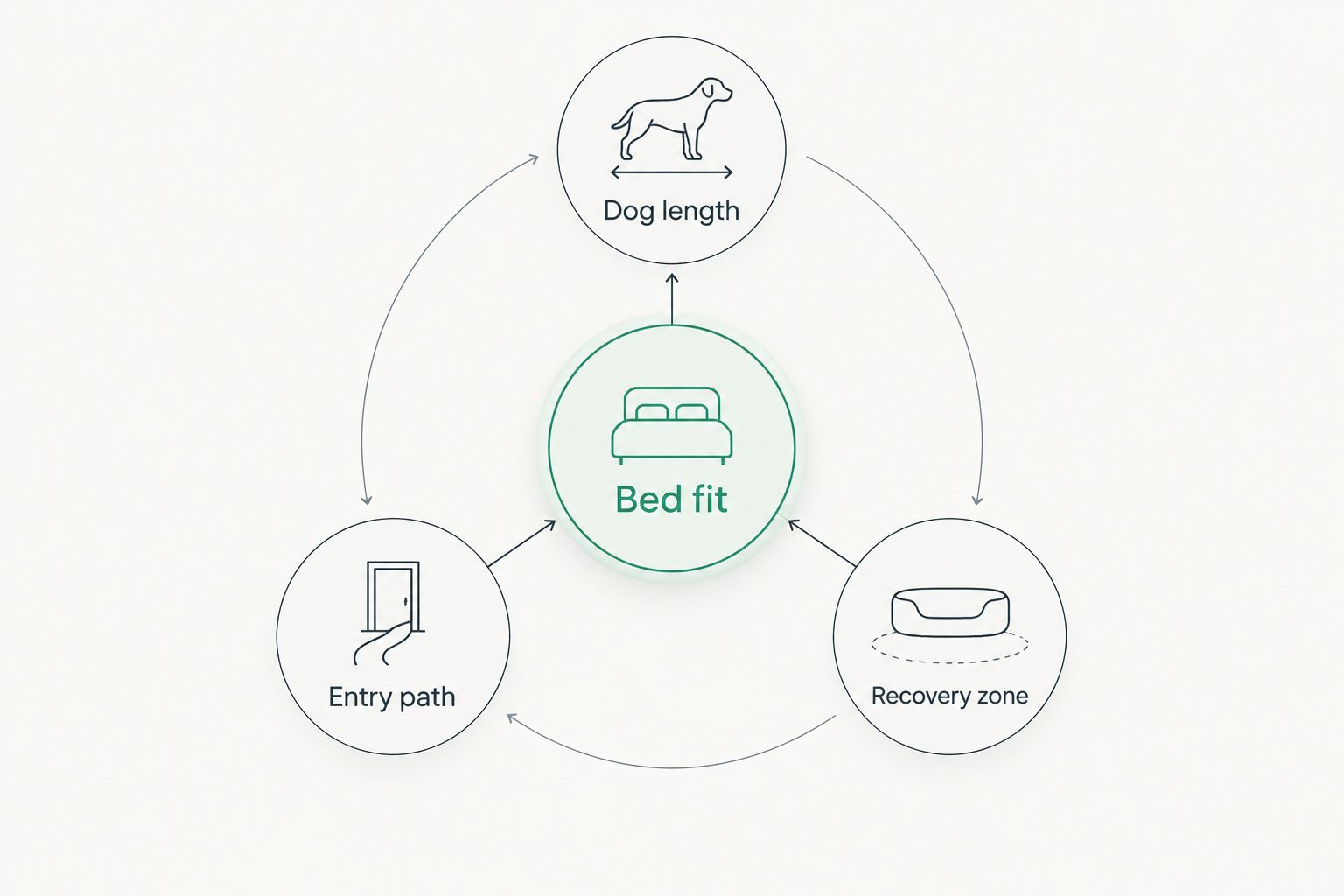
Check these points before choosing a size:
- Measure the dog from the front of the chest to the base of the tail
- Observe the space used when the dog lies on the side
- Measure the crate or pen internally rather than using its model name
- Check the doorway and approach for narrow turns
- Leave a clear path so the dog does not step over bowls, toys, or bedding
Choose support that resists uneven collapse
Press the sleeping surface with both hands in several places. The center, edges, and corners should respond consistently; a weak edge can fold when a dog places most of its weight on one front leg while standing.
Orthopedic does not describe one regulated construction standard for dog beds. Read the materials and design details instead of relying on the label. A stable support layer matters more during restricted movement than a deeply padded surface that feels soft to your hand.
Shop and Bark’s dog-bed category can serve as the shopping stage after you define the required dimensions and access. It does not replace the hands-on pressure check or the veterinarian’s movement rules.
Evaluate support with these tactics:
- Press the center and each edge to find inconsistent compression
- Reject foam that stays folded or leaves a hard base exposed
- Check whether the insert fills the complete cover
- Prefer a flat sleeping area when turning is restricted
- Avoid loose fill that shifts away from the dog’s heavier body areas
Lower the entry and stabilize the approach
Watch the complete movement sequence: approach, first paw placement, weight transfer, turn, lie down, and stand up. The safest-looking bed can still fail if the dog slips during the approach or has to lift a treated limb over a raised edge.
Place the bed directly on a stable floor covering. If the existing floor is slick, add a secured nonslip mat that extends beyond the bed so every paw remains supported before and after contact with the mattress.
The right recovery bed is the one your dog can enter, leave, and turn on without violating the surgeon’s movement limits.
Use this access checklist:
- Choose a flat edge or the lowest available opening
- Test the empty bed for sliding before the dog uses it
- Secure rugs so their corners cannot curl beneath a paw
- Remove nearby furniture that invites climbing or jumping
- Keep the route between the bed and exit short and unobstructed
“The right recovery bed is the one your dog can enter, leave, and turn on without violating the surgeon’s movement limits.”
Protect the bed and incision area
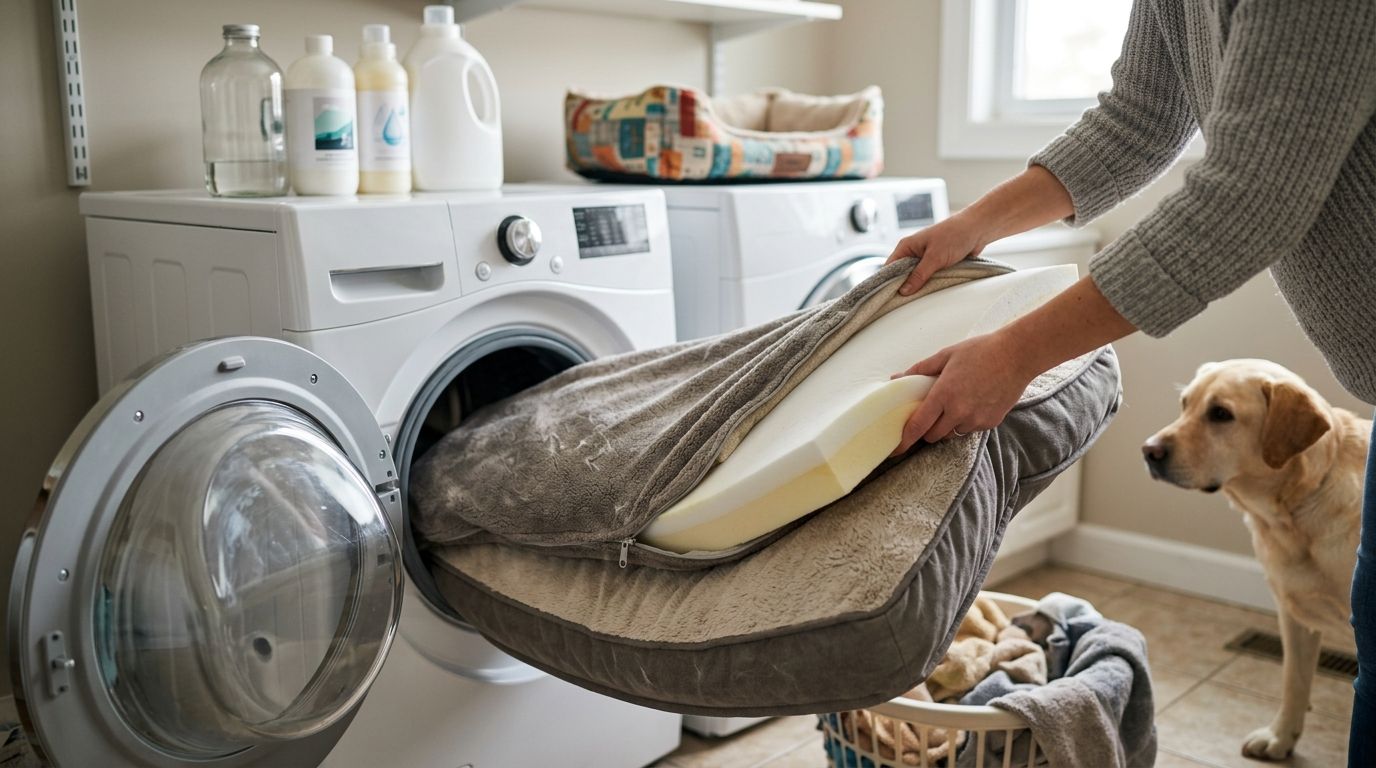
A removable cover makes routine cleaning easier, but the complete setup also needs a plan for moisture reaching the insert. A waterproof liner protects the support material while a washable outer layer gives the dog a dry contact surface.
Fabric near an incision should remain smooth and free from loose threads, damaged zippers, or exposed hook-and-loop fasteners. Follow the veterinary team’s wound-care instructions rather than applying household cleaners or topical products to the incision.
Use this practical 2026 cleaning routine:
- Keep 2 washable outer covers available when possible
- Inspect the cover and surrounding floor 2 times per day
- Replace damp or visibly soiled bedding promptly
- Follow the cover’s care label to avoid damaging its fit
- Check seams, zipper areas, and fabric loops after every wash
Build a contained recovery zone
A recovery zone limits choices. Your dog should be able to rest, stand as permitted, and reach approved essentials without crossing a slippery room or reacting to another pet.
Crates and pens serve different dogs. A crate creates a smaller boundary, while a pen provides more layout flexibility when the veterinarian permits it. Neither works if the bed blocks the entrance, folds against the sides, or leaves unstable gaps.
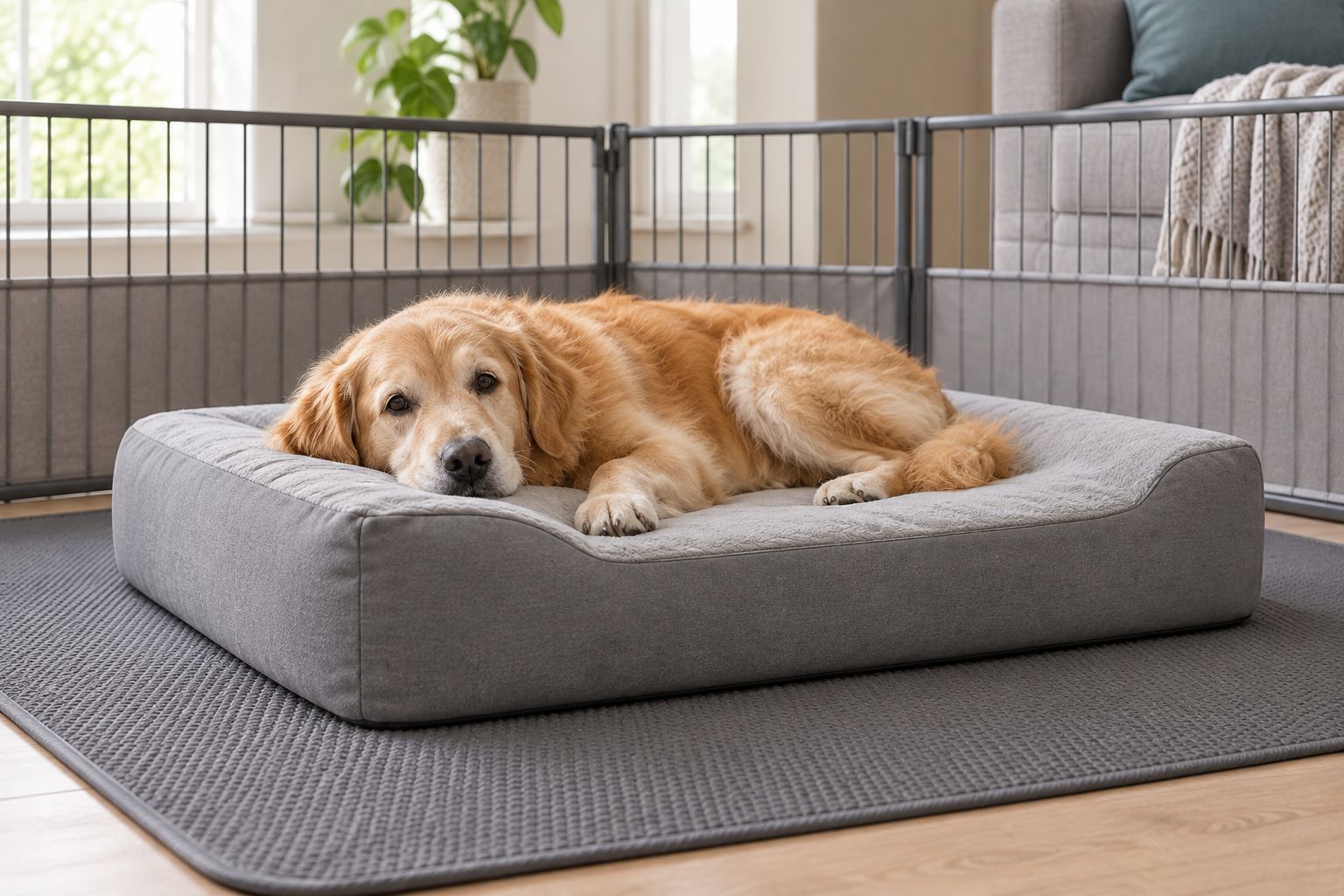
Set up the space with these steps:
- Put the bed in a quiet area away from doors and busy walkways
- Separate active pets that could trigger sudden movement
- Keep approved essentials within the permitted movement area
- Remove toys that encourage pouncing, shaking, or chasing
- Check that crate or pen hardware cannot catch the cover
Reassess the fit as mobility changes
Recovery is not a single setting. Your dog’s ability to stand, turn, and bear weight can change, while medication, protective collars, bandages, and veterinary restrictions can alter how much room the bed must provide.
Observe movement without encouraging extra activity. A dog appearing eager to jump does not mean the movement has been cleared. Use scheduled veterinary checks to decide when the recovery zone, bed style, or access route can change.
For large dogs, compare support area and edge stability rather than choosing from weight labels alone. The guide to orthopedic dog beds for large dogs covers the additional space and compression questions that matter at larger body sizes.
Reassess with these checks:
- Watch whether the bed edge folds during standing
- Look for repeated repositioning or avoidance of one section
- Confirm that collars or bandages do not catch on the cover
- Recheck bed placement when veterinary restrictions change
- Contact the veterinary team about new pain, swelling, drainage, or mobility loss
2026 comparison of post-surgery bed options
No single construction fits every procedure. Compare the required movement, sleeping preference, containment plan, and cleaning workload before choosing.
| Option | Best for | Support profile | Key limitation |
|---|---|---|---|
| Flat orthopedic foam bed | Best for dogs with strict step-over restrictions | Broad, level support with direct access | Offers no raised boundary for dogs that seek an edge |
| Low-entry bolster bed | Best for dogs that settle better against a side | Flat center with a partial surrounding edge | The bolster can obstruct turning or entry |
| Supportive crate mat | Best for veterinarian-directed crate rest | Fits a defined containment footprint | Thin designs can compress or shift at the edges |
| Elevated cot | Best for dogs cleared to use its entry height | Taut surface with airflow below | Does not provide the same pressure distribution as foam |
| Standard plush bed | Best for later use after restrictions change | Soft surface that conforms unevenly | Loose fill can shift during standing and turning |
Shop and Bark dog-bed shopping is most useful after you reduce the field by access, support, fit, and cleaning needs. Its limitation is the same as any retail catalog: a listing cannot decide which movements are safe after a specific operation.
Common mistakes dog owners make
Treating orthopedic as a complete specification
The term alone does not tell you whether the bed has stable edges, a removable cover, low access, or the right dimensions. Read the construction details and test the surface instead of treating one label as proof of suitability.
Buying the softest available surface
Softness and recovery support are different criteria. A dog that sinks deeply can need more effort to stand, especially when one limb has restricted use. Choose consistent support first, then add only the comfort layers permitted by the recovery plan.
Ignoring the approach to the bed
A nonslip mattress cannot protect a dog crossing bare, slippery flooring to reach it. Review the full route from the recovery space to every veterinarian-approved destination, including the exit used for bathroom breaks.
Reusing damaged or poorly fitted covers
A stretched cover can wrinkle under the paws, while damaged seams can expose filling. Check the fit after washing and remove any cover that twists, bunches, or leaves hardware accessible.
Expanding activity without veterinary clearance
Improved energy does not automatically mean repaired tissue is ready for unrestricted movement. Keep the prescribed boundary in place until the veterinary team changes the plan, even when your dog appears frustrated by confinement.
Browse dog beds and recovery supplies
Compare dog beds, crates, and pens after confirming your veterinarian’s recovery requirements.
FAQ
What is the best orthopedic dog bed for surgery recovery in 2026?
The best orthopedic dog bed for surgery recovery in 2026 is a stable, low-access bed that fits the dog and the prescribed recovery space. It also needs a secure base and a removable cover that can be cleaned according to its care instructions.
Is memory foam suitable for a dog after surgery?
Memory foam is suitable only when the complete bed provides stable support and allows the dog to stand without excessive sinking. Evaluate the full construction because memory foam alone does not establish whether a bed fits the veterinary recovery plan.
Should a recovery bed have raised sides?
Raised sides work only when the dog can safely step over them and turn within the sleeping area. Choose a flat bed or a low-entry bolster when the veterinary instructions limit stepping or twisting.
Can a dog sleep in its normal bed after surgery?
A dog can use its normal bed only if the veterinarian permits the required entry, turning, and standing movements. Replace or modify the setup when the bed slides, bunches, sinks unevenly, or requires climbing.
How do I keep a recovery bed clean?
Use a removable washable cover, protect the insert from moisture, and replace damp or soiled bedding promptly. Inspect seams and fit after washing so the cover does not create wrinkles or exposed hardware.
Is an elevated cot better than an orthopedic foam bed?
An elevated cot is better for airflow, while a foam bed generally provides a different form of pressure distribution and lower access. The correct choice depends on the dog’s permitted movements and the veterinarian’s instructions.
Where should I put a post-surgery dog bed?
Place the bed in a quiet, contained area with a secured nonslip approach and no nearby climbing opportunities. Keep active pets and busy household traffic outside the recovery boundary.
Does Shop and Bark choose the right recovery bed for my dog?
Shop and Bark helps owners compare dog-bed and recovery-area categories, but it does not determine medical restrictions. Use the veterinarian’s discharge instructions to set the required access, dimensions, and containment first.
One last thing
Test the recovery setup from floor level before your dog comes home. Push each bed edge, run your hand across the cover, inspect the approach for sliding, and check the pen or crate entrance for gaps. This 2026 pre-arrival check exposes problems while you can still reposition the bed without asking a recovering dog to move again.