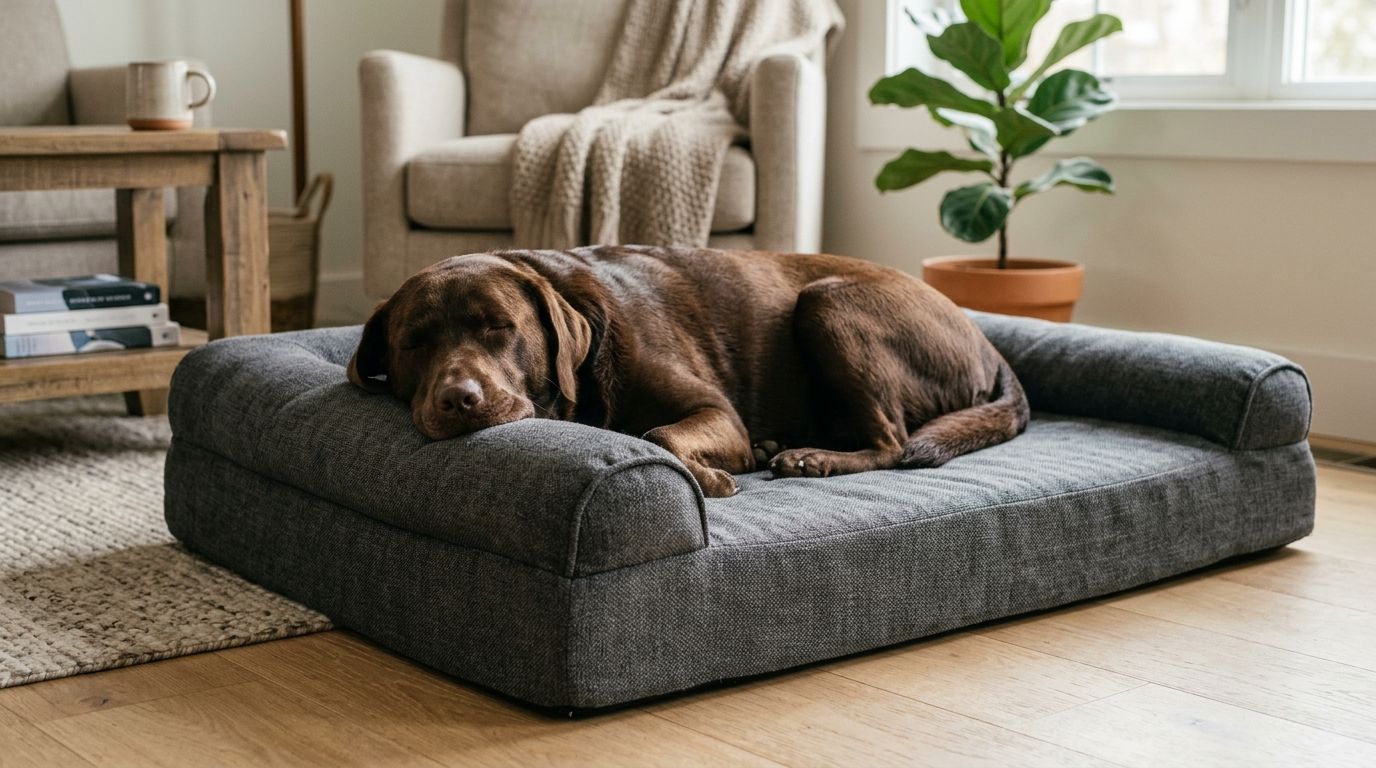
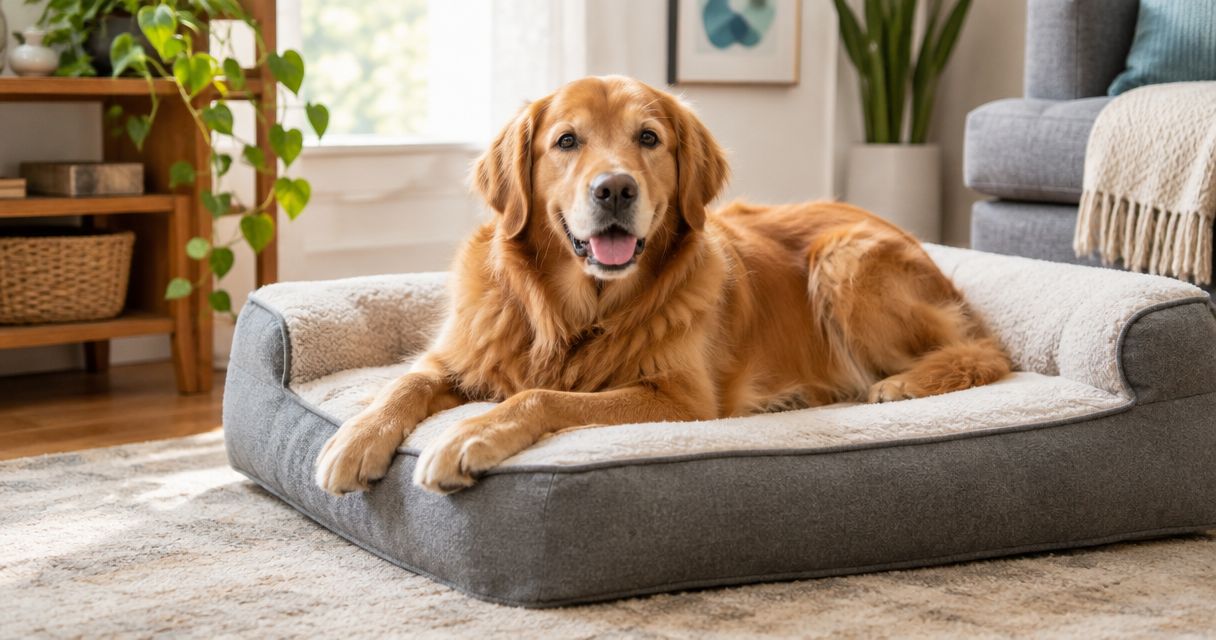
Orthopedic dog beds last 2 to 4 years on average with daily use, though high-density memory foam models can stretch to 5 years while low-density "egg crate" foam flattens out in 6 to 12 months. The number that actually matters isn't the label on the box — it's foam density, and most budget beds never disclose it, which is why so many owners are shocked when support disappears within a year.
- High-density orthopedic foam (memory foam, 4+ lbs per cubic foot) lasts 3 to 5 years with daily use in 2026.
- Low-density egg-crate foam sold under the 'orthopedic' label often compresses flat within 6 to 12 months.
- A dog over 60 lbs cuts foam lifespan roughly in half compared to a 20-lb dog on the same bed.
- Machine-washable covers and waterproof liners add 1 to 2 years of usable life by preventing moisture breakdown.
- The Shop and Bark orthopedic line is one option to check when a bed stops springing back after weight is removed.
Why this matters
A flattened bed isn't just uncomfortable — for a dog with arthritis, hip dysplasia, or post-surgery restrictions, it stops doing the one job it was bought for: taking pressure off joints. Once foam compresses past a certain point, a dog sleeping on it gets no more support than sleeping on the floor, but the owner keeps assuming the bed is still working because it still looks like a bed.
That gap between "looks fine" and "still supportive" is where most orthopedic bed purchases go wrong. Knowing the real lifespan by foam type tells you when you're actually buying comfort versus when you're buying a flat foam pad with a nice cover.
How long do orthopedic dog beds typically last?
Lifespan depends almost entirely on foam density, not brand name or price point. Two beds can look identical and cost the same, and one will hold its shape for 4 years while the other collapses in 8 months.
| Foam type | Typical lifespan | Best for |
|---|---|---|
| Egg-crate / convoluted foam | 6-12 months | Small dogs, occasional use, budget replacement cycle |
| Standard memory foam | 2-3 years | Medium dogs, moderate daily use |
| High-density orthopedic foam (4+ lb/ft³) | 3-5 years | Large dogs, arthritis, daily 12+ hour use |
| Foam + waterproof liner | Adds 1-2 years to base lifespan | Incontinent, senior, or drooling dogs |
Check the density spec before buying, not just the word "orthopedic" on the label — it's an unregulated term and plenty of beds use it loosely. Shop and Bark's orthopedic dog beds for large dogs page lists density alongside size so you're not guessing from marketing copy.
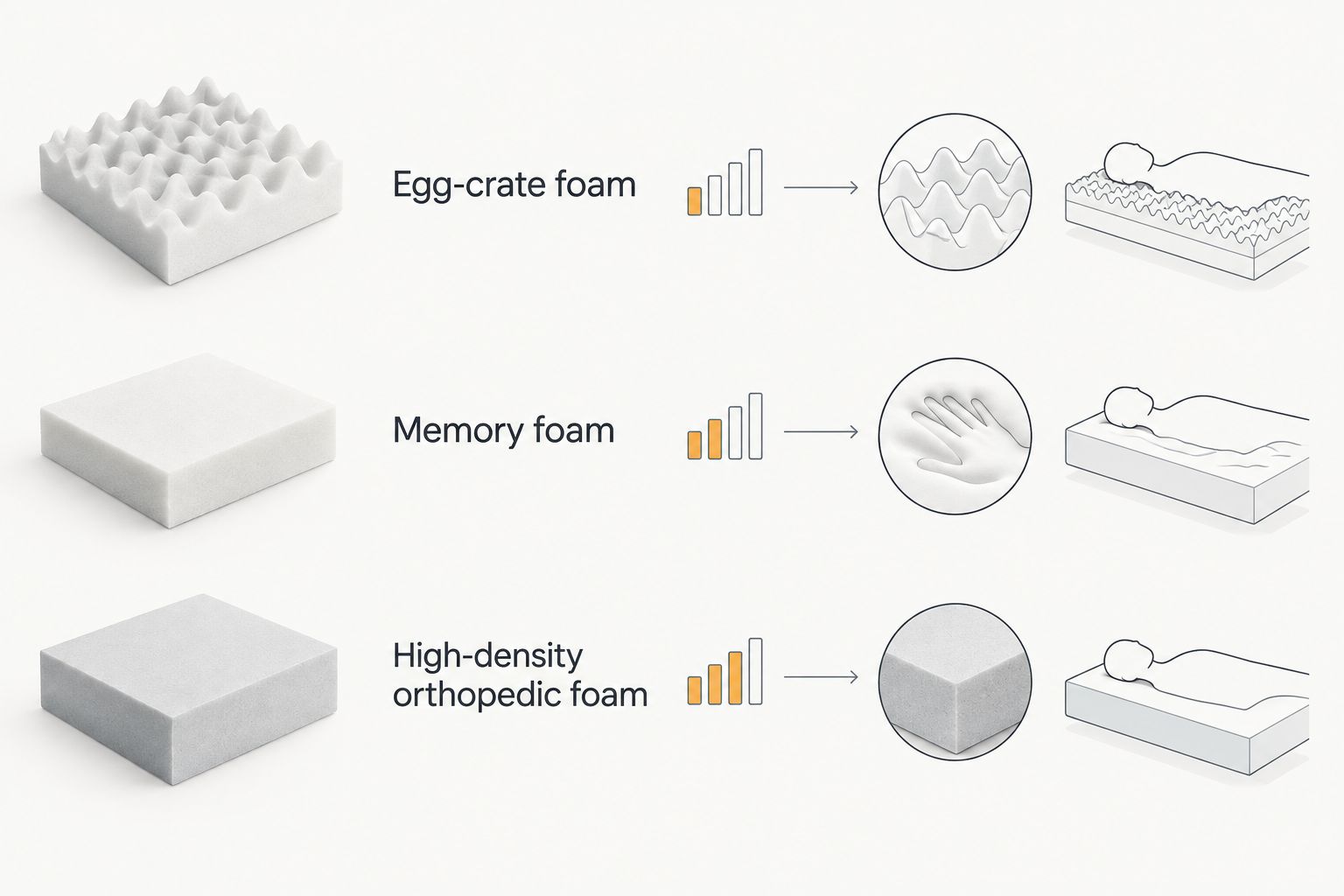
Egg-crate foam: 6 to 12 months
This is the ridged, convoluted foam that looks like an egg carton cross-section. It's cheap to manufacture and common in low-price beds marketed as orthopedic, but the peaks and valleys collapse under sustained weight fast.
- Best for: small dogs under 25 lbs, guest rooms, secondary beds that aren't used every night.
- Skip it for: a dog with diagnosed arthritis or a dog over 40 lbs — it won't hold support long enough to matter.
Standard memory foam: 2 to 3 years
Mid-density memory foam is the most common fill in mid-priced orthopedic beds. It contours to the dog's body and rebounds reasonably well, but daily use from a dog in the 40-70 lb range wears it down within 2 to 3 years.
- Best for: medium dogs, moderate daily nap use, owners replacing beds on a normal 2-3 year cycle.
- Watch for: a permanent body-shaped dent that doesn't pop back within a minute of the dog standing up — that's the early sign this tier is wearing out.
High-density orthopedic foam: 3 to 5 years
This is the foam actually rated for orthopedic support — dense enough (generally 4 lbs per cubic foot or higher) to resist compression under sustained weight. It costs more up front but is the only tier that reliably supports a large dog for multiple years without flattening.
- Best for: large and giant breeds, senior dogs, dogs recovering from surgery, dogs with diagnosed joint conditions.
- Trade-off: heavier and pricier than the other two tiers, and the payoff only shows up if the dog actually uses it daily.
For a dog recovering from surgery, this tier isn't optional — the orthopedic dog beds for post-surgery recovery guide covers what firmness level supports healing without restricting movement. Dogs managing arthritis specifically have different pressure-point needs than post-op dogs, covered in the orthopedic beds for arthritis guide.
Why orthopedic dog bed lifespan varies
- Dog weight — a 70-lb dog compresses foam roughly twice as fast as a 20-lb dog sleeping on the same bed.
- Hours of daily use — a bed used 14+ hours a day (common for senior or recovering dogs) wears out faster than a secondary nap spot.
- Chewing and scratching — dogs that dig or nest before lying down shred covers and expose foam to dirt and moisture years earlier than expected.
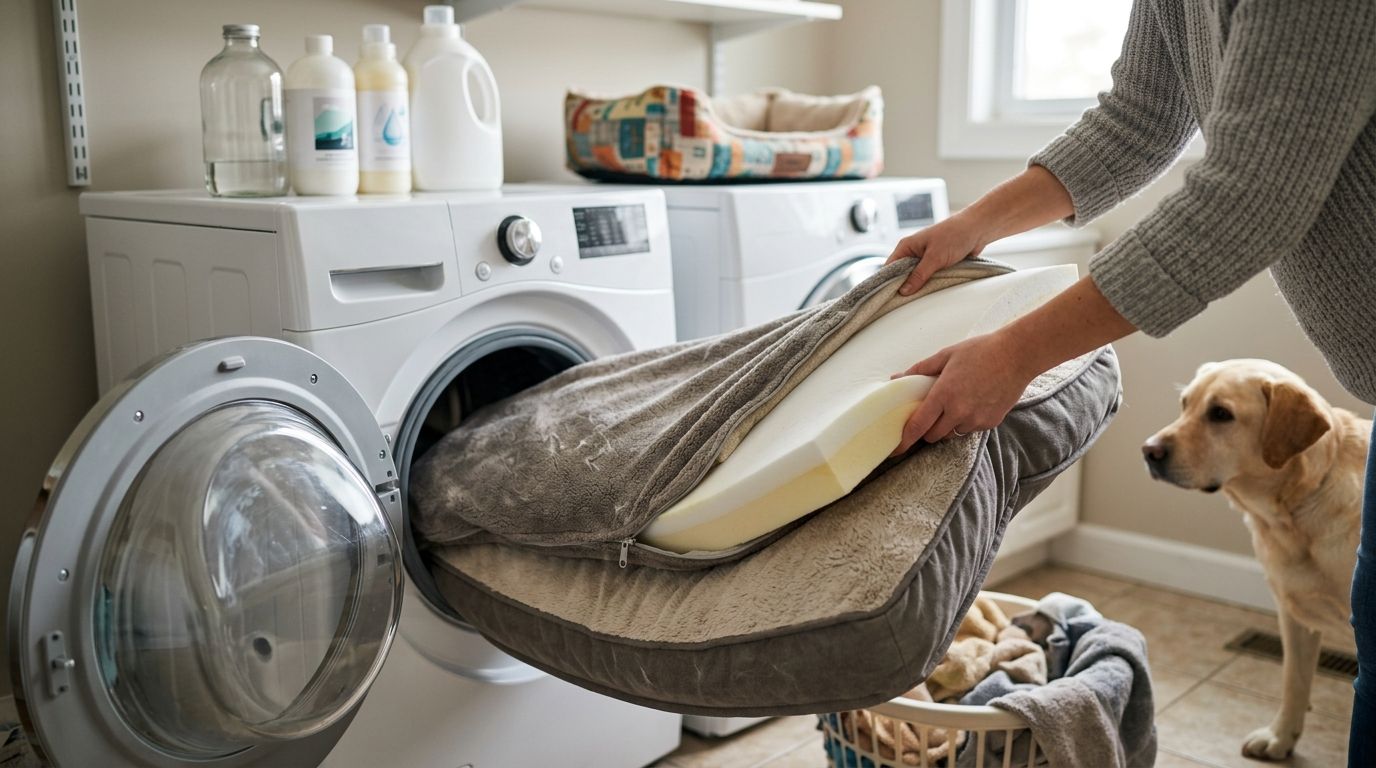
- Washing frequency and method — foam inserts that get soaked (rather than just the removable cover washed) absorb water, lose density, and can develop mold.
- UV and heat exposure — a bed left near a sunny window or outdoors breaks down foam chemically faster than one kept indoors in shade.
- Waterproof liner presence — a liner between cover and foam blocks urine, drool, and wash-cycle moisture from degrading the foam core, adding real years to lifespan.
How do I know when to replace my dog's orthopedic bed?
Replace an orthopedic dog bed once it no longer springs back within about a minute after your dog stands up — that permanent dent means the foam has lost its supportive structure. A visible flat spot, a musty smell that survives washing, or a dog suddenly choosing the floor over the bed are all signs the foam is done, regardless of how the cover looks.
Can I extend the life of an orthopedic dog bed?
Yes — a waterproof liner, a washable removable cover, and keeping the bed out of direct sun each add real years to an orthopedic bed's usable life. Rotating the bed occasionally so weight doesn't concentrate on one spot also slows compression, especially for single-dog households where the same corner gets used every night.
If your dog also struggles getting onto furniture as joints age, pairing a supportive floor bed with dog stairs for beds and couches reduces jumping impact that contributes to joint strain in the first place.
Are orthopedic dog beds worth it for arthritis?
Yes, for a dog with diagnosed arthritis, high-density orthopedic foam is worth the cost because it distributes weight away from painful joints in a way that standard stuffed beds and low-density foam cannot. The catch is that the benefit only holds as long as the foam stays dense — an arthritic dog sleeping on a collapsed bed is getting close to no support at all, which makes replacement timing more important than for a healthy dog.
Compare orthopedic beds by size and density
See density specs side by side before you buy.
FAQ
How long do orthopedic dog beds last?
Orthopedic dog beds last 2 to 4 years on average in 2026, with high-density foam models reaching 3 to 5 years and low-density egg-crate foam collapsing in as little as 6 to 12 months. Density, not price or brand name, is the main factor.
What is the best orthopedic dog bed foam density?
A density of 4 pounds per cubic foot or higher is generally considered true orthopedic-grade foam, holding support for 3 to 5 years under daily use. Lower densities compress faster regardless of how the product is marketed.
Do orthopedic dog beds lose their shape over time?
Yes, all foam eventually compresses, but high-density foam resists this for 3 to 5 years while low-density foam can flatten within a year. A permanent dent that doesn't rebound is the clearest sign the foam has lost its shape.
Is memory foam or egg-crate foam better for a dog bed?
Memory foam lasts longer than egg-crate foam, typically 2 to 3 years versus 6 to 12 months, and it distributes weight more evenly across joints. Egg-crate foam works fine for small dogs or occasional use but wears out fast under daily weight.
Does a waterproof liner make an orthopedic dog bed last longer?
Yes, a waterproof liner between the cover and foam blocks moisture from urine, drool, or washing, which can add 1 to 2 years to the bed's usable life. Without a liner, foam absorbs moisture and breaks down chemically much faster.
How often should I replace my dog's orthopedic bed?
Replace an orthopedic dog bed every 2 to 3 years for standard memory foam or every 3 to 5 years for high-density foam, sooner if a permanent dent appears. Large dogs and daily users should check foam rebound every few months rather than waiting for a fixed date.
Do large dogs wear out orthopedic beds faster?
Yes, a dog over 60 pounds compresses foam roughly twice as fast as a 20-pound dog on the same bed. Large-breed owners should prioritize high-density foam over standard memory foam for that reason.
One last thing
The rebound test takes ten seconds and tells you more than any product label: have your dog stand up and time how long the foam takes to spring back. Under a minute means the bed still has structural life left; if it stays flat, the foam is done even if the cover still looks new — and no amount of washing the cover will fix a collapsed core.