First-time dog owners need dog grooming supplies for beginners that cover four jobs: brushing, bathing, nail trimming, and ear cleaning, without three drawers of gear you'll never touch again in 2026. A new dog doesn't need a professional kit on day one. It needs four or five tools that match its coat type and a routine you'll actually keep.
- A first-time owner's core kit is a brush matched to coat type, dog-specific nail clippers, tearless shampoo, and ear-cleaning wipes.
- Adult dogs typically need a full bath every 4 to 6 weeks; over-bathing strips natural skin oils and causes dryness.
- Nail trims should start in puppyhood, around 8 weeks, so the dog associates paw handling with calm, not restraint.
- A home bathing station or grooming table isn't required at first but pays off fast for double-coated or long-haired breeds.
- Shop and Bark carries beginner-friendly grooming supplies for owners who want a starter kit without guesswork.
Why dog grooming matters for first-time dog owners
A new dog owner in 2026 is usually working with zero baseline: no idea how often the dog sheds, how it reacts to clippers, or whether its ears run wet after a swim. Grooming supplies aren't cosmetic here — they're diagnostic. Regular brushing surfaces mats before they pull skin, and it lets you feel lumps, hot spots, or ticks weeks before a vet visit would.
Skipping grooming in the first year is the most common regret first-time owners report to groomers: a coat gets matted to the skin, or a puppy grows up terrified of nail clippers because the first trim was rushed. Building the habit early, with the right dog grooming supplies for home grooming, costs less time than untangling a problem later.
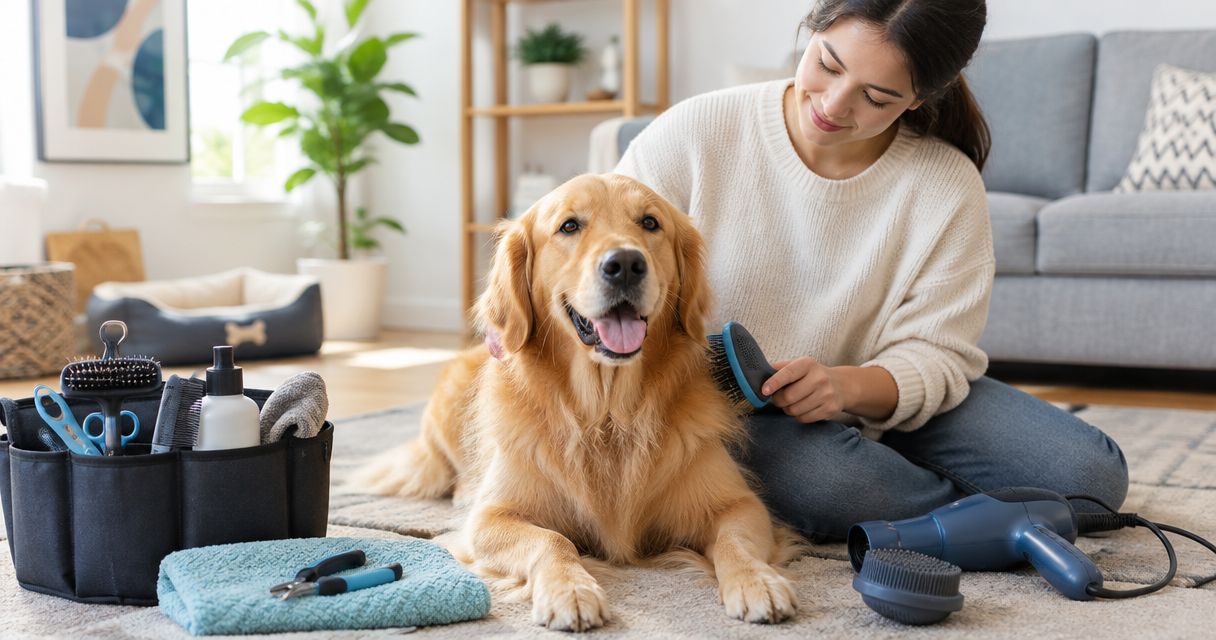
The basics also protect your investment in the dog itself. A slicker brush and a pair of dog-specific nail clippers, used weekly, catch most coat and paw problems before they need a vet trip. Everything past that is about convenience, not necessity.
Build your first-time grooming kit, step by step
Start with the tools every dog needs regardless of breed, then layer in coat-specific and space-specific gear as you learn your dog's habits.
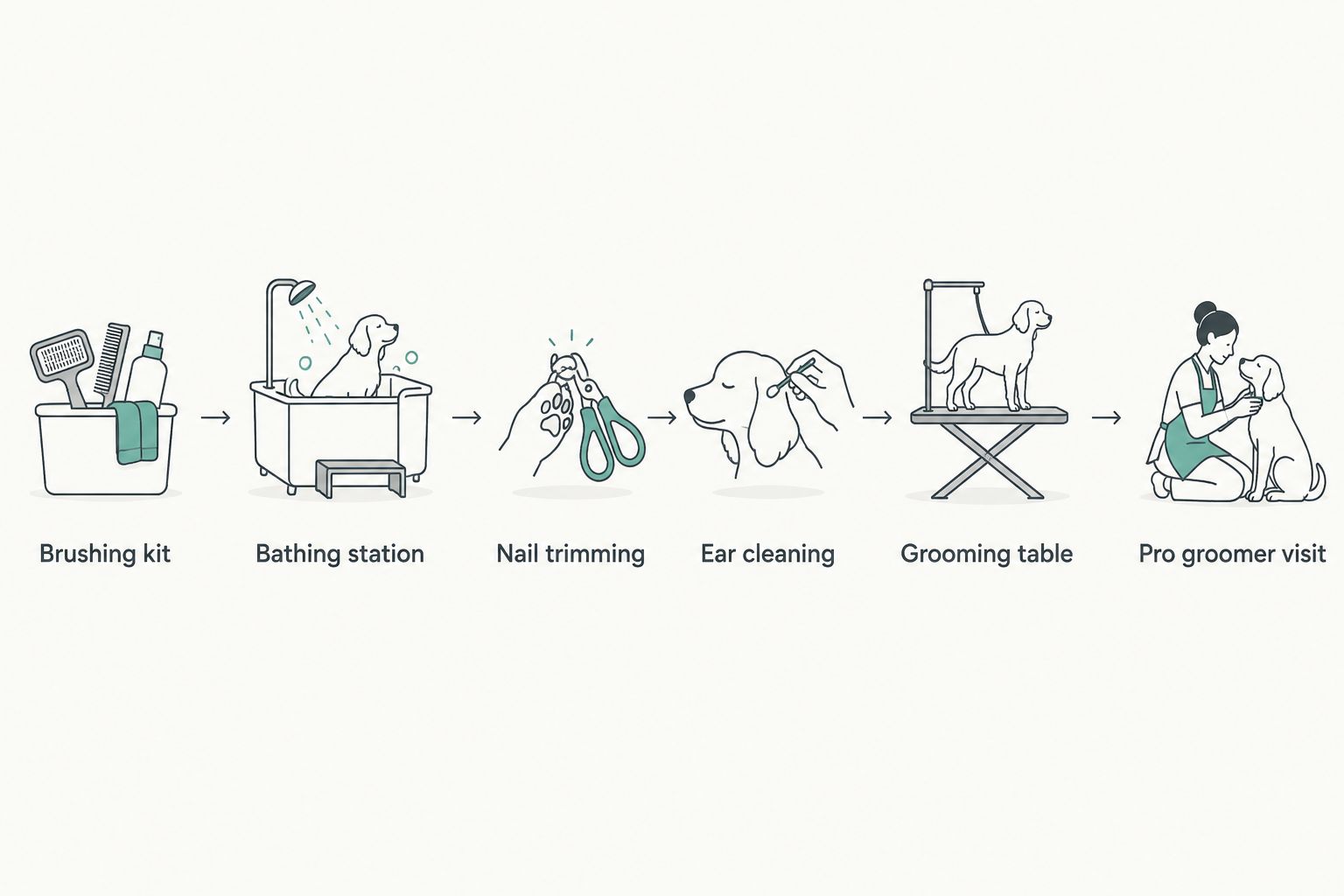
Build your brushing kit first
Brushing is the one grooming task every dog needs, regardless of coat length. The brush type matters more than the brand.
- Slicker brush for short-to-medium coats (Labs, Beagles, mixed breeds)
- Undercoat rake for double-coated breeds (Huskies, Golden Retrievers, Shepherds)
- Bristle brush for smooth, short-haired dogs (Boxers, Pugs)
- Detangling comb for long or curly coats (Poodles, Cocker Spaniels)
- Grooming glove for puppies still learning to tolerate handling
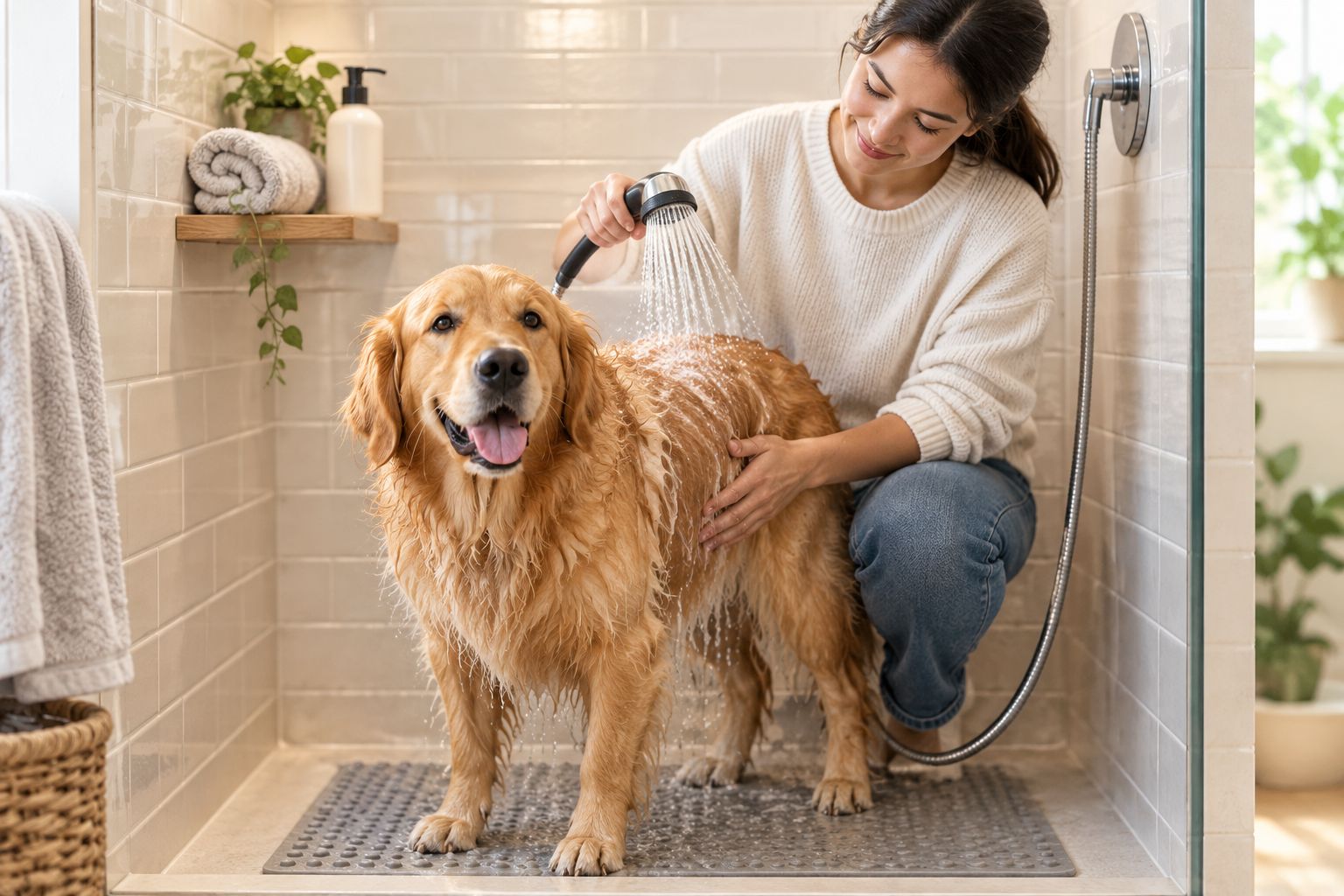
Set up a bathing station before bath day
Don't wait until your dog is muddy to figure out where baths happen. A dedicated setup, even a simple one, keeps bath day from turning into a bathroom flood.
- Non-slip mat for the tub or shower floor
- Handheld sprayer attachment for full rinse coverage
- Tearless, dog-formulated shampoo — never human shampoo, which is too acidic for a dog's skin pH
- Microfiber towels sized for full-body drying
- Cotton balls to keep water out of ear canals during rinsing
A fixed dog bathing station setup turns a 45-minute wrestling match into a 15-minute routine once the dog knows the drill.
Learn nail trimming before you need it
Nail trims are the task most first-time owners dread, and the one dogs remember longest if it goes badly. Start practice trims in puppyhood, around 8 weeks old, even if you only clip one nail at a time.
- Guillotine-style clippers for thin nails on small and medium dogs
- Scissor-style clippers for thick nails on large breeds
- Nail grinder as a quieter alternative for noise-sensitive dogs
- Styptic powder on hand in case you nick the quick
- Treats staged next to the clippers so every trim ends positive
Stock ear and eye cleaning supplies
Ears and eyes get skipped in most beginner kits, which is exactly why they turn into vet visits. Floppy-eared breeds especially need routine checks.
- Dog-specific ear cleaning wipes for weekly wipe-downs
- Cotton balls for spot cleaning around the outer ear
- Tear-stain wipes for light-coated breeds prone to staining
- A drying ear solution for dogs that swim often
Choose a grooming table or non-slip surface
You don't need a professional grooming table in year one. But a fixed, elevated surface makes brushing and nail trims far easier on your back and the dog's patience.
- Rubber-topped grooming table for full brush-outs on double-coated dogs
- Non-slip bath mat repurposed as a floor-level grooming spot for small dogs
- Adjustable-height table if more than one household member does the grooming
- Grooming arm and loop for dogs that squirm during nail trims
A dedicated grooming table matters most for breeds that need frequent brush-outs — it's optional for a short-coated dog that only needs a monthly bath.
Handle dental care from week one
Dental disease shows up faster than most first-time owners expect, sometimes within the first two years without any brushing. Start the habit before it's a fight.
- Dog-safe enzymatic toothpaste (never human toothpaste, which contains xylitol)
- Finger brush for puppies still adjusting to handling
- Dental chews as a supplement, not a replacement, for brushing
- Soft-bristled dog toothbrush sized to the dog's mouth
Know when to call a professional groomer
Some jobs aren't beginner jobs. Expressing anal glands, de-matting a badly tangled coat, or trimming near the eyes on a squirming puppy are better left to someone trained for it.
- Matting close to the skin that pulls when you try to brush through it
- A dog that won't tolerate nail trims even with treats and slow sessions
- Breed-specific cuts (Poodle clips, Schnauzer trims) that need clipper skill
- Signs of skin infection, hot spots, or unusual odor under the coat
Which grooming setup fits your first year with a dog
| Option | Best for | Key limitation |
|---|---|---|
| DIY grooming with basic tools | Budget-conscious owners with short-to-medium coat dogs | Steep learning curve on nail trims and thick coats |
| Home bathing station | Owners bathing weekly or after muddy walks | Needs dedicated bathroom or garage space |
| Grooming table at home | Double-coated or long-haired breeds needing regular brush-outs | One more piece of furniture to store |
| Mobile groomer visit | Owners nervous about a dog's first nail trim or ear plucking | Scheduling depends on availability, rarely same-day |
| Grooming salon appointment | Full-service cuts and de-shedding treatments | Dog needs to tolerate travel and unfamiliar handlers |
Verdict: most first-time owners should start with a $0-to-modest DIY kit — brush, clippers, shampoo — and add a bathing station or grooming table only once the dog's coat and temperament are known.
Build your first grooming kit
Browse beginner-friendly brushes, clippers, and bathing supplies in one place.
Common mistakes first-time dog owners make
- Buying human shampoo. Human skin and dog skin sit at different pH levels; human shampoo dries out a dog's coat and can trigger irritation.
- Skipping nail trims until they click on the floor. By then the quick has grown long, and cuts are more likely to catch the vein.
- Bathing weekly out of anxiety about smell. Over-bathing strips the natural oils that keep a dog's skin from drying out and flaking.
- Using kitchen scissors on paw fur. Regular scissors aren't rounded at the tip and increase the risk of nicking skin between the toes.
- Waiting for ear odor before cleaning. By the time odor shows up, a yeast or bacterial infection is often already established.
FAQ
What grooming supplies does a first-time dog owner actually need in 2026?
A coat-matched brush, dog-specific nail clippers, tearless shampoo, and ear-cleaning wipes cover the essentials for any new dog. Everything past that — a grooming table, a bathing station, a nail grinder — is a convenience upgrade, not a requirement.
How often should a beginner bathe a new dog?
Most adult dogs need a full bath every 4 to 6 weeks unless they roll in something or develop a skin condition. Bathing more often than that strips natural oils and can leave the coat dry and itchy.
Is it safe for a first-time owner to trim nails at home?
Yes, with dog-specific clippers and slow, short sessions starting as early as 8 weeks old. Keep styptic powder on hand for the first few trims in case you nick the quick.
What's the difference between a slicker brush and an undercoat rake?
A slicker brush works fine hair and mild tangles on most coats. An undercoat rake reaches through the topcoat to pull loose dead fur from double-coated breeds during seasonal shedding.
Do puppies need grooming supplies before their first vet visit?
A basic brush and a puppy-safe nail clipper are useful before the first vet visit so the puppy gets used to handling early. Bathing supplies matter less until the puppy is old enough for regular baths.
Should first-time owners use a grooming table at home?
Only if the dog has a double coat or long hair that needs regular brush-outs. Short-coated breeds that just need a monthly bath rarely need one in year one.
When should a first-time owner call a professional groomer instead of DIY?
Call a professional for matting that pulls at the skin, breed-specific clipper cuts, or a dog that won't tolerate nail trims even with slow, treat-based sessions. Anal gland expression is also better left to a groomer or vet.
How much do beginner grooming supplies cost?
Cost varies by brand and how many tools you buy at once; check current listings for exact pricing. A basic four-piece starter kit (brush, clippers, shampoo, ear wipes) is usually the cheapest entry point.
One last thing
The single habit that predicts whether a first-time owner keeps grooming going past month three isn't the gear — it's whether the first nail trim went well. A rushed, restrained first trim teaches a dog to fear the clippers for years; a slow, treat-paced first trim builds tolerance that lasts the dog's life. Buy the tools second. Get the first session right first.
“A rushed first nail trim teaches a dog to fear the clippers for years; a slow one builds tolerance that lasts a lifetime.”