Not every dog dental care kit removes plaque the same way, and picking the wrong one wastes months before you notice your dog's breath hasn't changed. The enzymatic toothpaste and finger brush kit wins dog dental care kits ranked by effectiveness for 2026 because it pairs mechanical scrubbing with chemical plaque breakdown — the two mechanisms veterinary dentists actually rely on. Best for puppies and brush-resistant dogs: dental wipe kits. Best budget, low-effort option: water additive and dental chew combo kits.
- Enzymatic toothpaste and finger brush kits top dog dental care kits ranked by effectiveness in 2026 for daily brushing.
- Dental wipe kits work best for puppies and dogs that won't tolerate a toothbrush.
- Water additive and chew combo kits suit busy owners but don't remove existing tartar.
- Multi-step complete kits fit multi-dog households already showing early buildup.
- Skip any kit with unlabeled paste — xylitol, common in human toothpaste, is toxic to dogs.
Why this matters
An estimated 80% of dogs show signs of periodontal disease by age three, according to the American Veterinary Dental College. Left alone, plaque hardens into tartar within days, and tartar under the gumline leads to tooth loss and, in some cases, infections that reach the bloodstream.
A dog dental care kit is cheaper and less stressful than a professional cleaning under anesthesia, but only if you pick the right mechanism for your dog's tolerance and mouth size. Shop and Bark carries the grooming and hygiene supplies that make a home dental routine possible, and the ranking below breaks down which kit type actually reduces plaque versus which one just smells nice.
What makes the best dog dental care kit
- Mechanical plaque removal — bristles or textured wipes that physically scrub the tooth surface
- VOHC-recognized ingredients — enzymatic pastes and gels formulated to break down plaque chemically, ideally aligned with Veterinary Oral Health Council standards
- Dog tolerance — a kit only works if the dog will hold still for it more than once
- Size-appropriate design — a finger brush built for a Chihuahua does nothing for a Mastiff's molars
- Ingredient safety — no xylitol, no artificial sweeteners built for human mouths
- Routine fit — daily use beats an occasional deep clean, so ease of use outranks intensity
Dog dental care kits at a glance
| Kit type | Best for | Standout feature | Key limitation |
|---|---|---|---|
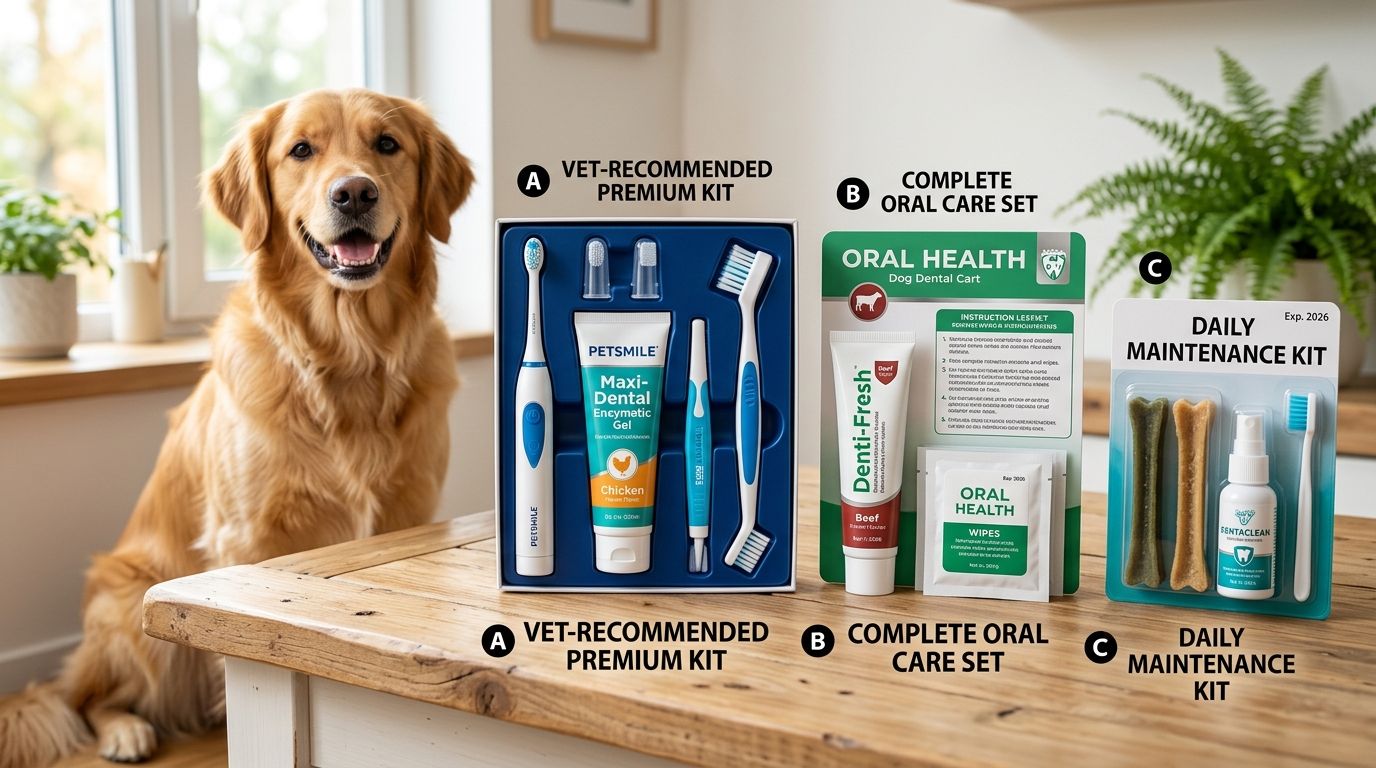
| Enzymatic toothpaste + finger brush | Daily brushing habit | Combines mechanical + chemical plaque control | Requires the dog to tolerate a finger in the mouth |
| Long-handled dual-head brush + gel | Large and giant breeds | Reaches back molars without finger contact | Learning curve for dogs new to brushing |
| Dental wipe kit | Puppies and brush-resistant dogs | No bristles, fastest to introduce | Doesn't reach below the gumline |
| Water additive + chew combo | Busy owners, maintenance only | Zero handling required daily | Doesn't remove tartar already present |
| Multi-step complete kit | Multi-dog households, early buildup | Covers brushing, wipes, and additive in one system | Takes more time to run the full routine |
1. Enzymatic toothpaste + finger brush kit: best dog dental care kit for daily brushing
This is the combination veterinary dentists recommend first because it does two things at once — the silicone finger brush physically dislodges soft plaque, and the enzymatic paste (typically built on a glucose oxidase or lactoperoxidase system) keeps breaking down bacteria between brushings. It's the closest at-home equivalent to what a hygienist does with a human patient.
Enzymatic toothpaste and finger brush kit pros:
- Removes plaque mechanically and chemically in one session
- Fits small mouths and puppies learning the routine
- Low cost per use since a tube lasts weeks
Enzymatic toothpaste and finger brush kit cons:
- Some dogs bite down on the finger brush before they get used to it
- Not enough surface area for molars on large breeds
- Needs daily consistency to show results within a few months
Best for: owners starting a brushing habit from scratch, especially with puppies or small breeds. Verdict: Buy.
2. Long-handled dual-head brush + gel kit: best dog dental care kit for large and giant breeds
A long handle with an angled, dual-sided brush head gets into the back molars where tartar builds up fastest on bigger dogs. Pair it with an enzymatic gel instead of a finger brush and you get the reach that small tools can't provide.
Long-handled brush and gel kit pros:
- Covers molars and premolars a finger brush can't reach
- Keeps your fingers out of a large dog's mouth
- Dual heads mean fewer passes per session
Long-handled brush and gel kit cons:
- Dogs unfamiliar with brushing often resist the handle more than a finger
- Bulkier to store and travel with
- Takes longer per session than a wipe or additive
Best for: Labradors, German Shepherds, Mastiffs, and other large breeds with more tooth surface to cover. Verdict: Buy.
3. Dental wipe kit: best dog dental care kit for puppies and brush-resistant dogs
Textured wipes soaked in an enzymatic or antibacterial solution let you introduce dental care without a brush at all. For puppies still teething, or adult dogs with a hard no on anything resembling a toothbrush, wipes are the entry point that keeps the routine going instead of abandoned in a drawer.
Dental wipe kit pros:
- Fastest kit type to introduce to a nervous or new dog
- No bristles means less risk of gum irritation on sensitive mouths
- Doubles as a quick check of gum color and breath between full brushings
Dental wipe kit cons:
- Doesn't reach below the gumline where tartar actually forms
- Less effective alone on dogs already showing tartar buildup
- Needs pairing with a brush kit eventually for full effectiveness
Best for: puppies, seniors with sensitive gums, and any dog that shuts down at the sight of a toothbrush. Verdict: Buy as a starting point, not a standalone long-term solution.
4. Water additive + dental chew combo kit: best dog dental care kit for busy owners
No handling, no restraint, no fighting a dog for two minutes a day — you pour the additive into the water bowl and hand over a chew. It's the lowest-effort option in this dog dental care kits ranked by effectiveness comparison, and that's exactly why it's the most sustainable one for owners who know they won't brush daily.
Water additive and chew combo kit pros:
- Zero daily handling required
- Chews double as enrichment, not just dental care
- Works alongside any other kit type without conflict
Water additive and chew combo kit cons:
- Does not remove tartar that's already hardened
- Chews add calories, which matters for dogs already managing weight
- Effectiveness depends heavily on how much water the dog actually drinks
Best for: owners who've tried brushing and know it won't stick, or as a maintenance layer on top of brushing. Verdict: Hold — pair it with mechanical brushing rather than relying on it alone.
5. Multi-step complete kit: best dog dental care kit for multi-dog households
This bundles a brush, paste, wipes, and a water additive into one system, built for owners managing more than one dog's routine or a dog already showing early tartar. It's the most thorough option and the one with the steepest time commitment.
Multi-step complete kit pros:
- One system covers every plaque-control mechanism at once
- Cost-efficient per component versus buying each piece separately
- Flexible — skip the brush on bad days and lean on wipes or additive instead
Multi-step complete kit cons:
- Running the full routine daily takes real time across multiple dogs
- More components to keep stocked and replace
- Overkill for a single dog with clean teeth and no tartar history
Best for: households with two or more dogs, or a dog whose vet has already flagged early tartar. Verdict: Buy if you're managing more than one mouth; Skip if you have one dog with a clean bill of dental health.
How we ranked these
Ranking weighted mechanical plaque removal and VOHC-aligned chemical action highest, since those two mechanisms are what actually slow periodontal disease per veterinary dental guidance. Dog tolerance came second — a kit with perfect ingredients that a dog refuses to use is a kit sitting unused by week two. Size-appropriate design and ingredient safety (specifically the absence of xylitol) were treated as pass/fail filters, not tiebreakers.
“A dental kit only works on the days you actually use it — tolerance beats ingredients every time.”
Which dog dental care kit should you choose?
Start with the enzymatic toothpaste and finger brush kit if your dog is a puppy or has never had its teeth brushed — it's the highest-effectiveness option and the easiest to build into a routine in 2026. Move to a long-handled brush and gel kit once your dog tolerates handling and needs more coverage on molars. If brushing simply isn't happening, a dental wipe kit paired with a water additive and chew combo keeps some plaque control going without the fight. Multi-dog households or dogs with existing tartar do best with the multi-step complete kit, run consistently rather than perfectly.
Shop and Bark's home grooming supplies lineup covers the brushes, wipes, and grooming tools that support a dental routine alongside general coat care. For dogs that get anxious during handling of any kind, including brushing, the calming chews for anxious dogs guide covers options that can make the whole session easier.
Build your dog's dental routine
Browse grooming and hygiene supplies for daily dental care.
FAQ
What's the best dog dental care kit for 2026?
The enzymatic toothpaste and finger brush kit ranks highest for effectiveness in 2026 because it combines mechanical scrubbing with chemical plaque breakdown. It's the easiest full-mechanism option to introduce to puppies and first-time brushers.
Is a dental wipe kit as effective as brushing?
No, dental wipes don't reach below the gumline where tartar actually forms. They work well as an entry point for puppies or brush-resistant dogs, but should transition to a brush kit over time.
How often should I use a dog dental care kit?
Veterinary dental guidance recommends brushing at least three times a week, with daily brushing producing the best plaque control. Water additives and chews can run daily alongside a brushing schedule.
Can I use human toothpaste in a dog dental kit?
No. Human toothpaste often contains xylitol, which is toxic to dogs, so any dental kit paste must be labeled specifically for dogs. Always check the ingredient label before use.
Do water additives actually remove tartar?
Water additives help slow new plaque formation but do not remove tartar that has already hardened on the tooth. They work best as a maintenance layer alongside brushing, not a replacement for it.
What dental kit works best for puppies?
Dental wipe kits are the easiest starting point for puppies since there are no bristles to get used to. Introduce a finger brush kit once the puppy tolerates handling around the mouth.
Are multi-step dental kits worth it for one dog?
A multi-step complete kit is generally overkill for a single dog with no tartar history. It makes more sense for multi-dog households or a dog whose vet has already flagged early buildup.
How do I know if my dog's dental kit is working?
Breath improvement and visibly cleaner teeth near the gumline within four to six weeks of consistent use are the clearest signs. If tartar persists past that window, a veterinary cleaning may be needed before the kit can make progress.
One last thing
Check the label on the paste before you check the brush — xylitol shows up in some human toothpaste and is toxic to dogs, so any dental kit paste needs to say explicitly "for dogs." It's the one ingredient check that matters more than which kit type you pick.