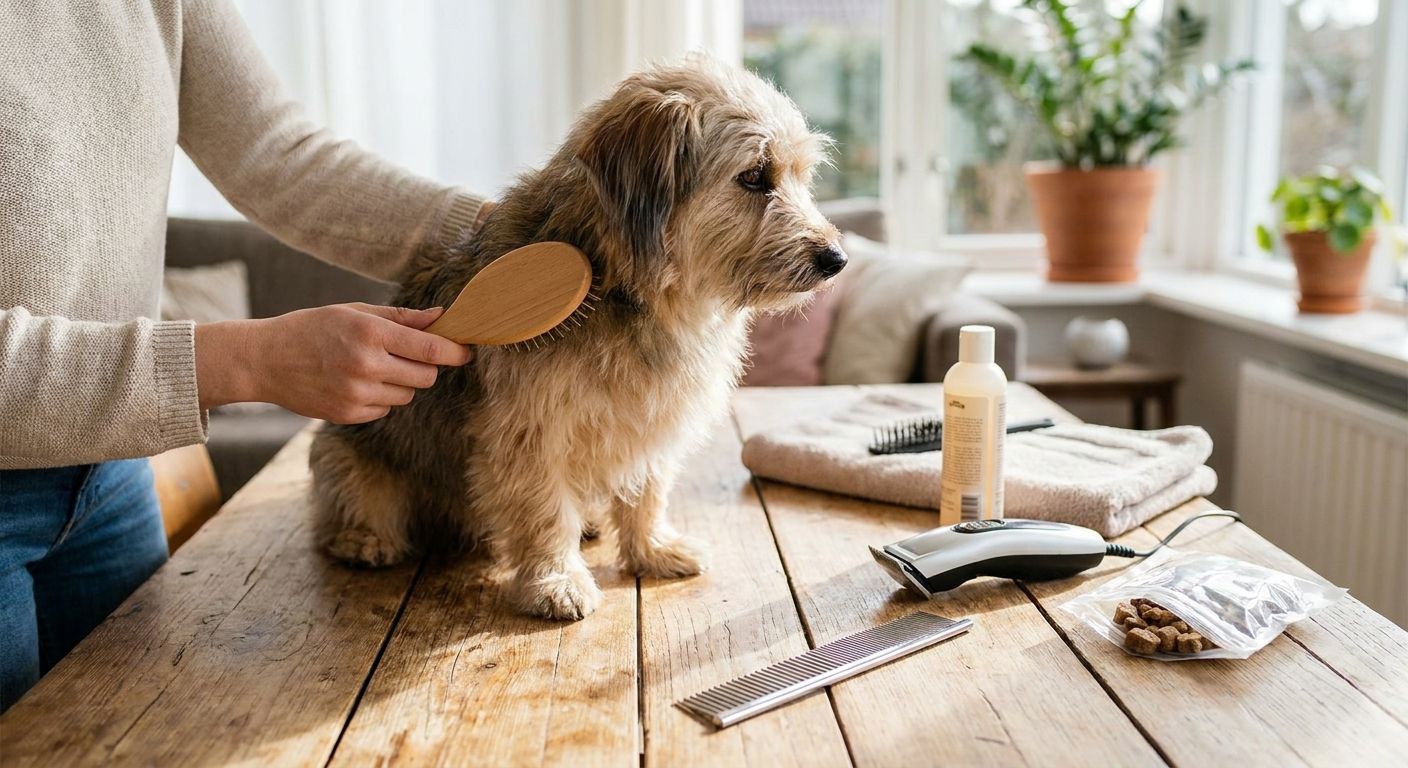
Home grooming in 2026 replaces a $60-plus salon appointment with a routine you control on your own schedule. Best overall: a slicker brush. Best for double-coated shedders: an undercoat rake. Best for nail-trim anxiety: a dog nail grinder.
- The best dog grooming supplies for home grooming in 2026 start with a slicker brush and undercoat rake combo.
- A dog nail grinder beats clippers for anxious dogs by filing nails gradually instead of cutting in one motion.
- Double-coated breeds blow their coat twice a year — an undercoat rake handles that volume, a slicker brush can't.
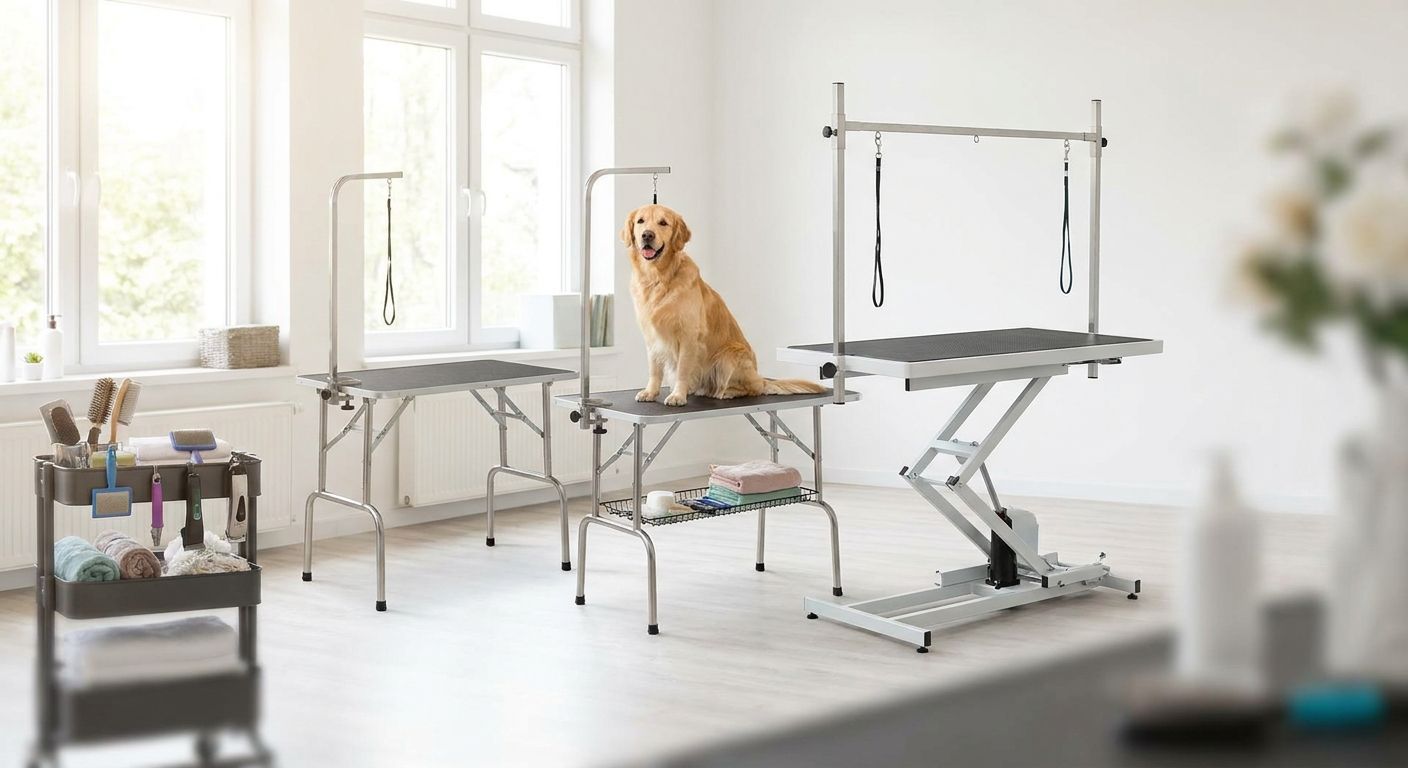
- A grooming table with an arm turns a squirming 60-pound dog into a still one in under a minute.
- Ear cleaning solution only matters weekly for floppy-eared breeds — upright-eared dogs need it far less.
Why this matters
A dog that hates the groomer's table isn't being dramatic — clippers are loud, nail trims hurt when the quick gets nicked, and a 20-minute session with a stranger is stressful for a lot of dogs. Home grooming, done with the right tools for the right job, removes most of that friction.
Shop and Bark carries every category on this list, from brushes to ear solution, if you'd rather build a full grooming kit in one order instead of piecing it together across three retailers.
The mistake most owners make isn't skipping grooming — it's buying one tool and expecting it to do every job. A slicker brush can't deshed a Husky in March, and clippers aren't the safe choice for a dog that panics at nail trims. Match the tool to the task and the whole routine gets faster.
What makes the best dog grooming supplies for home grooming
- Coat-type match — double coat, single coat, wire coat, and curly coat all need different tools
- Safety features — grinder guard rings, rounded shear tips, quiet clipper motors
- One-person usability — does it need a second set of hands to hold the dog still
- Durability — rust-resistant metal teeth, replaceable blades, motor life
- Noise level — a loud motor is the single biggest reason dogs bolt mid-session
- Coverage of a full routine — brushing, trimming, ears, and nails, not just one task
At a glance
| Supply | Best for | Standout feature | Key limitation |
|---|---|---|---|
| Slicker brush | Daily coat maintenance & de-matting | Fine bent wires pull loose fur without cutting skin | Doesn't reach dense undercoat |
| Undercoat rake | Heavy-shedding double-coated breeds | Two rows of pins cut through blown undercoat fast | Too aggressive for thin, single coats |
| Dog nail grinder | Anxious dogs & precision trims | Files gradually, near-zero quick-cutting risk | Motor noise takes weeks to tolerate |
| Cordless clippers | Full-body trims between salon visits | No cord to manage around a moving dog | Blades dull faster on matted coats |
| Grooming table with arm | Controlling wriggly or large dogs | Frees both hands for the tool | Takes up permanent floor space |
| Ear cleaning solution | Preventing infections in floppy ears | Breaks down wax before it traps moisture | Needs weekly use, not one-time |
| Grooming shears | Finishing paws, face & sanitary areas | Rounded tips safer near skin | Slowest tool for full-body work |
1. Slicker brush: best dog grooming supply for daily coat maintenance
A slicker brush uses fine, slightly bent wire pins set in a flat pad to pull loose hair and break up small mats before they turn into skin-pulling knots. Run it in the direction of hair growth for 5-10 minutes and most single- or medium-coated dogs stay tangle-free between full sessions.
Slicker brush pros:
- Works on nearly every coat type except very short, smooth coats
- Cheapest entry point into home grooming supplies
- Doubles as a daily check for ticks, burrs, and skin issues
Slicker brush cons:
- Misses the dense undercoat on double-coated breeds
- Wire pins can scratch skin if pressed too hard on thin coats
Best for: dogs with medium, wavy, or curly coats that mat easily. Verdict: Buy.
2. Undercoat rake: best for double-coated shedders
An undercoat rake carries two rows of curved metal pins spaced to slide past the topcoat and grab the dense undercoat underneath. Double-coated breeds like Huskies, Labs, and German Shepherds blow their coat twice a year, and a slicker brush alone can't keep up with that volume.
Undercoat rake pros:
- Pulls out large amounts of loose undercoat in a single session
- Cuts visible shedding on floors and furniture fast during peak weeks
- Speeds up grooming time noticeably during blowout season
Undercoat rake cons:
- Too aggressive for short-haired or single-coated dogs
- Requires a gentler hand on thin-coated or elderly dogs
Best for: double-coated shedders during spring and fall blowouts. Verdict: Buy.
3. Dog nail grinder: best for nail-trim anxiety
A nail grinder files the nail down in small passes instead of cutting it in one motion, which makes it the safer pick for dogs that flinch at clippers. It also smooths sharp edges clippers leave behind, so there's less scratching on skin or floors afterward.
Dog nail grinder pros:
- Near-zero risk of cutting the quick compared with clippers
- Rounds and smooths nail edges in the same pass
- Handles thick, overgrown nails that dull clipper blades
Dog nail grinder cons:
- Motor noise spooks some dogs for the first few sessions
- Slower than clippers for four paws' worth of nails in one sitting
Best for: dogs with nail-trim anxiety or nails too thick for standard clippers. Verdict: Buy. Pair it with a calming chew beforehand for a dog that startles at the motor.
4. Cordless dog clippers: best for full-body trims
Cordless clippers handle full-body trims for breeds that need regular haircuts — Poodles, Doodles, Schnauzers — without a cord tangling around a dog that won't hold still. A guard comb lets you set the length once and repeat it every 4-6 weeks.
Cordless clippers pros:
- No cord to manage during an already squirmy session
- Interchangeable guard combs cover multiple lengths with one tool
- Faster than scissors for covering a whole body
Cordless clippers cons:
- Blades dull faster on thick, matted, or wet coats
- Battery life limits back-to-back sessions on multiple dogs
Best for: breeds on a 4-6 week haircut schedule. Verdict: Buy if your breed needs regular cuts; Skip if your dog only sheds and never needs a haircut.
5. Grooming table with arm: best for controlling wriggly or large dogs
A grooming table with a raised arm and noose holds a dog at a comfortable working height, which matters more than any brush or clipper once the dog weighs over 40 pounds. It frees both your hands for the tool instead of one hand holding the dog still.
Grooming table pros:
- Frees both hands for brushing, clipping, or nail work
- Raised height saves your back compared with grooming on the floor
- Non-slip surface keeps a nervous dog from sliding and panicking
Grooming table cons:
- Takes up permanent floor space in a small home
- Overkill for a single small, cooperative lapdog
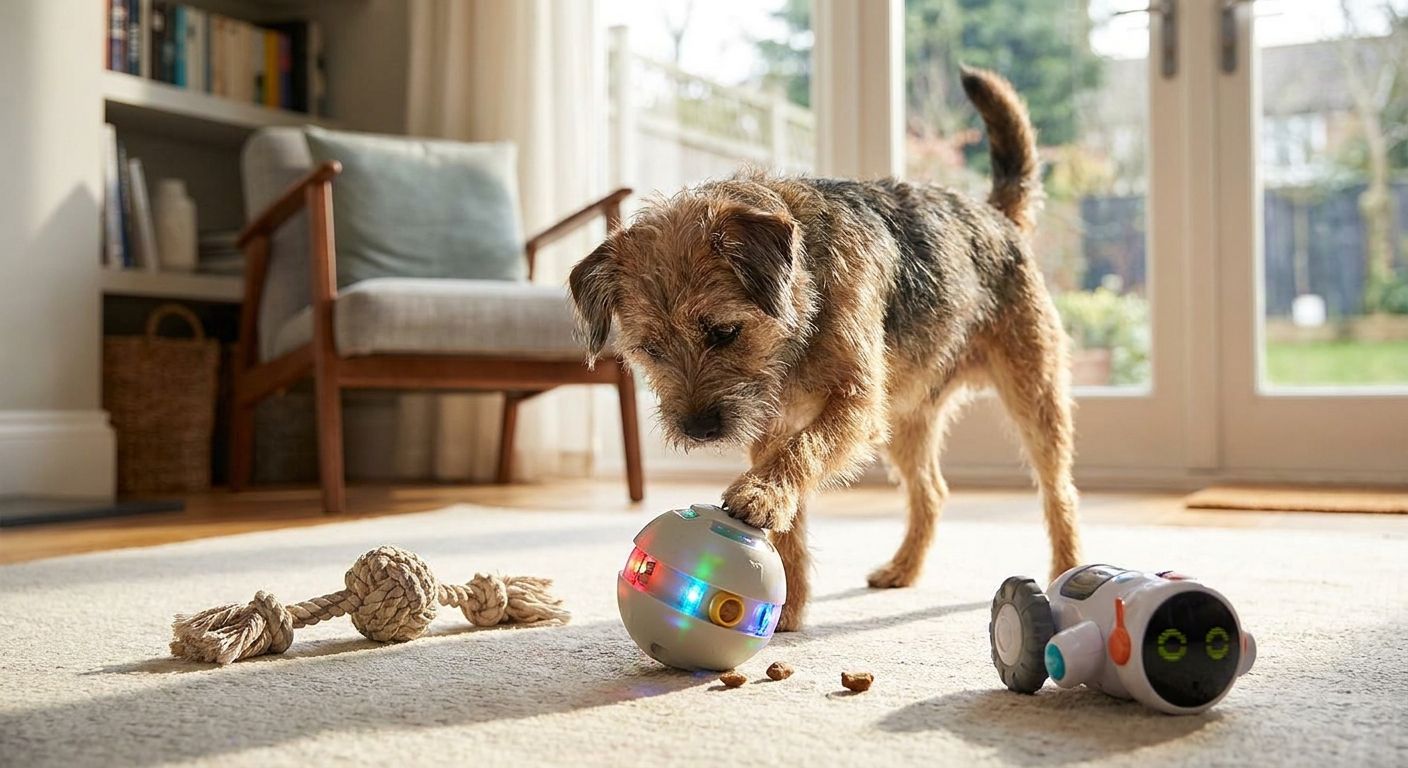
Best for: large or wriggly dogs, and households grooming more than one dog. Verdict: Buy for large-breed households; Wait if you own one calm, small dog. Keep an interactive toy nearby to reward stillness between passes.
6. Ear cleaning solution: best for preventing infections in floppy ears
An ear cleaning solution breaks down wax and debris before it traps moisture, which is the main driver of ear infections in floppy-eared breeds like Cocker Spaniels and Basset Hounds. Applied weekly with cotton pads, it's a preventive step, not a treatment for an infection already underway.
Ear cleaning solution pros:
- Cheap, fast preventive step that fits into a normal brushing session
- Reduces odor common in floppy-eared breeds
- Works alongside every other tool on this list with no learning curve
Ear cleaning solution cons:
- Needs consistent weekly use to actually prevent problems
- Doesn't replace a vet visit once an infection has set in
Best for: floppy-eared breeds and dogs that swim or bathe often. Verdict: Buy.
7. Grooming shears: best for finishing paws, face, and sanitary areas
Grooming shears with rounded, blunt tips handle the close work clippers and brushes can't — trimming hair around paw pads, eyes, and sanitary areas without risking a nick. They're slower than clippers for full-body work, which is why they're a finishing tool, not a primary one.
Grooming shears pros:
- Rounded tips make close work near skin and eyes safer
- Cleans up paw pad hair that causes slipping on hard floors
- Precise enough for touch-ups between full sessions
Grooming shears cons:
- Slowest tool on this list for covering a whole coat
- Requires a steadier hand than a guarded clipper
Best for: finishing touches around paws, face, and sanitary areas. Verdict: Buy as a companion tool, not a standalone one.
How we ranked
Each supply above earns its slot for solving one grooming task better than a general-purpose alternative — a slicker brush for daily upkeep, an undercoat rake for shed season, a nail grinder for anxious paws, clippers for full trims, a table for control, ear solution for prevention, and shears for finish work. None of them compete for the same job, so a full at-home kit means picking one from each category rather than picking a single winner.
Which dog grooming supplies should you choose?
Start with a slicker brush and an undercoat rake — those two cover most of a normal week's grooming for most coat types in 2026. Add a nail grinder next if trims are a fight, then a grooming table once your dog outgrows lap-grooming. Ear cleaning solution and shears round out a full kit but aren't the first purchase for a dog that's never had an ear infection or a matted paw.
Stock your home grooming kit
Shop grooming supplies built for the tools ranked above.
FAQ
What are the best dog grooming supplies for home grooming in 2026?
The best dog grooming supplies for home grooming in 2026 are a slicker brush, an undercoat rake, a nail grinder, cordless clippers, a grooming table, ear cleaning solution, and grooming shears. Together they cover brushing, deshedding, nail trims, cuts, and ear care without a salon visit.
Is a nail grinder better than clippers for dogs?
A nail grinder is safer for dogs that flinch at clippers because it files the nail down gradually instead of cutting it in one motion, nearly eliminating the risk of hitting the quick. Clippers are faster once a dog tolerates nail trims, so many owners keep both tools.
How often do double-coated dogs need deshedding?
Double-coated breeds blow their undercoat twice a year, typically spring and fall, and need an undercoat rake several times a week during those stretches. Outside shedding season, a slicker brush once or twice a week is usually enough.
Do I need a grooming table for home grooming?
A grooming table isn't required for a small, cooperative dog, but it's close to essential for large or wriggly breeds because it frees both your hands for the tool. Anyone grooming more than one dog gets more value from a table too.
How often should I clean my dog's ears at home?
Floppy-eared breeds like Cocker Spaniels and Basset Hounds benefit from weekly ear cleaning to prevent moisture buildup, while upright-eared breeds often only need it monthly. Ear cleaning solution is a preventive step, not a treatment for an existing infection.
What's the difference between a slicker brush and an undercoat rake?
A slicker brush uses fine bent wires to pull loose surface hair and small mats, while an undercoat rake uses two rows of longer pins to reach the dense undercoat underneath. Single-coated dogs usually only need a slicker brush; double-coated dogs need both.
Can home grooming supplies fully replace professional grooming?
A slicker brush, undercoat rake, nail grinder, and clippers cover most maintenance grooming at home, but breeds needing precise breed-standard cuts often still need occasional professional shaping. Home tools handle the upkeep between those visits.
One last thing
The fastest place for a mat to form unnoticed isn't the ears or the belly — it's between the toes, hidden under paw fur where owners rarely check. Run a slicker brush or shears through that spot every session in 2026, even on weeks the rest of the coat looks fine.