Six types of home dog bathing stations solve six different problems, and picking the wrong one means you're either kneeling over a bathtub for 20 minutes or storing a giant basin you never use. This guide ranks them by drainage, floor space, dog size ceiling, and cleanup time so you match the station to your actual bathroom and your actual dog.
- Best overall: elevated grooming tub with ramp, for multi-dog households doing DIY grooming at home in 2026.
- Best for apartments: portable folding bath tub, zero permanent footprint.
- Best for large or muddy dogs: outdoor hose-end bathing station, no water-volume limit.
- Best budget pick: inflatable travel dog bath, cheapest entry point but not a primary station.
- Best for puppies: utility sink station, drains instantly and works for dogs under 20 lbs.
Why this matters
A bathing station isn't a luxury item once you own more than one dog or a dog that gets muddy weekly. The wrong pick either wastes your floor space or wastes your back, and most owners find that out after buying the wrong one. Shop and Bark's dog care catalog covers the shampoos, sprayers, and towels that pair with any of the six station types below, but the station itself is the decision that determines whether bath day takes 15 minutes or 45.
The six categories below cover every realistic home setup in 2026: apartments with no yard, houses with a mudroom, and everything between. None of them are interchangeable — a station built for a 12-pound terrier will not hold an 80-pound Lab, and a station built for yard washdowns does nothing for a renter with no outdoor faucet.
What makes the best dog bathing station
- Drainage — does water leave the station on its own, or do you bail it out by hand
- Dog size ceiling — the largest breed the walls, ramp, or basin can actually contain
- Floor space — permanent footprint versus fold-flat storage
- Cleanup time — minutes from wet dog to dry floor
- Cost of entry — upfront price versus plumbing or installation work
- Renter-friendliness — whether it requires drilling, plumbing changes, or a dedicated room
Dog bathing stations at a glance
| Station type | Best for | Standout feature | Key limitation |
|---|---|---|---|
| Elevated grooming tub with ramp | Multi-dog households, DIY grooming | Counter-height basin with drain hookup | Needs plumbing or drain hose |
| Portable folding bath tub | Apartments, small spaces | Folds flat for closet storage | Wall height struggles past 60 lbs |
| Outdoor hose-end station | Large or muddy dogs, yard access | Unlimited water volume | Weather and cold-water dependent |
| Walk-in shower converter | Owners already bathing in the tub | No new plumbing needed | Still requires kneeling |
| Inflatable travel bath | Budget buyers, travel, vet prep | Packs to the size of a towel | Punctures on gravel, no drain hose |
| Utility sink station | Puppies, small breeds | Already plumbed, drains instantly | Too small for medium/large dogs |
1. Elevated grooming tub with ramp: best for multi-dog households
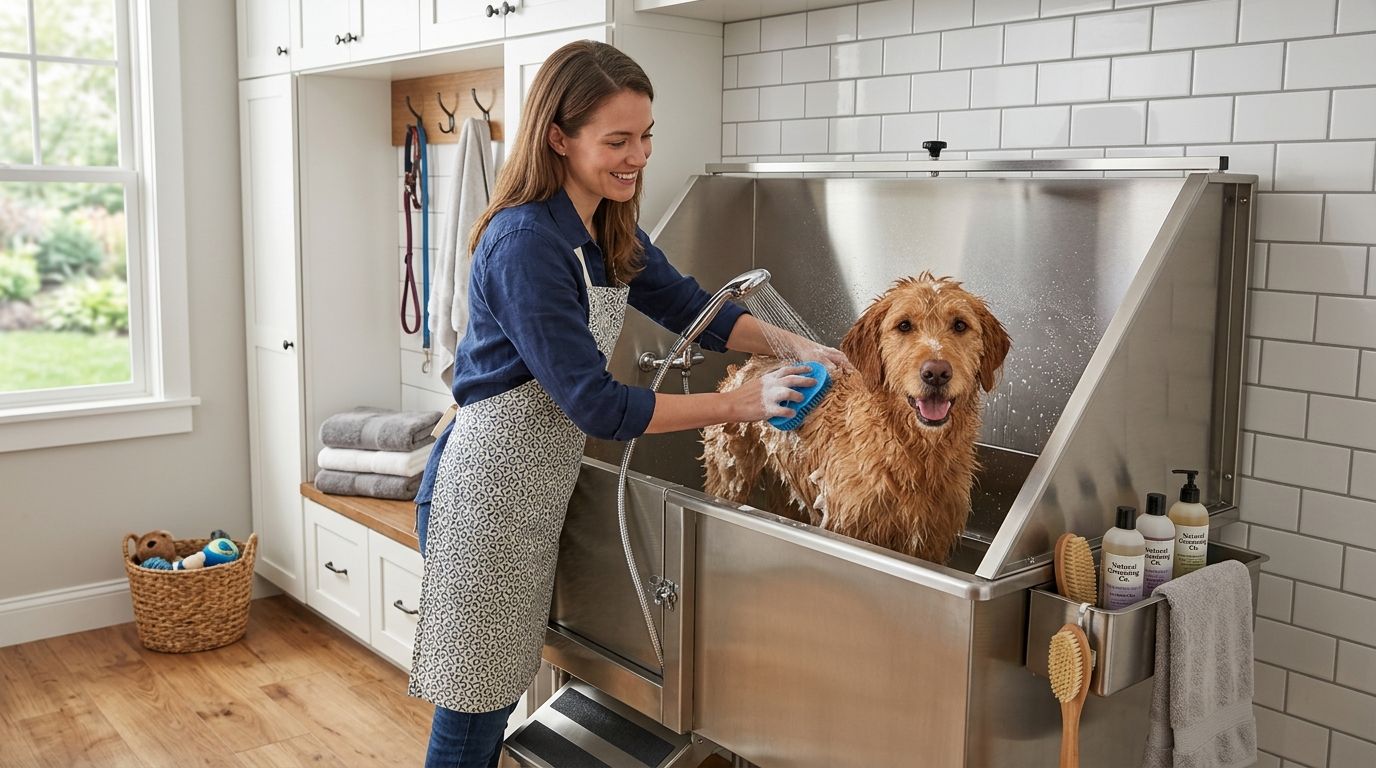
This is a raised basin, usually with a non-slip ramp, a sprayer hose, and a hookup to a floor or utility drain. It sits at counter height so you're standing instead of kneeling, and it holds enough water for a full lather-and-rinse cycle without refilling.
Elevated grooming tub pros:
- Saves your back across back-to-back baths for multiple dogs
- Contains splash better than a floor-level tub
- Pairs with a full grooming session — shampoo, brush-out, nail trim
- Handles medium and large breeds without the wall height failing
Elevated grooming tub cons:
- Requires either existing plumbing or a drain hose run to a floor drain
- Takes permanent floor space, which rules it out for most renters
- Higher upfront setup effort than any other option on this list
If you're already stocking shampoo, detangling spray, and brushes from the grooming supplies for home grooming lineup, this station is the one that makes a full grooming session worth the setup. Best for: households with two or more dogs, or anyone grooming at home instead of paying for a groomer visit. Verdict: Buy.
2. Portable folding bath tub: best for apartments and small spaces
This is a collapsible-walled tub that sets up inside a real bathtub or shower pan and folds flat for storage between uses. It's the closest thing to a dedicated bathing station that doesn't require a dedicated room.
Folding bath tub pros:
- Zero permanent footprint — fits in a closet or under a bed
- Cheap relative to any plumbed station
- Travels well for pet-sitting or a family visit
Folding bath tub cons:
- Wall height struggles once a dog crosses 60 lbs
- Seams can leak if the tub is folded while still damp with soap residue
If floor space is already the deciding factor in your home, the same logic behind picks in the crate furniture for small apartments guide applies here — anything that doesn't fold flat is a liability in a one-bedroom. Best for: renters and small-space owners with dogs under 60 lbs. Verdict: Buy for renters, Skip if you own a large breed.
3. Outdoor hose-end bathing station: best for large or muddy dogs
This setup attaches a sprayer nozzle and a shampoo reservoir directly to an outdoor hose, sometimes mounted to a deck rail or fence post. There's no basin at all — the yard or driveway is the containment area.
Outdoor hose-end pros:
- No water-volume limit, which matters for double-coated or large breeds
- Fastest cleanup for mud and dirt after a hike or a muddy yard
- Works for dogs that panic in enclosed spaces
Outdoor hose-end cons:
- Weather-dependent — cold months mean cold water unless you run a heated line
- No control over runoff near flower beds or a shared yard
Best for: large-breed or double-coated dogs with regular yard access. Verdict: Buy if you have outdoor faucet access, Skip entirely for apartment dwellers.
4. Walk-in shower converter: best for owners who already bathe in the tub
This is a non-slip mat paired with a sprayer head that clips onto the existing shower arm or tub spout, sometimes with a suction-cup barrier to keep the dog in the wet zone. It's the lowest-effort upgrade to a bathroom you already use for dog baths.
Shower converter pros:
- Cheapest entry point of any plumbed option
- No new plumbing or drilling required
- Works immediately with an existing bathroom
Shower converter cons:
- Still requires kneeling or bending over the tub edge
- Small dogs can slip past the suction barrier
- Splash still reaches the bathroom floor without a raised lip
If your dog needs brushing and nail trims in the same session, compare this against a full setup in the grooming tables ranked by price guide before committing. Best for: owners with an existing tub who bathe dogs less than twice a month. Verdict: Hold — fine as a starter setup, worth upgrading once bath frequency climbs.
5. Inflatable travel dog bath: best budget option
This is a PVC inflatable basin that packs down to roughly the size of a rolled towel and inflates with a hand pump. It exists for travel and low-cost entry, not as a daily-use station.
Inflatable bath pros:
- Lowest cost of entry on this list
- Packs flat for travel or vet-visit prep
- Doubles as a puppy pool in warm months
Inflatable bath cons:
- Punctures on gravel or from a dog's own claws
- No drain hose, so water gets bailed out by hand
- Wobbles under dogs over 40 lbs
Best for: budget buyers, travel, or occasional use rather than a weekly routine. Verdict: Buy as a backup station, Skip as your only one.
6. Utility sink station: best for puppies and small breeds
This repurposes an existing laundry or utility sink, usually with a slip-on sprayer attachment. It's already plumbed in most homes, which makes it the fastest station to set up from scratch.
Utility sink pros:
- Already plumbed — no installation cost
- Drains instantly, no standing water
- Counter height works well for puppies and toy breeds
Utility sink cons:
- Too small for medium or large breeds
- Shared laundry space gets messy fast
- Hard water stains build up on porcelain over time
Best for: puppies and dogs under 20 lbs. Verdict: Buy if the sink already exists, Skip if you'd have to install one just for this.
Gear Up For Bath Day
Shampoo, detangling spray, and brushes for whichever station you pick.
How we ranked these
Each station was measured against the six criteria above: drainage, dog size ceiling, floor space, cleanup time, cost of entry, and renter-friendliness. No station wins on all six — the elevated grooming tub loses on renter-friendliness what it gains on drainage and size ceiling, and the inflatable bath loses on drainage what it gains on cost. That trade-off is the actual decision, not a single best-in-class winner.
Which dog bathing station should you choose in 2026?
For most households with more than one dog, the elevated grooming tub with ramp is the 2026 default — it's the only station built for repeat use across multiple dogs without kneeling. Renters and apartment owners should default to the portable folding bath tub instead, since it adds zero permanent footprint. Large-breed owners with yard access get the most value from the outdoor hose-end station, and anyone testing the waters before committing to a full setup should start with the walk-in shower converter.
“If your dog bolts before the rinse cycle is done, the station is wrong for your space, not your dog.”
FAQ
What are the best dog bathing stations for home use in 2026?
The elevated grooming tub with ramp wins overall for multi-dog households, the portable folding bath tub wins for apartments, and the outdoor hose-end station wins for large or muddy dogs. The right pick depends on floor space and dog size more than budget.
Is an elevated grooming tub worth it for one dog?
It's worth it if you're grooming at home regularly rather than paying for professional visits. For occasional baths on a single small dog, a folding tub or utility sink handles the job with far less setup.
Can I use a walk-in shower converter for a large dog?
Yes, since it uses your existing tub or shower, but you'll still be kneeling or bending, which is the main trade-off versus a raised station.
How often should I bathe my dog?
Most veterinarians recommend bathing a healthy adult dog every four to six weeks unless they get visibly dirty sooner. Dogs with skin conditions may need a different schedule set by a vet.
Do inflatable dog baths work for large breeds?
Not reliably. Inflatable baths start to wobble and lose shape once a dog crosses roughly 40 lbs, which makes them a backup or travel option rather than a primary station.
What drains the fastest, a utility sink or a grooming tub?
A utility sink drains instantly since it's already plumbed into the house. A grooming tub drains just as fast but only once it's connected to a drain hose or floor drain.
Are outdoor bathing stations usable in winter?
Only with a heated water line. Standard hose-end stations run cold water, which most dogs and owners avoid once temperatures drop.
What's the cheapest dog bathing station to set up?
The inflatable travel bath and the walk-in shower converter are the two lowest-cost entry points, since neither requires new plumbing or a permanent fixture.
One last thing
Most vets recommend bathing a healthy adult dog every four to six weeks — bathe more often and you strip the natural oils that keep skin from drying out. That schedule is exactly why the station matters more than the shampoo: a setup that takes 45 minutes of kneeling gets skipped, and a skipped bath schedule is worse for a dog's coat than almost any product choice.