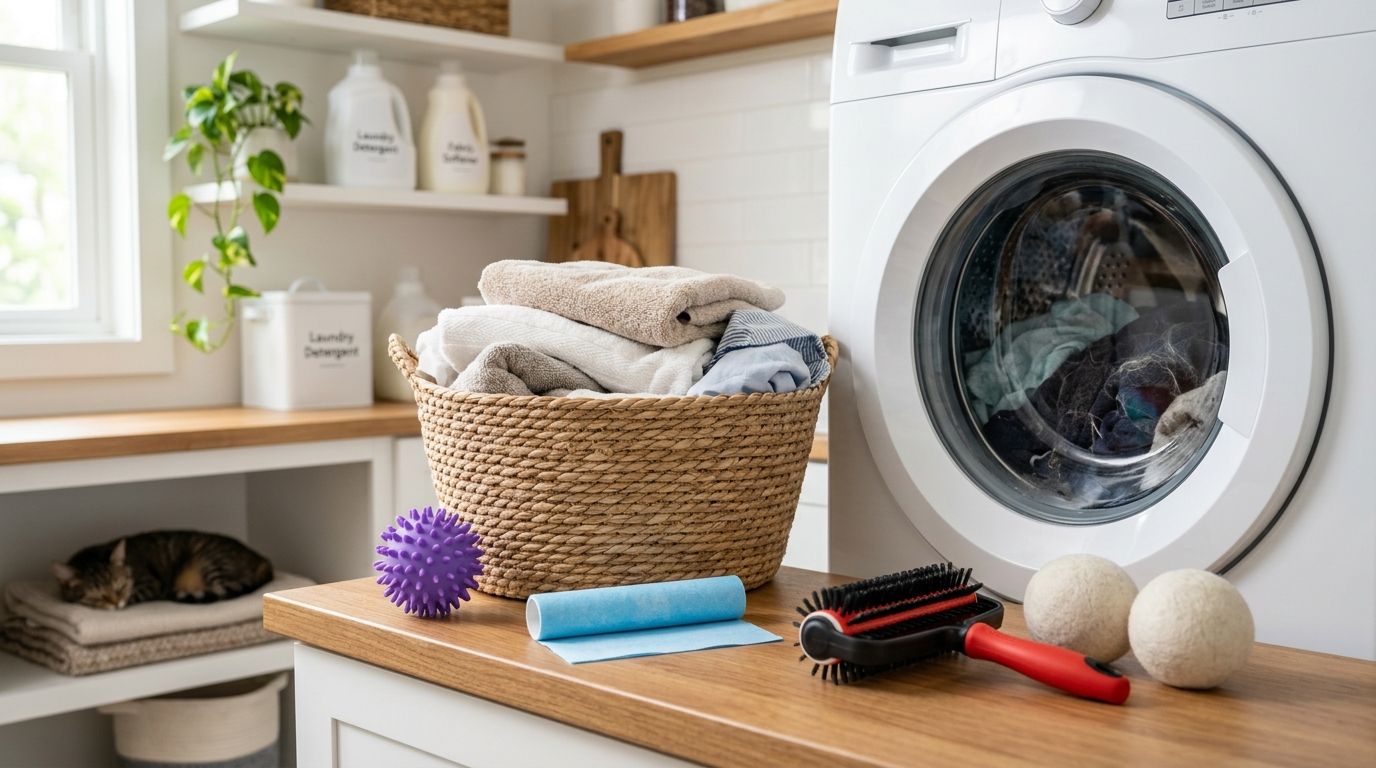
Dog hair works itself into every fiber of a wash load, and a regular cycle without the right tool just moves it from the shirt to the drum, then to the next load. The best pet hair removers for laundry in 2026 combine a pre-wash brush, an in-drum catcher, and a dryer-stage tool — no single gadget handles all three jobs.
- Best overall for best pet hair removers for laundry in 2026: a silicone laundry ball tossed straight into the wash drum.
- Best for protecting your drain line: a mesh pet-hair-catching laundry bag used every cycle.
- Best budget option: a damp rubber glove run over dry fabric before it ever hits the machine.
- Best for the dryer stage: wool dryer balls, which grab loose hair as clothes tumble.
Why this matters
Short dog hair is the hardest laundry problem in the house because it's too short to snag on fabric weave and too fine to filter out at the drain. It rides through the wash, clings via static in the dryer, and ends up back on your clothes after they're clean. A washing machine that ingests hair load after load can also clog the drain pump filter, which is a repair call most owners don't see coming until the machine stops draining.
The fix isn't one miracle product — it's picking the right tool for each stage of the laundry process. That's how this list is built: by stage, not by hype.
What makes the best pet hair remover for laundry
- Doesn't add its own lint or shed pieces into the wash
- Works on short, fine hair (not just long fur, which is the easy case)
- Reusable across dozens of loads rather than single-use
- Safe for machine filters, pumps, and drain lines
- No mid-cycle reapplication — it works passively while the load runs
- Doesn't require special detergent or a second machine cycle
At a glance: pet hair laundry tools ranked for 2026
| Tool | Best for | Standout feature | Key limitation |
|---|---|---|---|
| Silicone laundry ball | Washing machine loads overall | Works passively inside the drum, no prep needed | Needs to be emptied and rinsed between loads |
| Mesh hair-catching laundry bag | Drain protection and delicates | Traps loose hair before it reaches the pump filter | Reduces how much fabric fits per load |
| Rubber squeegee brush | Pre-wash brushing on blankets and throws | Pulls embedded hair off fabric before it ever touches water | Manual step, adds time before you load the machine |
| Adhesive lint roller | Spot-treating heavily coated items | Fast on a single garment or dog bed cover | Single-use sheets, not built for whole loads |
| Wool dryer balls | Dryer-stage hair pickup and static | Also cuts drying time slightly by separating fabric | Less effective on hair already matted into the weave |
| Rubber glove (damp) | Zero-cost, on-demand use | Nothing to buy, works on couch throws and car seats too | Slow for anything beyond one or two items |
1. Silicone laundry ball: best pet hair remover for laundry overall
A silicone or rubber laundry ball goes into the drum with the load and uses its raised nubs to snag hair as clothes tumble in the wash water. It's the closest thing to a set-and-forget solution because it works during the cycle you're already running, not as an extra step.
Silicone laundry ball pros:
- No extra time added to your laundry routine
- Reusable for years, not a consumable
- Works on hair already mixed into wet fabric, which brushes and rollers can't do
Silicone laundry ball cons:
- Collected hair has to be picked off and disposed of after each load
- Less effective on heavily matted hair that's dried onto fabric before washing
Best for: owners doing regular full loads of dog bedding, blankets, and clothing together. Verdict: Buy.
2. Mesh pet-hair-catching laundry bag: best for protecting your drain line
This is a fine-mesh bag that either holds the load or attaches near the drain point, catching loose hair before it can reach the pump filter. If you've ever had a washing machine start draining slowly after months of dog laundry, this is the preventive fix.
Mesh laundry bag pros:
- Reduces the odds of a clogged pump filter repair call
- Doubles as protection for delicates washed alongside pet bedding
- Simple to rinse and reuse
Mesh laundry bag cons:
- Cuts down usable load capacity since fabric has to fit inside or around it
- Doesn't remove hair that's already stuck to the fabric surface
Best for: households with a washing machine that's already shown drainage trouble. Verdict: Buy.
3. Rubber squeegee brush: best for pre-wash brushing on blankets and throws
A rubber-bristled brush pulls embedded hair off dry or slightly damp fabric before it goes anywhere near the machine. This matters most for dog blankets and couch throws where hair gets pressed deep into the weave from body weight and static.
Rubber squeegee brush pros:
- Removes hair the wash cycle would just push deeper into fabric
- Works on furniture and car seats too, not just laundry
- No consumable cost after purchase
Rubber squeegee brush cons:
- Manual labor — you're doing the work, not the machine
- Slower for large loads of multiple items
Best for: heavily shed-on blankets and throws that go through the wash weekly. Verdict: Buy.
4. Adhesive lint roller: best for spot-treating heavily coated items
The classic sticky-sheet roller is still the fastest option for one garment or a single dog bed cover covered in hair, especially right before folding when the hair is loose and dry. It's not built for whole-load laundry, but it's the right tool for a fast fix.
Adhesive lint roller pros:
- Fastest single-item cleanup available
- No learning curve, works immediately out of the package
- Cheap to keep a few sheets on hand
Adhesive lint roller cons:
- Sheets run out and need replacing regularly
- Impractical for an entire load, only realistic per-item
Best for: a quick pass on a coat, cushion cover, or single garment right before it's put away. Verdict: Hold — keep one on hand, don't rely on it for full loads.
5. Wool dryer balls: best for the dryer stage and reducing static
Wool dryer balls bounce around the dryer drum, separating clothes so hair has less surface contact to cling to, and cutting the static that pulls loose hair back onto fabric after the wash. They work best as the second half of a two-stage system alongside a wash-stage tool.
Wool dryer balls pros:
- Reduces static cling, which is what redeposits hair after washing
- Reusable for a long stretch, not single-use
- Can shave a few minutes off drying time by improving airflow between items
Wool dryer balls cons:
- Doesn't remove hair that's matted into fabric before drying
- Needs a wash-stage tool alongside it to be fully effective
Best for: finishing the job after a wash-stage catcher has already done the heavy lifting. Verdict: Buy.
6. Rubber glove (damp): best budget option
A damp rubber dish glove run over dry fabric picks up hair through static and friction, and it costs nothing if you already own a pair. It's the go-to for a couch throw or car seat cover on the way to the hamper, not a full load solution.
Rubber glove pros:
- Zero cost if you own a pair already
- Works on furniture, car interiors, and clothing alike
- No shopping required to start using it today
Rubber glove cons:
- Slow — realistically one or two items at a time
- Requires re-wetting the glove periodically to keep static effective
Best for: a fast, no-purchase fix before laundry day. Verdict: Buy for spot use, Skip as your only system.
“If your washing machine drains slower every month, the hair isn't leaving with the water — it's building up in the pump filter.”
How this list was ranked
Each tool was scored against the criteria above: whether it works on short fine hair (not just long fur), whether it's reusable, whether it protects the machine itself, and whether it adds a manual step or works passively. The silicone laundry ball ranked highest because it's the only tool that works during a cycle you're already running. Everything else earned its slot by solving a stage the ball doesn't cover — the drain, the pre-wash brush-out, or the dryer.
Brushing your dog more often cuts the problem at the source rather than the laundry end. Regular sessions with the right home grooming supplies pull out loose undercoat before it ever reaches a blanket or your clothes, and pairing that with a routine bath using a proper dog bathing station keeps shedding season from turning into a laundry emergency.
Cut shedding before it hits the laundry
Browse grooming tools built for regular at-home brushing sessions.
Which pet hair remover for laundry should you choose in 2026?
For most dog owners, the silicone laundry ball plus a mesh hair-catching bag is the setup that solves 90% of the problem — one works inside the wash, the other protects the drain. Add wool dryer balls for the dryer stage and a rubber squeegee brush for anything heavily matted, like a dog bed cover, before it goes in at all.
If you only buy one thing in 2026, buy the silicone laundry ball. If your machine has already started draining slowly, add the mesh bag next — that's a maintenance cost you can avoid entirely.
Shop and Bark carries the grooming side of this equation: brushes and combs that pull hair out at the source instead of chasing it through the wash.
FAQ
What's the best pet hair remover for laundry in 2026?
A silicone laundry ball is the best overall pick for 2026 because it works passively inside a normal wash cycle without adding an extra step. Pair it with a mesh hair-catching bag if your drain line has ever clogged.
Do lint rollers work on freshly washed clothes?
Adhesive lint rollers work on dry fabric before or after washing, but they're not built for whole loads. Use them for a fast pass on a single garment, not as your main laundry-hair system.
How do I stop dog hair from clogging my washing machine?
Use a mesh pet-hair-catching bag every load so loose hair gets trapped before it reaches the pump filter. A slow-draining machine over several months is usually a sign hair has already built up there.
Is a mesh laundry bag necessary for pet hair?
It's not necessary for every household, but it's the cheapest insurance against a drain pump repair if you wash dog bedding or blankets regularly. Households already seeing slow drainage should add one immediately.
How often should I brush my dog to reduce hair in laundry?
Brushing several times a week during shedding season pulls loose undercoat out before it ever reaches a blanket or couch throw. Regular use of the right home grooming supplies cuts the laundry-side problem at the root.
Do dryer balls remove pet hair?
Wool dryer balls reduce static cling, which is what pulls loose hair back onto clothes after washing, and they separate fabric so hair has less surface to grip. They work best alongside a wash-stage tool, not alone.
Can pet hair damage a washing machine?
Repeated hair buildup in the drain pump filter can slow or stop drainage over time, which shows up as a slow-draining or error-code machine. A mesh catching bag used consistently prevents most of this.
What's the cheapest way to remove pet hair from laundry?
A damp rubber dish glove run over dry fabric removes hair through static and friction at zero added cost. It's slow for full loads but works well as a quick fix before laundry day.
One last thing
The tool that gets skipped most often isn't in the laundry room at all — it's the brush. Owners who brush a shedding dog three or four times a week during peak season report noticeably less hair reaching the hamper in the first place, because most of what ends up on clothes was loose undercoat that never got pulled out. The 2026 laundry-side fixes on this list matter, but they're managing a problem that starts at the dog.