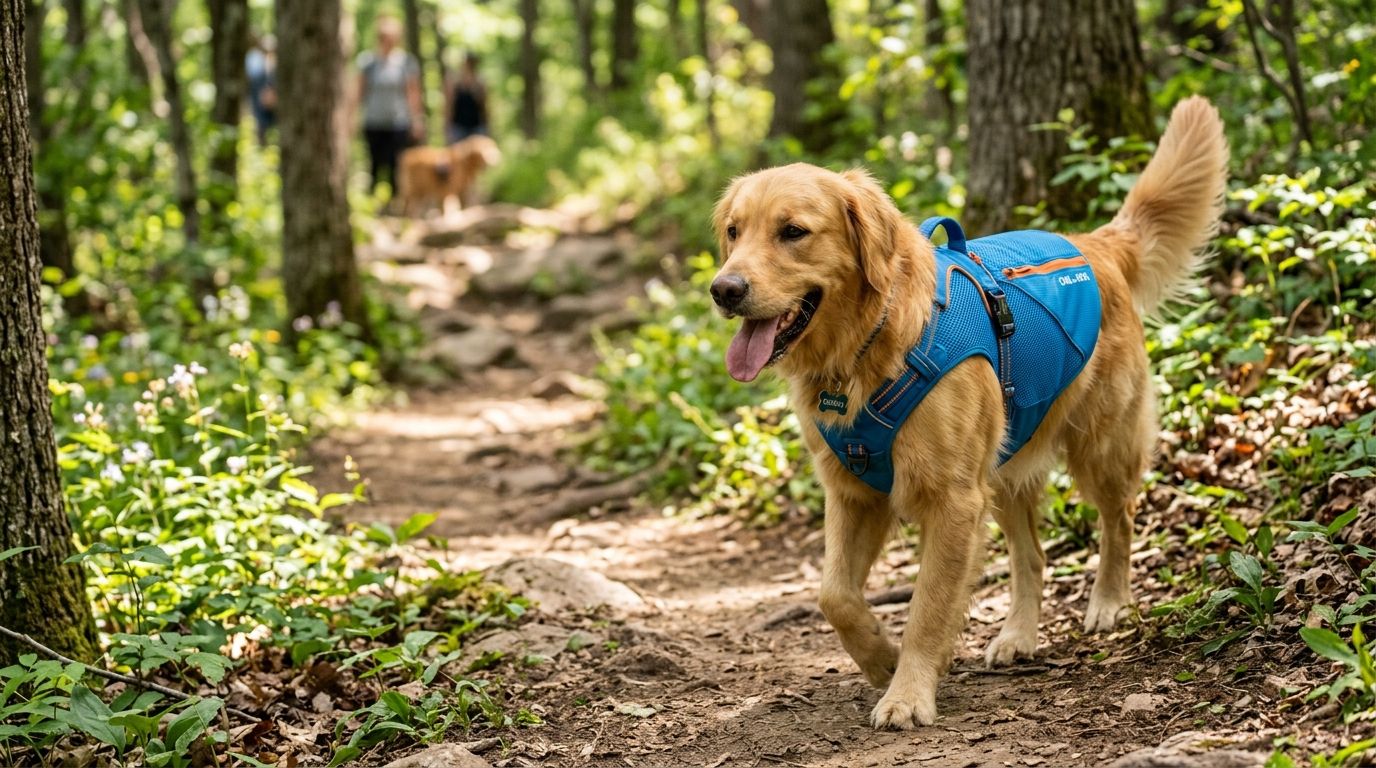
Cooling vests for dogs in 2026 range from evaporative fabric wraps to frozen gel-pack coats, and picking the wrong type either does nothing for your dog on a 90-degree walk or leaves you refreezing packs every 45 minutes.
- The best cooling vests for dogs in 2026 use evaporation, frozen gel packs, or phase-change material to pull heat away from the body.
- Evaporative cooling vests win overall for daily walks and moderate heat because they need only water to reactivate.
- Ice and gel pack vests handle extreme heat and high-intensity work but require a freezer nearby.
- Cooling bandanas are the budget pick for small dogs and short outings under 30 minutes.
- Coat color, breed, and exercise intensity matter more than vest brand when choosing cooling gear.
Best overall: evaporative cooling vest. Best for extreme heat: ice/gel pack vest. Best budget option: cooling bandana or wrap.
Why this matters
A dog's normal body temperature runs 101 to 102.5°F, and once core temperature climbs toward 106°F, heatstroke becomes a real emergency, not a discomfort issue. Brachycephalic breeds — bulldogs, pugs, boxers — regulate heat worse through panting alone because their airways are already restricted, so they're the dogs that benefit most from external cooling gear. Cooling vests are not a substitute for shade and water; they buy you time and comfort on top of good hydration habits, which is why the elevated dog bowls for large dogs guide is worth pairing with anything on this list.
Every cooling vest sold in 2026 relies on one of three mechanisms: evaporation, stored cold (ice or gel), or phase-change material that holds a set temperature longer than plain ice. None of them work if the dog is already overheated when you put the vest on — that's a vet visit, not a gear problem. Browse the current apparel selection at Shop and Bark before a heat wave hits, not during one.
What makes the best cooling vest
- Cooling mechanism — evaporative fabric, frozen gel insert, or phase-change pack, each with a different duration and reactivation method
- Coverage — vests that cool the back and chest (where large blood vessels sit close to the skin) work better than bandanas covering only the neck
- Weight when wet or loaded — a heavy vest fights the cooling benefit by adding physical load, especially on small or senior dogs
- Reactivation time — how fast you can refresh the vest between walks or breaks
- Fit and adjustability — a loose vest loses skin contact and stops transferring heat
- Coat compatibility — thick double coats trap moisture differently than short coats, changing how evaporative vests perform
Cooling vest types at a glance
| Type | Best for | Standout feature | Key limitation |
|---|---|---|---|
| Evaporative cooling vest | Daily walks, moderate heat | Reactivates with tap water in minutes | Loses effect fast in high humidity |
| Ice/gel pack vest | Extreme heat, working dogs | Sustained cold for 1-2 hours | Needs a freezer between uses |
| Phase-change material (PCM) vest | Consistent, controlled cooling | Holds a steady temperature, not a cold spike | Requires a fridge/freezer to prep |
| Cooling bandana/wrap | Small dogs, short outings | Lightweight, low cost of entry | Covers less surface area, shorter duration |
| UV-reflective cooling coat | Sun exposure, outdoor events | Blocks direct sun heat gain on top of cooling | Adds bulk versus a plain vest |
1. Evaporative cooling vest: best for daily walks and moderate heat
An evaporative cooling vest works by soaking a special fabric layer in water, then relying on evaporation to pull heat off the dog's skin as the water dries — the same principle as a swamp cooler. Soak it, wring it out, and it's ready in under five minutes, which makes it the easiest type to use on a normal walk schedule in 2026.
Evaporative cooling vest pros:
- Reactivates with any tap water, no freezer required
- Lightweight compared to gel or ice inserts
- Works well for dogs on-leash for 30-60 minute walks
Evaporative cooling vest cons:
- Loses most of its cooling effect in high humidity, where evaporation slows down
- Needs re-wetting roughly every hour in direct sun
- Some dogs dislike the initial wet-fabric feel
Best for: owners doing regular walks or yard time in dry heat. Verdict: Buy.
2. Ice/gel pack vest: best for extreme heat and working dogs
This style has fabric pockets that hold flat gel packs or ice packs frozen ahead of time. It delivers the coldest, most sustained cooling of any vest type, which is why search-and-rescue and working-dog handlers lean on it during peak summer months.
Ice/gel pack vest pros:
- Coldest, longest-lasting cooling of any type covered here
- Performs regardless of humidity, unlike evaporative fabric
- Good fit for high-intensity activity — herding, agility, field work
Ice/gel pack vest cons:
- Requires a freezer between sessions, which rules out all-day trips without a cooler
- Heavier than evaporative or bandana styles
- Packs can feel too cold directly against skin for sensitive dogs without a fabric buffer
Best for: working dogs and high-heat climates where evaporative vests fall short. Verdict: Buy.
3. Phase-change material (PCM) vest: best for controlled, steady cooling
PCM vests use inserts engineered to melt at a set temperature — usually just below body heat — so the dog gets a steady cooling effect instead of an initial ice-cold shock that fades fast. Prep them in a fridge or freezer, and they hold a consistent temperature range for longer than a standard ice pack.
PCM vest pros:
- Steady temperature instead of a cold spike followed by a quick warm-up
- Comfortable direct-skin contact — no ice-pack shock
- Better suited to dogs that need extended, gentler cooling
PCM vest cons:
- Still needs fridge or freezer prep time, same logistics burden as gel packs
- Generally pricier construction than a basic evaporative vest
- Overkill for a quick 20-minute walk
Best for: dogs with longer outdoor sessions who need gentle, sustained cooling rather than a quick blast. Verdict: Buy for the right use case.
4. Cooling bandana or wrap: best budget option for small dogs
A cooling bandana is a scaled-down version of the evaporative vest — usually crystal-filled or gel-lined fabric worn around the neck. It's the cheapest way to add cooling for short trips, and it's the easiest to size for toy and small breeds that don't fit standard vest cuts well.
Cooling bandana pros:
- Lightest option, barely noticeable on small dogs
- Fastest to put on and take off
- Good starter option before committing to a full vest
Cooling bandana cons:
- Covers far less surface area, so cooling effect is limited
- Shorter duration than a full vest before it needs re-wetting or refreezing
- Not enough for high-heat or high-intensity situations
Best for: small dogs and quick errands rather than long outdoor stretches. Verdict: Buy for light use, skip for serious heat.
5. UV-reflective cooling coat: best for direct sun exposure
This type combines a cooling evaporative or gel layer with a reflective or light-colored outer shell designed to bounce back sunlight instead of absorbing it. It's built for dogs spending real time in direct sun — beach days, open fields, outdoor events — rather than shaded neighborhood walks.
UV-reflective cooling coat pros:
- Reduces heat gain from direct sun on top of active cooling
- Useful for dark-coated dogs, which absorb more solar heat than light coats
- Doubles as sun protection for thin-coated or shaved dogs
UV-reflective cooling coat cons:
- Bulkier than a plain cooling vest
- Reflective materials add cost to manufacture versus a basic vest
- Unnecessary if your dog mostly stays in shade
Best for: dogs with heavy sun exposure at the beach, on trails, or at outdoor events. Verdict: Buy if sun exposure is the main issue, hold otherwise.
If you're layering cooling gear with other seasonal apparel, check how a vest fits under or over a shell in the dog raincoats and windbreakers guide — the same fit rules about chest coverage and strap placement apply. And if your dog wears a harness for walks, confirm the vest doesn't interfere with the chest strap using the no-pull dog harnesses sizing notes.
How we ranked
The ranking above weighs cooling mechanism, coverage, reactivation time, and coat compatibility ahead of anything cosmetic. Evaporative vests take the overall spot because they cover the most common use case in 2026 — regular walks in moderate-to-dry heat — with the least logistics. Ice and gel vests rank above PCM and bandanas for extreme heat specifically because sustained, deep cold matters more than convenience once temperatures cross into dangerous territory.
“If the vest feels dry to the touch after an hour outside, it has stopped cooling your dog and needs re-wetting or a fresh pack.”
Which cooling vest should you choose?
For most dog owners doing normal daily walks through summer 2026, the evaporative cooling vest is the default pick — cheap to run, fast to reactivate, no freezer required. Switch to an ice or gel pack vest if your dog works, trains, or hikes in genuinely extreme heat where a wet-fabric vest can't keep up. Small dogs on short errands do fine with a cooling bandana, and dogs that spend real time in direct sun benefit from a UV-reflective coat layered on top of any cooling mechanism.
Shop dog cooling and apparel gear
Browse the current apparel and gear lineup before the next heat wave hits.
FAQ
What's the best cooling vest for dogs in extreme heat?
Ice and gel pack cooling vests hold the deepest, longest cold of any type, which makes them the best pick for extreme heat or high-intensity work in 2026. They need freezer access between uses, which is their main tradeoff.
Is an evaporative cooling vest better than an ice pack vest?
Evaporative vests win on convenience since they reactivate with tap water instead of a freezer, but ice pack vests deliver colder, longer-lasting cooling. Choose evaporative for daily walks and ice/gel for genuinely extreme heat.
How long does a cooling vest stay effective?
Evaporative vests typically need re-wetting roughly every hour in direct sun, while gel and phase-change vests hold their effect for 1-2 hours depending on ambient temperature. Once the fabric feels dry or the pack feels room-temperature, the cooling effect has ended.
Do cooling vests work in humid climates?
Evaporative cooling vests lose most of their effectiveness in high humidity because evaporation slows down, so ice, gel, or phase-change vests perform more reliably in humid conditions. Dry-climate owners get the most benefit from evaporative styles.
Are cooling vests safe for all dog breeds?
Cooling vests are generally safe, but brachycephalic breeds like bulldogs and pugs benefit most since their airways already limit natural heat regulation through panting. Any dog showing signs of heatstroke needs veterinary care immediately, not just a vest.
What's the cheapest way to cool down a dog outdoors?
A cooling bandana or wrap is the lowest-cost entry point for small dogs and short outings, though it covers far less surface area than a full vest. For anything beyond a quick errand, a full evaporative or gel vest cools more effectively.
Can a cooling vest replace shade and water?
No — a cooling vest supplements hydration and shade, it doesn't replace them. Dogs still need access to water and shade breaks regardless of what cooling gear they're wearing.
One last thing
Dark-coated dogs absorb more solar heat than light-coated dogs standing in the same sun, which is why a plain black or dark-brown dog benefits more from a reflective outer layer than a light-coated dog wearing the exact same evaporative vest. If your dog is dark-coated and spends real time outdoors in 2026, the UV-reflective coat isn't a cosmetic upgrade — it's doing measurable work the evaporative fabric alone can't.