Set up the whelping box at least a week before the due date, not the night labor starts — a dam scrambling in a cardboard box with bath towels at 2 a.m. loses time and warmth she and the litter can't spare. Get the box, the liner, and the heat source in place early so delivery happens in a space built for it.
- Setting up a whelping box in 2026 means sizing it to the dam, lining it flat (no bunching blankets), and holding the nest at 85-90°F for week one.
- Pig rails set 3-4 inches from the wall stop a rolling dam from crushing a pup against the side.
- Newborn puppies can't regulate their own body temperature until roughly week three, so the heat source matters more than the box material.
- Shop and Bark's whelping box lineup covers small to giant-breed sizes, and the same setup logic scales to any of them.
- Around week three or four, puppies start climbing the rails — that's the cue to add a playpen extension.
Why this matters
Most neonatal puppy deaths in the first few days trace back to chilling or crushing, not infection — a puppy separated from the pile for even 20-30 minutes can drop body temperature fast enough to stop nursing. A properly built whelping box removes both risks at once: it holds heat in one contained space and gives a trapped pup an escape gap if the dam rolls over.
Getting this wrong doesn't usually look dramatic. It looks like a quiet, cold puppy at the edge of the pile that stopped competing for a nursing spot. The setup below is built to catch that before it happens.
Before you start
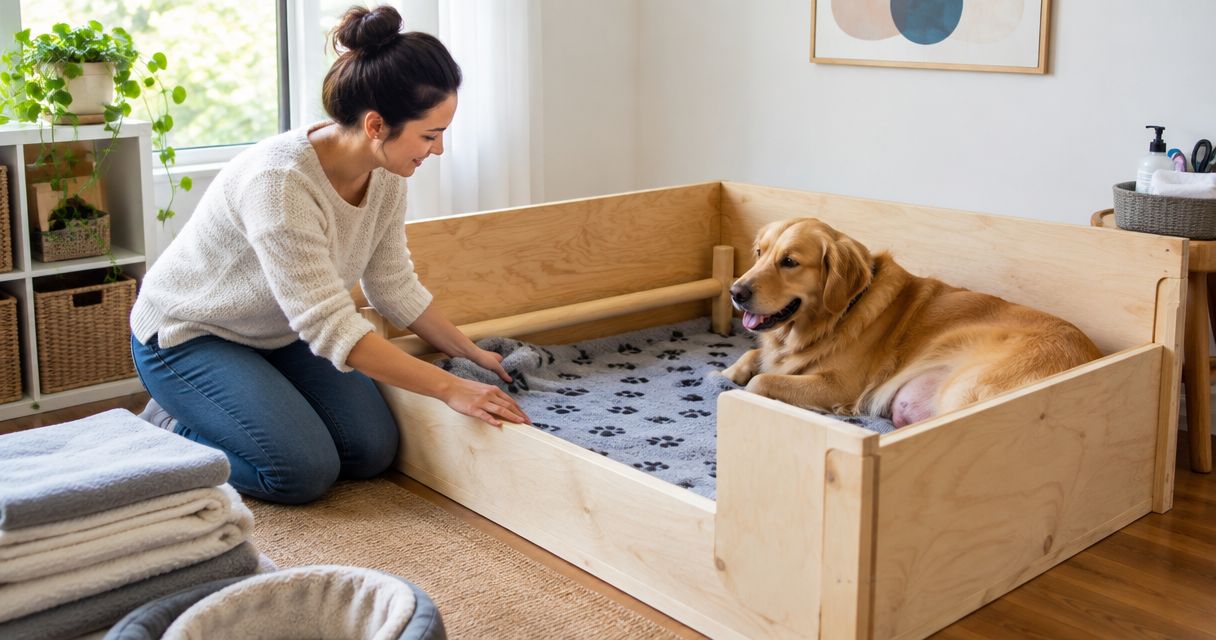
- A whelping box sized for the dam — she needs to lie fully stretched out with room to spare, not just curl up. Shop and Bark's whelping box collection runs from compact frames for small breeds to reinforced boxes for giant-breed litters.
- Flat, washable liner material and a backup set — you'll be swapping soiled layers repeatedly during active labor.
- A contained heat source with a thermometer — a heating pad or lamp that covers only part of the floor, plus a thermometer placed inside the box, not the room.
- The gotcha: fluffy blankets and thick towels feel cozier, but the folds trap newborns and raise suffocation risk in the first 72 hours. Use flat fleece or a tight-weave sheet instead — nothing that bunches.
Choose the box and set the location
- Place the whelping box in a quiet, low-traffic room the dam already knows — a spare bedroom or laundry room, away from other pets and foot traffic.
- Pick or set side rails around 4-6 inches high to start. High enough to keep newborns in, low enough that the dam can still see over the top and doesn't feel boxed in.
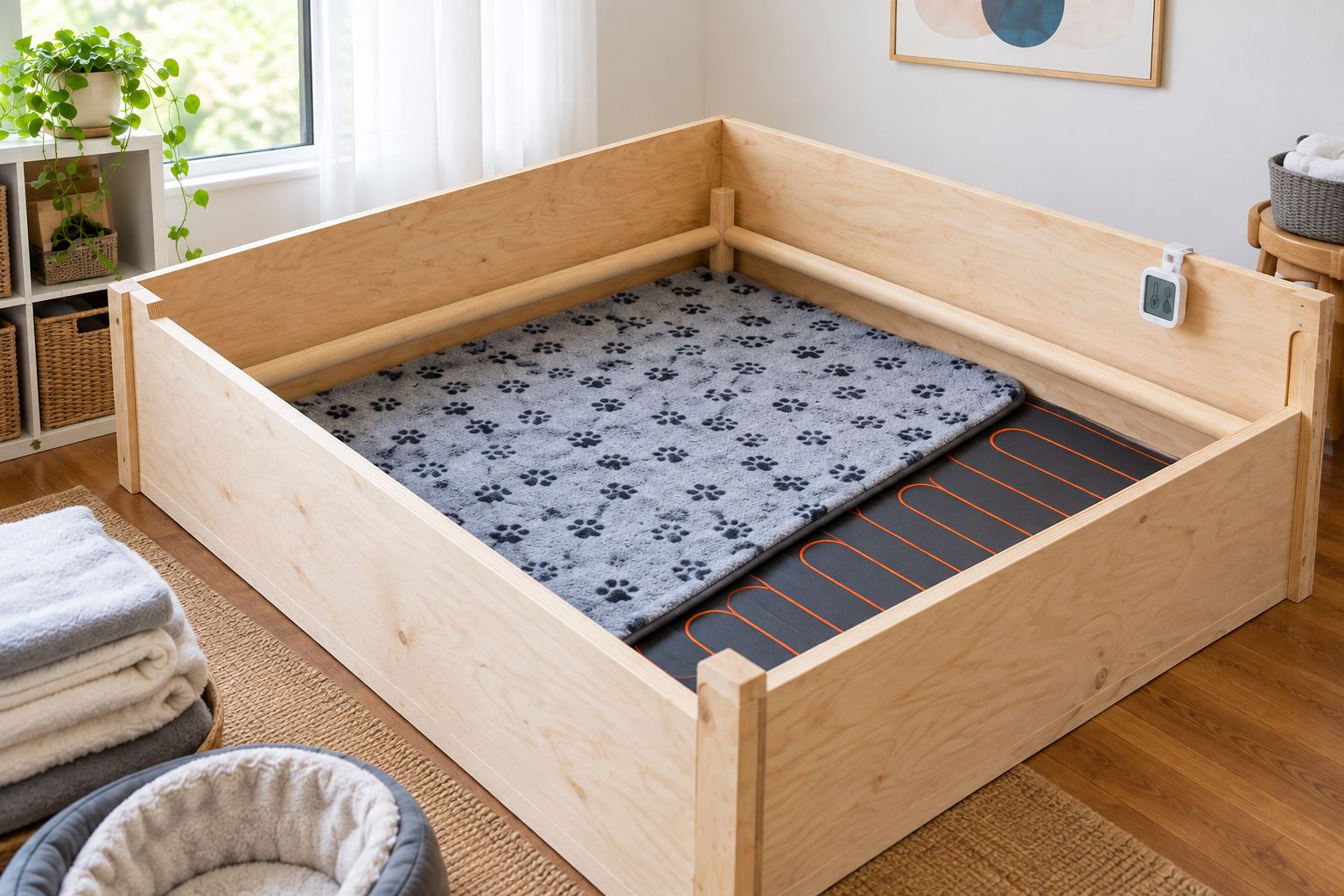
- Add pig rails — a horizontal rail set 3-4 inches from the wall and floor — if the box doesn't already have them. They give a pinned puppy a gap to wriggle free if the dam shifts her weight suddenly.
Expected result: the dam can walk in, turn a full circle, and lie down completely extended without her body touching the sides.
Line the nest
- Lay disposable puppy pads or newspaper down first — this layer takes the worst of the mess during heavy discharge on delivery day and gets tossed whole.
- Cover it with flat whelping fleece or a tight cotton sheet. Skip loose blankets entirely; they're the single most common thing first-time breeders get wrong here.
- Keep a duplicate set of liners folded and ready nearby so a soiled layer gets swapped in under a minute without disturbing the dam mid-labor.
Expected result: you can strip and replace the entire floor covering in one motion without lifting the dam or moving puppies out of the box.
Add heat and monitor temperature
- Install a heating pad under one half of the box, or a heat lamp angled over one corner — never heat the entire floor. The dam and litter need somewhere cooler to retreat to.
- Hold the box temperature at 85-90°F for the first week. Newborn puppies can't regulate their own body heat until around week three, so this isn't optional comfort — it's the main thing keeping them alive between feedings.
- Drop the ambient temperature by roughly 5°F each week after that, landing around 70-75°F by week four.
- Keep the thermometer inside the box itself. Room temperature and box temperature routinely differ by more than 10°F once the heat source is running.
Expected result: puppies pile loosely together and nurse steadily, instead of shivering in a tight heap or scattering to avoid overheating.
Set up the whelping box now
Sizes for small-breed to giant-breed litters, ready before the due date.
Expanding the setup as puppies grow
Puppies start hooking paws over the rails and attempting to climb out around week three, right as weaning begins. The whelping box that worked for delivery isn't built for a mobile litter.
- Raise the side rails to roughly 12 inches, or swap in a taller insert once you see puppies attempting to climb.
- Attach a playpen extension to the box opening so the litter has a separate area for elimination, away from the sleeping nest.
- Move food and water dishes into the pen extension rather than the nest, keeping the sleeping side dry.
Expected result: the litter naturally splits activity — one end for sleeping, one end for everything else — which cuts daily cleanup significantly.
By six to eight weeks, most litters outgrow the extension entirely. A full-size playpen replaces the whelping setup at that point, giving the group room to explore under supervision instead of staying boxed in.
Troubleshooting
- Dam won't settle into the new box. Rub bedding from her usual sleeping spot into the new liner so it carries a familiar scent, and place the box in a room she already sleeps in.
- Puppies pile in one corner and overheat. The heated zone is covering too much floor. Shrink it to one side only and re-check with the thermometer.
- Dam paces or seems anxious in the 12-24 hours before labor. That's typical pre-whelping behavior. For dams with a documented history of noticeable anxiety, ask a vet whether a calming chew a few days out makes sense — it's not a fix for labor itself, just for the lead-up stress.
- Bedding soaks through constantly during active labor. Pre-cut a stack of puppy pads before labor starts so you're swapping layers instead of trying to dry the ones already down.
- Dam needed a C-section and struggles to climb into the box afterward. A lower-rimmed orthopedic recovery bed placed just outside the whelping box lets her rest and nurse without climbing over raised sides during recovery.
What to do next
Once the litter is weaned and moved to a playpen setup, the whelping box itself usually gets stored until the next litter or passed along. If you're running more than one litter or a multi-dog household long-term, the setup logic here — contained space, washable liner, controlled heat — carries over directly into crate and pen arrangements for adult dogs sharing a home.
FAQ
How do I set up a whelping box for the first time?
Size the box so the dam can lie fully extended, line the floor with flat washable fabric (not loose blankets), and hold the temperature at 85-90°F for the first week using a heating pad or lamp that covers only half the floor.
What size whelping box do I need?
The box needs to fit the dam lying fully stretched out plus extra room on all sides — small-breed dams need noticeably less floor space than giant-breed dams, so size to the specific breed rather than the litter count.
How warm should a whelping box be?
Keep the box at 85-90°F for the first week, since newborn puppies can't regulate their own body temperature until around week three. Drop the temperature by about 5°F each week after that.
What bedding is safe for a whelping box?
Flat, tight-weave fleece or cotton sheeting is safest. Loose blankets and thick towels bunch into folds that raise suffocation risk for newborns in the first 72 hours.
When do puppies outgrow a whelping box?
Puppies start climbing the rails around week three or four, which is the signal to raise the sides or add a playpen extension. Most litters move to a full playpen by six to eight weeks.
What are pig rails on a whelping box and do I need them?
Pig rails are horizontal bars set 3-4 inches from the wall and floor that give a pinned puppy an escape gap if the dam rolls over. They're worth adding to any box that doesn't already include them.
Can I use a regular dog crate instead of a whelping box?
A standard crate is usually too small for the dam to lie fully extended and lacks pig rails, which raises crushing risk. A dedicated whelping box is the safer choice for delivery.
Should I put the whelping box near other pets?
No — keep it in a quiet, low-traffic room away from other household pets. Noise and unfamiliar animals near the nest can raise the dam's stress during and after labor.
One last thing
The riskiest window isn't during labor — it's the first 72 hours after, when most neonatal deaths trace back to chilling or crushing rather than infection. That's why the thermometer and the pig rails do more work than any disinfectant routine, and why checking box temperature at 2 a.m. matters more than how clean the liner looks.