Choosing the right whelping box determines whether a litter stays warm, clean, and injury-free for the first four to six weeks of life — get the size or design wrong and you're mopping up messes or, worse, dealing with a crushed puppy.
- The best whelping boxes for puppies in 2026 fall into five distinct types, not one universal winner.
- A wooden pig-rail box wins for large litters because the rails stop the dam from crushing puppies against the wall.
- A plastic corner whelping box is the easiest to disinfect between litters and works best for first-time breeders.
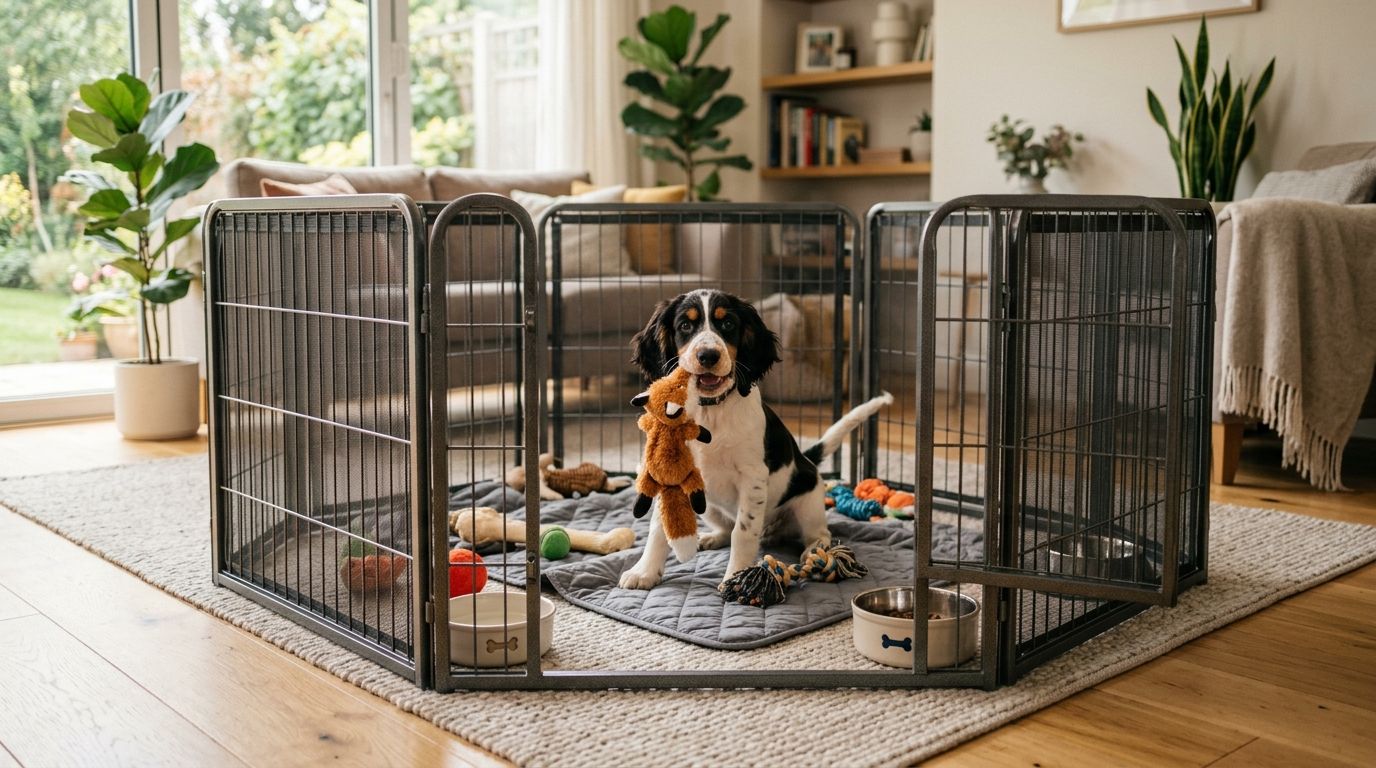
- Puppies typically outgrow any whelping box by week 4 to 6 and need a puppy playpen next.
- Skip fabric foldable boxes for anything beyond short-term travel use — they don't hold up to daily accidents.
Why this matters
A whelping box isn't a crate and it isn't a bed — it's a contained, washable space that keeps a nursing dam and her litter together without letting puppies wander into drafts or get stepped on. The wrong box height lets puppies climb out before their legs can handle it; the wrong floor material lets fluids soak in and breed bacteria.
Most dams stay in the whelping box for the first three to four weeks, then puppies start standing and need more room to explore safely. That's the point where a lot of owners transition into a puppy playpen instead of trying to stretch the original box past its job. Get the first four weeks right and the rest of weaning gets a lot easier.
Verdict up front: the wooden pig-rail whelping box is the best overall pick for most litters in 2026, the plastic corner box is best for easy cleanup and first-time breeders, and the DIY kiddie-pool setup is the best budget option for a single litter.
What makes the best whelping box
- Pig rails or guard rails along the interior walls, set a few inches off the floor, so the dam can't accidentally pin a puppy against the side.
- Non-porous, washable flooring — sealed wood, plastic, or a removable liner — that doesn't absorb fluids or hold odor.
- Sides tall enough to contain a newborn but low enough for the dam to step over once puppies start moving around at three to four weeks.
- Floor space that lets the dam lie fully stretched out with room left over for the litter, not a box sized to her standing footprint.
- A dry, draft-free zone or heat source built into or placed inside the box for the first two weeks, since newborn puppies can't regulate their own body temperature.
- Easy access for the owner — a drop-front panel or low side — for cleaning and handling without disturbing the whole litter.
Whelping boxes at a glance
| Type | Best for | Standout feature | Key limitation |
|---|---|---|---|
| Wooden pig-rail box | Large litters | Guard rails prevent crushing | Heavier, harder to disinfect fully |
| Plastic corner box | First-time breeders, easy cleanup | Wipes clean, no absorbent seams | Sides often too low past week 3 |
| Foldable fabric box | Travel or temporary whelping | Packs flat, lightweight | Not durable through a full litter cycle |
| Playpen-conversion system | Extended puppy-proofing after weaning | Expands as puppies grow | Needs a separate box for newborn stage |
| DIY kiddie-pool box | Budget, single-litter use | Cheap, disposable if needed | No built-in rails or insulation |
1. Wooden pig-rail whelping box: best overall for large litters
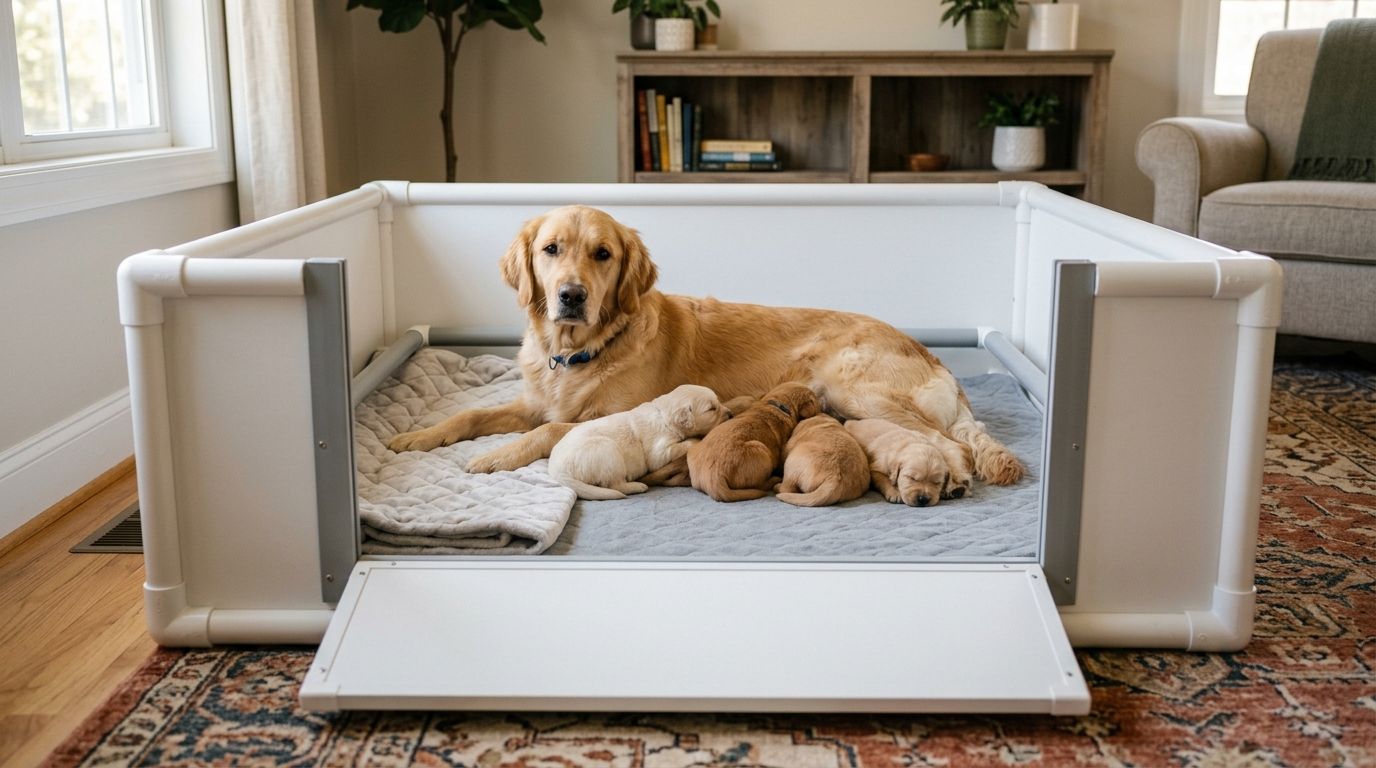
A wooden whelping box with interior pig rails is a plywood or solid-wood enclosure with a raised bar running along each inside wall a few inches above the floor. That rail gives puppies an escape gap if the dam rolls or leans against the side, which matters most in litters of six or more where space inside the box is tight.
Wooden pig-rail box pros:
- Rails cut crushing risk in crowded litters
- Solid sides block drafts better than mesh or fabric
- Can be built or bought to the dam's exact length plus extra room
Wooden pig-rail box cons:
- Raw wood absorbs fluid unless sealed or lined
- Bulky and awkward to move once assembled
- Full disinfection between litters takes more effort than plastic
Best for: breeders expecting a litter of five or more puppies. Verdict: Buy.
2. Plastic corner whelping box: best for easy cleanup
A molded plastic whelping box is built as a low-walled corner unit, usually with rounded seams so there's nowhere for fluid or bacteria to hide. It's the type most first-time breeders reach for because it wipes down with a hose or a bucket of soapy water in minutes.
Plastic corner box pros:
- Fastest cleanup between whelping and after
- No absorbent material to replace or seal
- Lightweight enough for one person to move
Plastic corner box cons:
- Sides are often too low once puppies start climbing around three weeks
- No built-in pig rails on most models
- Can feel drafty without added bedding or a heat source
Best for: owners whelping their first litter who want minimal mess management. Verdict: Buy.
3. Foldable fabric whelping box: best for travel or temporary setups
A foldable fabric whelping box uses a collapsible frame with a fabric or vinyl liner, built to pack flat when not in use. It's a reasonable stopgap for a breeder moving a dam between locations or handling an unplanned litter without time to build a permanent box.
Foldable fabric box pros:
- Packs down for storage or transport
- Lower upfront setup than a built wood box
- Quick to assemble without tools
Foldable fabric box cons:
- Fabric seams absorb fluid and stain permanently
- Frame flexes under an active litter, reducing containment
- Not built to survive a full four-to-six week cycle without wear
Best for: a single, short-notice litter or a temporary whelping location. Verdict: Hold — fine in a pinch, not a long-term setup.
4. Playpen-conversion system: best for extended puppy-proofing after weaning
This isn't a whelping box in the traditional sense — it's a modular pen system that starts small around the newborn stage and expands as the litter grows, eventually functioning as a full puppy playpen once weaning starts around three to four weeks. It solves the problem of buying two separate enclosures in one month.
Playpen-conversion pros:
- Grows with the litter instead of being replaced
- Panels can be reconfigured for house layout
- Extends usable life well past the newborn stage
Playpen-conversion cons:
- Newborn-stage containment isn't as tight as a dedicated whelping box
- Costs more upfront than a basic box
- Assembly takes longer than a single-piece unit
Best for: breeders who want one system covering birth through eight-week placement. Verdict: Buy if budget allows for the higher upfront setup.
5. DIY kiddie-pool whelping box: best budget option
A hard-plastic kiddie pool, lined with washable bedding, works as a whelping box for a single litter when cost is the deciding factor. It has no rails and no insulation built in, so it depends entirely on what you add — towels, a heat lamp, a puppy pad layer — to do the job a purpose-built box does on its own.
DIY kiddie-pool pros:
- Lowest-cost option by a wide margin
- Widely available, no waiting on shipping
- Disposable if a litter has a health issue requiring full replacement
DIY kiddie-pool cons:
- No pig rails, so crushing risk is higher
- Low sides mean puppies escape earlier than with a built box
- No insulation against cold floors
Best for: a one-time litter on a tight budget. Verdict: Skip unless it's genuinely the only option — the missing rails are the real risk here.
How we ranked these
Each type was weighed against the six criteria above: rail safety, washable flooring, containment height, floor space relative to the dam, temperature control, and ease of access for daily cleaning. The wooden pig-rail box scores highest because it's the only type built specifically to reduce crushing injuries, which is the single biggest physical risk in the whelping stage.
“If a whelping box doesn't have pig rails and the litter is five or more puppies, add rails before the dam ever goes in.”
Which whelping box should you choose?
For most litters heading into 2026, the wooden pig-rail whelping box is the safest default — it's the only design built around preventing the most common newborn injury. If cleanup speed matters more than rail protection and the litter is small, the plastic corner box is the practical pick. Anyone whelping on a single occasion with a tight budget can make the kiddie-pool route work, but plan to add rails and bedding yourself, and expect to keep a close eye on the litter around the clock.
Whatever the choice, the dam's stress levels matter as much as the box itself — a nervous or anxious dam in the days around whelping benefits from a calm setup, and some breeders pair the whelping period with calming chews for dogs to take the edge off a stressful first week.
Ready for the next stage after whelping?
Puppies outgrow the whelping box fast — plan the playpen transition early.
FAQ
What are the best whelping boxes for puppies in 2026?
A wooden pig-rail whelping box is the best overall choice for litters of five or more because the rails prevent crushing. Plastic corner boxes are best for easy cleanup, and playpen-conversion systems work best for extended use past the newborn stage.
How big should a whelping box be?
The box needs enough floor space for the dam to lie fully stretched out with room left over for the whole litter. Undersized boxes increase the risk of a dam accidentally lying on a puppy.
How long do puppies stay in a whelping box?
Most litters stay in the whelping box for the first three to four weeks, then need a larger puppy playpen once they start standing and exploring. Waiting too long to move up increases escape attempts and mess.
Do whelping boxes need pig rails?
Pig rails aren't mandatory but they significantly reduce crushing risk in larger litters. Any box without built-in rails, like a kiddie pool, should have rails added before a large litter arrives.
Is a plastic or wooden whelping box better?
Plastic boxes clean faster and don't absorb fluid, making them better for first-time breeders. Wooden boxes with pig rails offer better crushing protection and insulation, making them the stronger choice for large litters.
Can you use a kiddie pool as a whelping box?
Yes, a hard-plastic kiddie pool can work as a budget whelping box for a single litter, but it lacks pig rails and insulation. Add bedding, a heat source, and homemade rails before relying on it for a large litter.
What replaces a whelping box once puppies outgrow it?
A puppy playpen is the standard next step once puppies start standing and walking around three to four weeks old. It gives them more room to explore while still containing them safely.
One last thing
The detail most first-time breeders miss isn't the box at all — it's the floor underneath it. A whelping box sitting directly on a cold tile or concrete floor pulls heat away from newborn puppies faster than most heat lamps can replace it, even with bedding inside. Put a layer of insulation, like a thick foam pad or rug, under the box itself before the dam ever goes in, not just inside it.