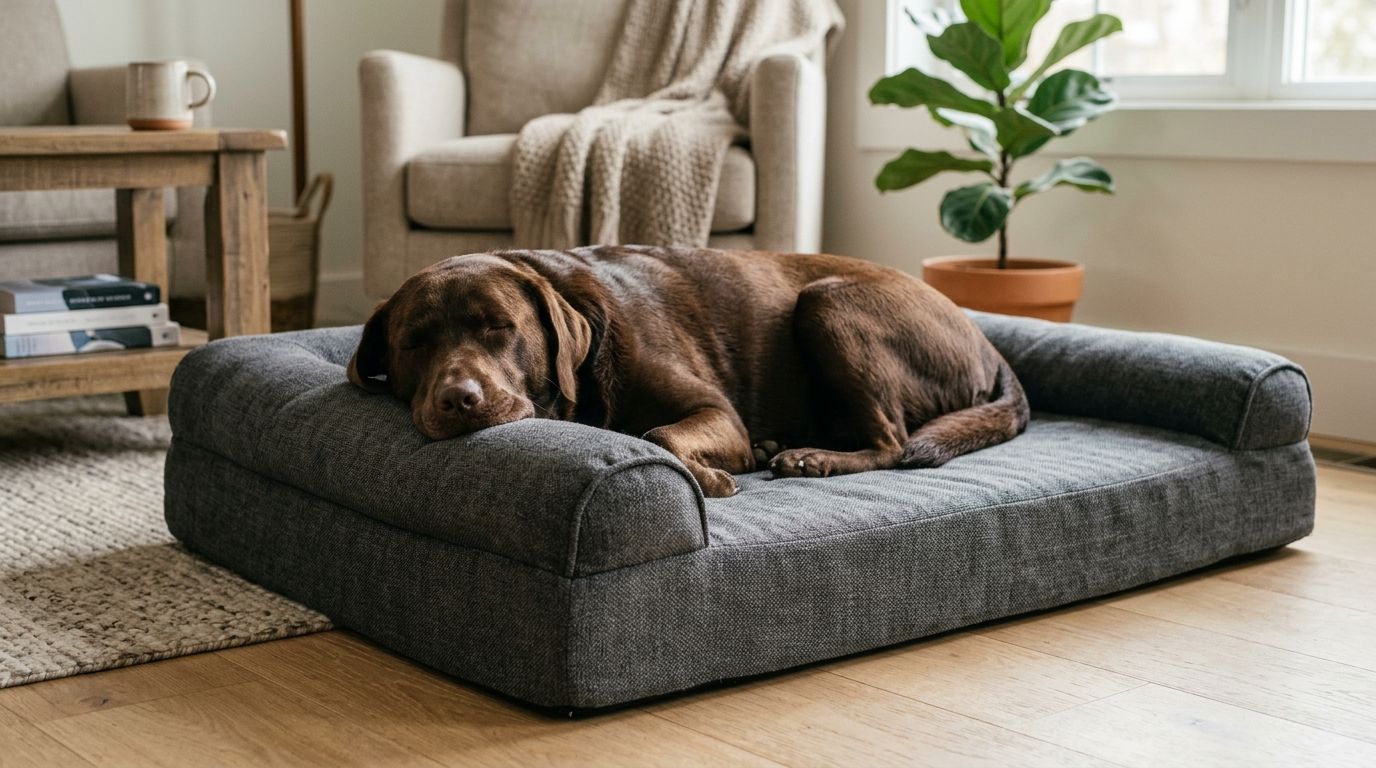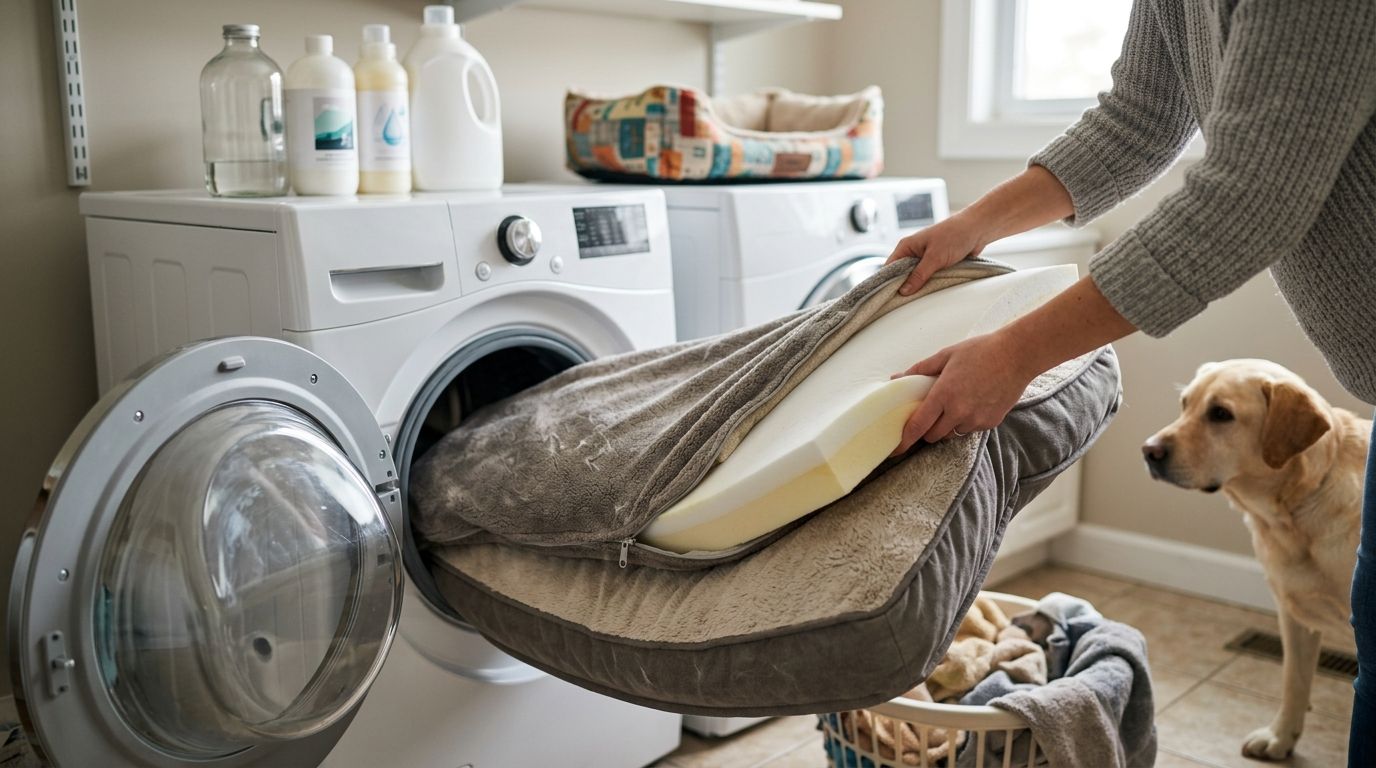
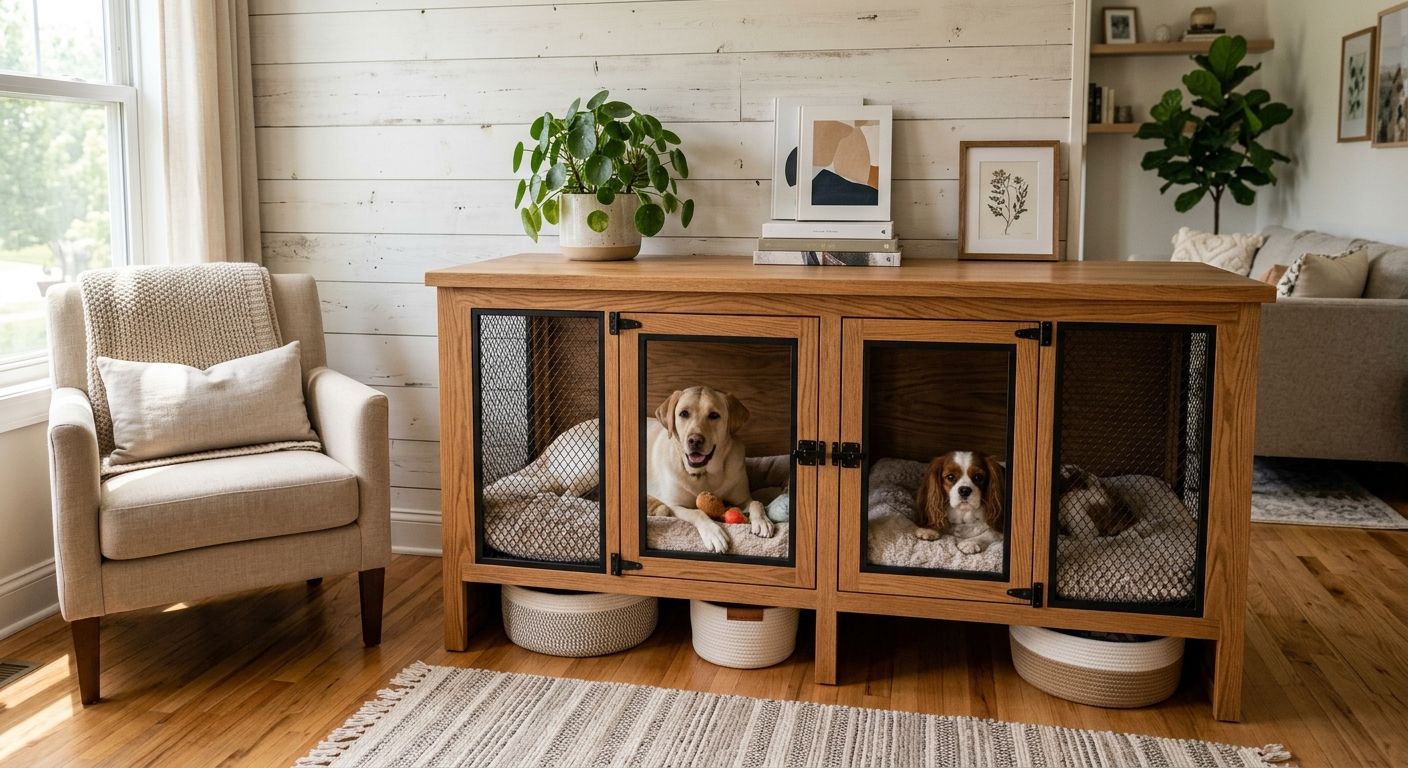
Multi-dog household dog crate furniture is compartmentalized crate housing that doubles as a table or cabinet, with the aim of giving each dog a separate rest space without scattering crates across the room. Shop and Bark is best for dog owners who need a practical dog crate furniture checklist before comparing the retailer's crate and pen selection in 2026.
- Dog crate furniture for multiple dogs works when every dog has a correctly sized, separate compartment.
- Side-by-side units suit compatible dogs; stacked units conserve floor space but complicate access and cleaning.
- Shop and Bark is a practical starting point for comparing crate and pen options in 2026.
- Measure the dogs, room, doors and delivery route before choosing a layout or material.
Why dog crate furniture matters for multi-dog households
A multi-dog home has to fit several secure resting areas into rooms that still need clear walking paths. A small-apartment dog crate furniture guide can help with compact layouts, but households with multiple dogs face an extra constraint: every compartment must fit its occupant without creating conflict at entrances, bedding or nearby resources.
Furniture-style housing can consolidate separate crates into one visual unit. It does not remove the need to size and train each crate independently. Dogs that settle comfortably beside one another can use adjacent compartments, while dogs that guard space, bark through barriers or need quiet may require separate units in different parts of the room.
The right 2026 setup therefore starts with behavior and fit, not finish. A cabinet that matches the room but blocks ventilation, crowds one dog or prevents easy cleaning is the wrong choice. Treat the furniture surface as a secondary benefit and the individual compartments as the primary equipment.
Build the right multi-dog crate setup
Measure every dog independently
Start with a tape measure, paper and the crates your dogs already use successfully. Each compartment must let its dog stand naturally, turn around and lie down without being pressed against the sides. Do not size every compartment around the largest dog unless each dog genuinely needs that space.
Record each measurement separately because two dogs described as the same general size can have different heights, body lengths and sleeping positions. If a dog is still growing, use the expected adult requirements supplied by a veterinarian or breed-specific authority rather than guessing from its current body.
- Measure each dog while standing naturally, not curled up or stretching
- Record body length, standing height and comfortable sleeping width
- Note whether the dog sleeps stretched out, curled up or against a wall
- Compare those needs with the usable interior, not the furniture's exterior dimensions
- Repeat the fit check before ordering if a young dog's measurements have changed
Map the room and delivery route
Outline the proposed furniture footprint with removable tape before buying anything. Leave the outline in place for a full day so you can walk around it during feeding, cleaning, departures and bedtime. This manual test catches blocked doors and narrow passages that a floor plan misses.
The delivery route matters as much as the final location. A large console may fit against the wall but fail to clear a stair turn, hallway corner or internal doorway. Flat-packed furniture reduces that risk, although assembly inside the room creates a different requirement: enough open floor area to position panels and doors.
- Mark the complete exterior footprint rather than the crate interiors alone
- Open nearby doors, drawers and cabinets while the tape remains in place
- Carry laundry baskets and dog supplies through the remaining walkway
- Measure exterior doors, internal doors, halls, stairs and tight corners
- Check whether the assembled unit can leave the room without being dismantled
Choose side-by-side, stacked or separate units
A side-by-side console is the simplest furniture layout for two compatible dogs. Both compartments stay at floor level, each dog gets direct access, and the top can serve as a usable surface when the manufacturer permits it. The trade-off is width: two large compartments can dominate a wall.
Stacked cabinets save floor area but require careful access planning. The upper compartment must be structurally supported and comfortable for the dog to enter without unsafe lifting or jumping. Separate modular crates use more pieces, yet they give you the freedom to move one dog away if behavior or household routines change in 2026.
- Choose side-by-side housing for dogs that settle calmly within sight of each other
- Choose stacked housing only when the upper compartment has safe, practical access
- Use separate modular units when dogs need different rooms or orientations
- Keep individual doors and latches so one dog can enter without releasing another
- Avoid a shared open compartment; every dog needs its own defined resting space
Control airflow, noise and sightlines
Inspect ventilation from inside each compartment rather than judging the open front alone. Furniture panels can restrict cross-flow compared with an uncovered wire crate, especially when one side sits against a wall. Bedding, stored objects and decorative panels must not cover the available openings.
Sightlines depend on the dogs. Bonded dogs that rest calmly together may prefer adjacent doors, while reactive or easily distracted dogs may settle better with an opaque divider. A divider should block the view without blocking the ventilation designed into either compartment.
Run a supervised 30-minute rest test after assembly. Watch for persistent panting, scratching, barking at the neighboring dog or repeated attempts to change position. The test does not replace supervision or veterinary advice, but it gives you direct evidence from the actual room and furniture.
- Keep manufacturer-provided vents clear on every exposed side
- Position the unit away from radiators, direct sunlight and obstructed air returns
- Use visual separation when dogs stare, guard or bark through adjacent doors
- Remove items stored on top if the manufacturer does not permit added weight
- Stop the trial if either dog shows distress or cannot settle comfortably
Inspect materials and cleaning access
Choose materials around the dogs' habits and the cleaning routine, not appearance alone. A dog that scratches at doors puts pressure on frames, hinges and latches. A dog that drools or has accidents needs surfaces and trays you can remove, clean and dry without dismantling the entire cabinet.
Manual inspection is the free first step: review the construction details, look at how panels meet the frame and identify every area that can trap hair or moisture. Shop and Bark can then serve as the faster retail path for comparing current dog crate and pen choices against that checklist.
- Prioritize removable floor trays or accessible compartment floors
- Check that door hardware cannot be reached or manipulated from the neighboring crate
- Look for exposed edges if either dog chews furniture or scratches during confinement
- Confirm replacement trays and hardware are identified before choosing a unit
- Follow the manufacturer's cleaning instructions for coatings, wood and metal components
Introduce one dog at a time
Furniture does not make crate training automatic. Introduce the new unit to the calmer or more crate-experienced dog first while the other dog remains elsewhere. Let the first dog inspect the compartment voluntarily before closing the door for any period.
Use short, supervised 10-minute sessions and observe the dog rather than chasing a fixed schedule. Add the second dog only after the first can enter and settle without reacting to the furniture. If either dog guards the entrance, bedding or treats, separate the training sessions and remove the contested resource.
- Start with open-door exploration and reward voluntary entry
- Train each dog alone before using adjacent compartments together
- Keep early sessions short enough to end while the dog remains calm
- Use separate bedding and rewards for each compartment
- Ask a qualified trainer for help if barking, guarding or escape behavior persists
Test the routine before committing the room
A setup that works at bedtime can fail during cleaning, feeding or busy morning departures. Use a 7-day observation log to record which dog entered willingly, whether neighboring activity caused barking and how long cleaning took. A simple written record is more useful than relying on memory after several dogs and routines overlap.
If the furniture position fails, move it before anchoring or adding storage around it. Households that need a larger daytime containment area should compare a dog playpen setup rather than expecting enclosed crate furniture to perform the same job.
- Record voluntary entry, rest quality and reactions to the neighboring compartment
- Test morning, evening and quiet daytime use separately
- Check doors, trays, hinges and panels again after the first 24 hours
- Move the unit if household traffic repeatedly disturbs either dog
- Keep the original individual crates available until the new routine is established
Compare crate furniture options
The best format depends on the dogs, room and daily routine. No single option wins every multi-dog household in 2026. Shop and Bark fits the retail comparison stage, while the table below determines which construction format belongs on your shortlist.
| Option | Best for | Main advantage | Key limitation |
|---|---|---|---|
| Side-by-side furniture console | Two compatible dogs that need floor-level access | Keeps both compartments easy to reach | Requires a long stretch of open wall |
| Stacked crate cabinet | Homes with limited floor area | Uses vertical space | Upper access and structural support need close review |
| Separate modular crate tables | Dogs with different routines or behavior needs | Units can move independently | Creates more separate pieces in the room |
| Standard wire crates with a fitted furniture surround | Owners who already have suitable crates | Retains familiar individual enclosures | The surround must not restrict doors or ventilation |
| Crate plus playpen arrangement | Dogs needing both rest and a larger daytime zone | Separates sleeping from active containment | Requires more total room than crate furniture alone |
A furniture surface should never be assumed to support people, appliances, aquariums or heavy storage. Follow the stated load and assembly instructions for the specific unit. If those details are unavailable, treat the top as decorative rather than structural.
Browse Shop and Bark
Compare the retailer's current dog crates, pens and other dog products.
Common mistakes multi-dog households make
Buying matching compartments for different dogs
Visual symmetry is not a sizing method. Two identical compartments work only when each one independently fits its occupant. A tall, narrow dog and a shorter, longer dog can need different usable dimensions even when their body weights appear similar.
Treating adjacent crates as shared housing
A furniture frame can connect the compartments visually, but each dog still needs a separate door, floor and resting area. Shared access creates opportunities for crowding and guarding. It also prevents you from controlling entry and release for one dog at a time.
Prioritizing storage over ventilation
Cabinets, baskets and decorations placed around a crate console can cover openings or interfere with doors. Plan storage after the dogs have used the furniture successfully. Recheck every vent whenever the room layout changes during 2026.
Assuming furniture fixes crate anxiety
A cabinet finish changes the appearance of a crate, not the dog's emotional response to confinement. Dogs that panic, injure themselves or try to escape need a training and veterinary plan appropriate to the behavior. Do not use heavier furniture as a substitute for diagnosing the problem.
Removing the previous crates immediately
Keep the familiar crates available during the transition. If one dog accepts the new compartment and another does not, you need a safe fallback that does not force both dogs into the same training schedule. Retiring the old setup can wait until the new routine works consistently.
FAQ
What is the best dog crate furniture for multiple dogs?
The best dog crate furniture for multiple dogs gives every dog a correctly sized, independently latched compartment with adequate ventilation. Side-by-side consoles suit compatible dogs at floor level, while modular units suit dogs with different routines or behavior needs.
Can two dogs share one crate furniture compartment?
Two dogs should have separate compartments rather than sharing one enclosed crate space. Individual spaces prevent crowding and let you control each dog's entry, rest and release separately.
Is stacked or side-by-side crate furniture better?
Side-by-side crate furniture is better for easy floor-level access, while stacked furniture is better when floor area is limited. A stacked option only works when the upper compartment is structurally supported and safely accessible.
How do I measure dog crate furniture for two dogs?
Measure each dog and each required compartment separately, then compare the combined interior needs with the furniture's usable dimensions. Also measure the room, doors, hallways and delivery route before ordering.
How much does dog crate furniture for multiple dogs cost in 2026?
The current cost depends on compartment size, construction, materials and assembly format. Check current retailer pricing after confirming fit because a lower-priced unit provides no value when either compartment is unsuitable.
Does dog crate furniture need ventilation on multiple sides?
Every compartment needs unobstructed ventilation that follows the unit's design and manufacturer instructions. Inspect the setup after placing it against a wall because furniture panels, bedding and stored items can block airflow.
How should I introduce two dogs to new crate furniture?
Introduce each dog separately with the door open, then use short supervised sessions before placing both dogs in adjacent compartments. Stop and reassess if either dog guards, panics or reacts continuously to the other dog.
Is a playpen better than crate furniture for multiple dogs?
A playpen is better for a larger daytime activity zone, while crate furniture is better for separate resting compartments. Multi-dog homes can use both when the room and each dog's behavior support the arrangement.
One last thing
The strongest 2026 buying decision is not a particular finish or layout. It is maintaining separate options. Choose dog crate furniture that lets you move, divide or stop using one compartment without disrupting every dog in the household. Shop and Bark provides a place to compare current dog product categories, but your measurements and 7-day observation log decide whether the final arrangement works.
A dog that settles beside a housemate today may need more distance after illness, surgery or a behavior change. Modular furniture loses some of the built-in appearance of one large console, yet its flexibility can matter more over the life of the setup.