Brushing a dog's teeth once a week when plaque hardens into tartar in as few as 3 to 5 days isn't a routine, it's catch-up. Set up a 2-minute daily brushing habit, layer in dental chews and a weekly gum check, and tartar never gets the window it needs to set in.
- A dog dental care routine at home means daily 2-minute brushing, not weekly - plaque hardens into tartar within days.
- The American Veterinary Dental College reports most dogs show some periodontal disease by age 3.
- Dental chews support the routine but don't replace brushing - they clean chewing surfaces, not gumlines.
- Resistant or anxious dogs need a chew-first desensitization phase before a toothbrush ever touches their gums.
Why this matters
Tartar doesn't come off with a toothbrush once it's mineralized. At that point it's a professional scaling job, not a home fix. A daily routine catches plaque in its soft, brushable window and keeps it from ever crossing that line.
Small and toy breeds have crowded teeth and hit gum disease earlier and harder than large breeds, which makes a consistent dental care kit more than a nice-to-have for them. Bad breath, yellow buildup along the gumline, and a dog pulling away when you touch its muzzle are the first signs the routine below is meant to catch before a vet has to.
Everything in this routine is available through Shop and Bark - finger brushes, enzymatic pastes, dental chews - so you're not piecing gear together from three different sites.
Before you start
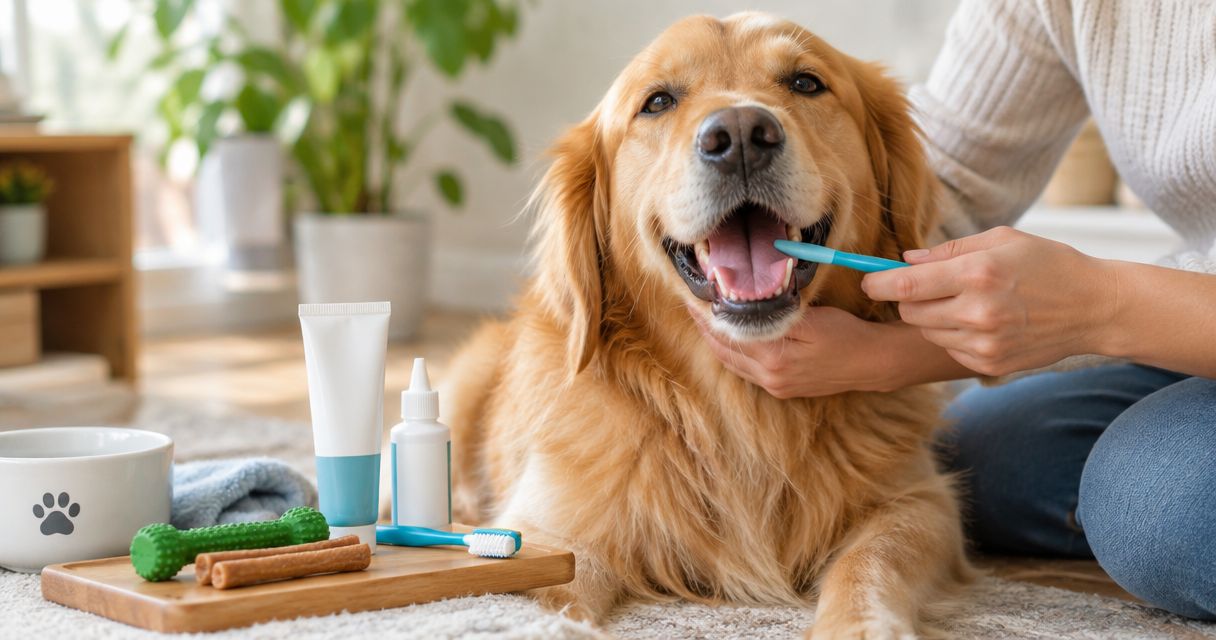
- A soft-bristled dog toothbrush or finger brush and enzymatic dog toothpaste. Never use human toothpaste - xylitol and fluoride are toxic to dogs.
- One or two dental chews and a treat your dog already loves, for the desensitization phase before brushing starts.
- The gotcha: don't hand your dog a toothbrush on day one. Dogs that get bristles at their gums before they've accepted the taste of the paste will fight the whole routine for weeks. Let them lick paste off your finger first - that step below isn't optional, it's the one that determines whether this sticks past day 5.
Set up the taste-acceptance phase
- Squeeze a pea-sized amount of enzymatic dog toothpaste onto your finger.
- Let your dog lick it off - once in the morning, once at night.
- Repeat for 3 to 4 days until your dog approaches your hand expecting the paste, not flinching from it.
Expected result: your dog licks the paste off willingly and stops pulling its head away when you reach for its muzzle.
Configure the daily brushing station
- Pick one spot with good light and no distractions. Same spot, same time, every day - the habit forms faster than the technique does.
- Load the brush or finger brush with a pea-sized dab of paste.
- Lift the lip on one side, angle bristles at roughly 45 degrees toward the gumline, and brush in small circles for about 30 seconds per side.
- Work outer tooth surfaces first. Dogs tolerate this fastest, and inner surfaces can wait until the outer routine is solid.
- Finish every session with a dental chew or the treat that kicked off the taste-acceptance phase.
Expected result: a full side-to-side brush takes under 2 minutes and ends with your dog walking away relaxed, not avoiding your hands for the rest of the day.
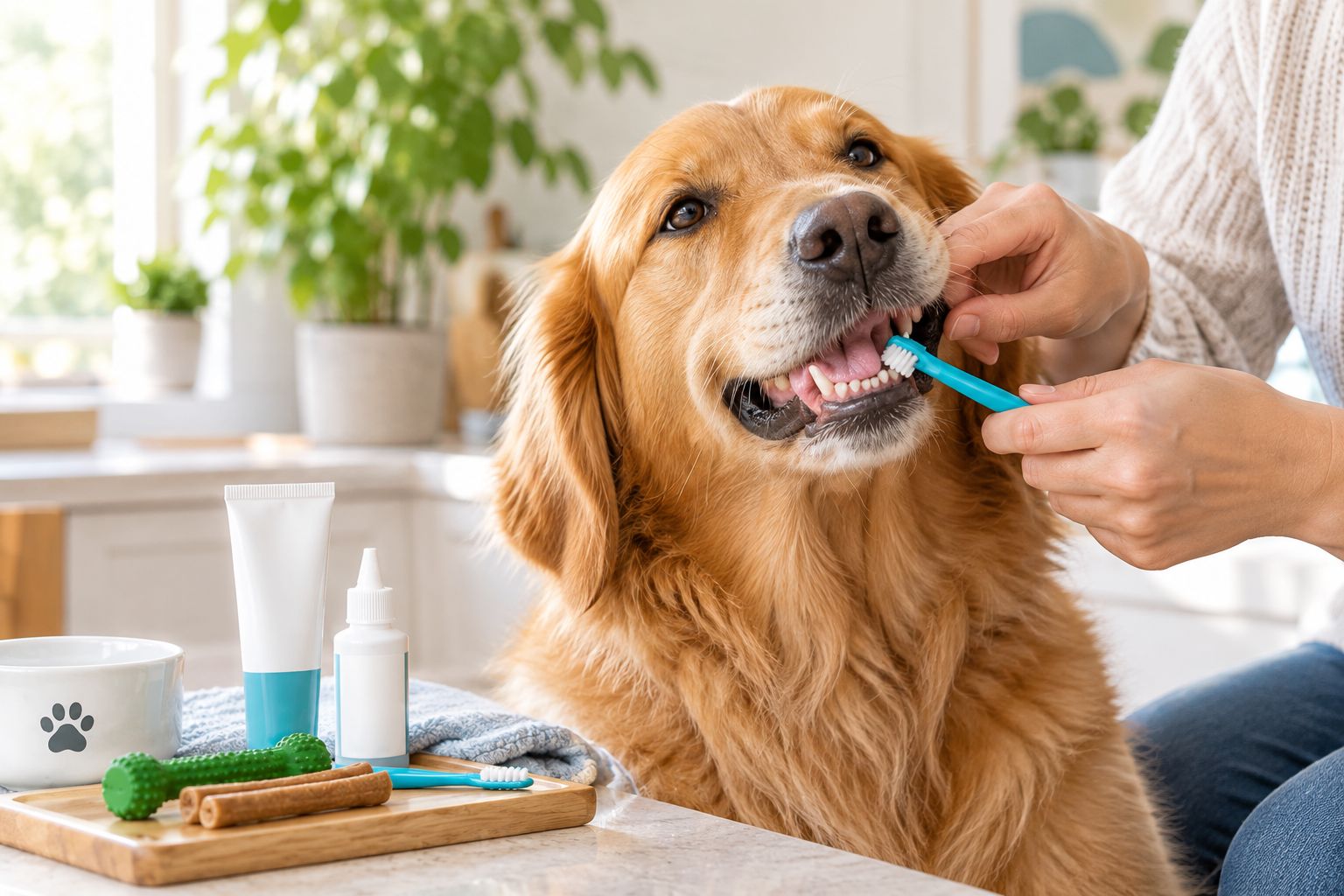
Layer in the weekly deep-clean check
- Once a week, run a finger along the gumline and check for redness, swelling, or a smell that wasn't there when you started.
- Take a phone photo of the same tooth each week. A baseline photo makes it obvious when something's changed a month in.
- Rotate in a dental chew or a different enzymatic paste if plaque is building faster than the brushing alone is handling - the dog dental care kits ranked by effectiveness breakdown compares pastes, chews, and finger-brush kits side by side.
Expected result: week-over-week photos show flat or shrinking plaque along the gumline, not new buildup.
Compare dental kits before you buy
See how enzymatic pastes, finger brushes, and chews stack up.
The chew-first variant: for dogs who won't tolerate a brush yet
Some dogs need weeks, not days, and forcing the finger-paste phase on a dog that's already anxious about handling sets the whole routine back further.
- Skip the finger-paste phase and start with a dental chew instead, offered calmly with no handling attached.
- Pair every chew session with the same quiet praise so the dog associates dental gear with calm, not restraint.
- Once your dog holds and chews for 5 minutes or more without stress signals, reintroduce the finger-paste phase from step one above.
For dogs whose resistance is anxiety-driven rather than just unfamiliarity, calming chews built for anxious dogs used 20-30 minutes before a session can lower the baseline stress enough that brushing becomes possible at all.
“If the toothbrush touches gums before the dog has accepted the paste, the whole routine turns into a fight you'll refight every day.”
Troubleshooting
- Dog clamps its jaw shut. Stop and back up to the licking-only phase for a few more days. Forcing the mouth open teaches the dog that brushing means a struggle.
- Gums bleed during brushing. Ease off pressure for a week. If bleeding continues past 3 sessions, that's a vet visit, not a technique fix.
- Dog chews the toothbrush or steals the paste tube between sessions. Store gear out of paw reach - most resistance at this stage is opportunistic, not dental.
- Breath doesn't improve after 2 to 3 weeks of consistent brushing. That usually points to a tooth needing professional scaling underneath the visible surface, not a brushing problem.
- Puppy won't hold still at all. Cut sessions to 10 seconds and build up gradually - teething puppies have sore gums and need shorter, gentler sessions than adult dogs.
Customize your routine
Once daily brushing holds for a full month, extend the routine instead of stopping there. Add a dental chew rotation from the toys built for aggressive chewers guide if your dog destroys standard chews in minutes, and fold the rest of the coat and nail routine into the same session using the home grooming supplies checklist so dental care isn't the only thing on the calendar.
A dog dental care routine at home that's still running in 2026 looks boring by design: same spot, same order, same two minutes. That's the version that actually prevents the vet bill instead of just delaying it.
FAQ
What's the best dog dental care routine at home?
Daily 2-minute brushing with enzymatic dog toothpaste, backed by a weekly gumline check and dental chews between sessions, is the routine veterinary dentists recommend most in 2026. Weekly or occasional brushing lets plaque harden into tartar before it's addressed.
How often should you brush your dog's teeth?
Daily is the standard, since plaque can mineralize into tartar in as few as 3 to 5 days. Brushing 2-3 times a week slows disease but doesn't prevent it the way daily brushing does.
Is dog toothpaste different from human toothpaste?
Yes - human toothpaste contains fluoride and often xylitol, both toxic to dogs if swallowed, and dogs don't spit. Use an enzymatic toothpaste made specifically for dogs.
Can dental chews replace brushing?
No. Dental chews clean chewing surfaces through mechanical action but don't reach the gumline the way a brush does. They support a brushing routine, they don't substitute for it.
How do you clean a dog's teeth without a toothbrush?
A finger brush, dental wipes, or a washcloth wrapped around a finger with enzymatic paste all work as substitutes when a dog won't tolerate a bristled brush yet. They're a bridge to full brushing, not a permanent replacement.
When should you see a vet instead of brushing at home?
See a vet if gums bleed for more than 3 straight brushing sessions, breath stays bad after 2-3 weeks of consistent brushing, or you spot loose teeth, swelling, or visible tartar buildup along the gumline. Those signs point past what home brushing can fix.
How long does it take for a dog to get used to teeth brushing?
Most dogs accept a finger brush within 3-4 days of a paste-only taste-acceptance phase, with full brushing tolerance building over 2-3 weeks. Anxious or previously mishandled dogs can take a month or more using the chew-first variant.
What are the signs of dental disease in dogs?
Persistent bad breath, yellow-brown buildup along the gumline, red or swollen gums, and reluctance to have the muzzle touched are the earliest signs. By age 3, the American Veterinary Dental College notes most dogs already show some degree of periodontal disease.
One last thing
Small and toy breeds develop periodontal disease earlier than large breeds because their teeth sit more crowded in a smaller jaw, which traps plaque faster - if you've got a Chihuahua or a Yorkie, the daily routine above isn't optional the way it might feel for a Lab.