
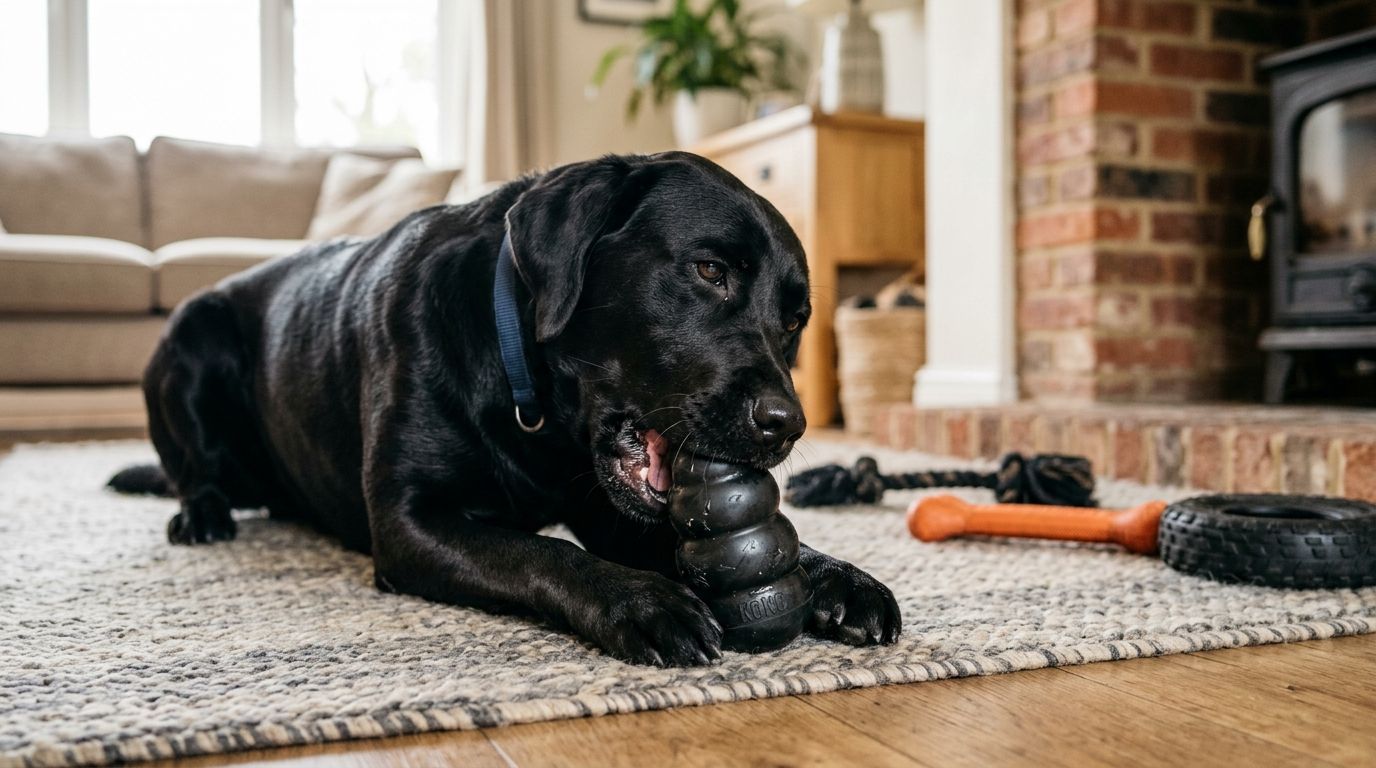
Aggressive chewers destroy soft toys in minutes, and picking the wrong material means a repeat trip to the store within a week. The best dog toys for aggressive chewers in 2026 are solid rubber chew toys for daily gnawing, extreme rubber tire toys for 100+ lb power chewers, and treat-dispensing rubber toys for dogs that chew out of boredom rather than raw jaw strength.
- Solid rubber chew toys are the best overall pick for aggressive chewers in 2026 — dense material, no removable parts.
- Extreme rubber tire toys are the best dog toys for large power-chewer breeds over 100 lbs.
- Nylon chew bones are the budget option but can splinter once a dog bites through the surface.
- Treat-dispensing rubber toys work best for boredom chewers, not pure power chewers.
- Rope toys need direct supervision — they are not built for unsupervised aggressive chewing.
Why this matters
A toy rated for "tough chewers" on the packaging and a toy that actually survives a Rottweiler are two different products. Vets see foreign-body obstructions from swallowed fabric, rope fiber, and squeaker parts every year, and the fix is almost always the same: match toy material to bite force, not to marketing language. Shop and Bark stocks chew-focused gear because most dog owners buying for a genuine aggressive chewer are on their third or fourth failed toy already.
The categories below aren't ranked by brand — they're ranked by what the material and shape actually do under real chewing pressure. Pick by your dog's size and chewing style, not by whichever toy looks toughest on the shelf.
What makes the best dog toys for aggressive chewers
- Material density — solid rubber and reinforced nylon resist compression better than hollow vinyl or plush
- No removable small parts — squeakers, stuffing, and stitched eyes are the most common swallowed pieces
- Shape resists puncture — rounded or tire-style profiles avoid thin edges a strong jaw can catch and tear
- Size matched to jaw span — a toy small enough to be swallowed whole is never safe, regardless of material
- Easy to clean — dishwasher-safe or boilable rubber stays sanitary through daily use
- Track record with power chewers, not just general chew-toy marketing claims
At a glance
| Toy type | Best for | Standout feature | Key limitation |
|---|---|---|---|
| Solid rubber chew toys | Aggressive chewers overall | Dense, treat-stuffable core | Can still crack under sustained heavy jaws |
| Extreme rubber tire toys | 100+ lb power-chewer breeds | Thicker wall, textured cleaning surface | Bulky for small dogs to grip |
| Nylon chew bones | Budget-conscious owners | Lightweight, long shelf life | Can splinter once outer layer is breached |
| Treat-dispensing rubber toys | Boredom chewers | Slows chewing, adds problem-solving | Not a standalone fix for pure power chewers |
| Reinforced rope toys | Supervised tug play | Doubles as dental floss during play | Fibers detach with aggressive biting |
1. Solid rubber chew toys: best overall for aggressive chewers
Solid natural rubber holds up to sustained gnawing better than any other common toy material, and the hollow-core designs let you pack treats or kibble paste inside to extend chew sessions. Most tolerate boiling water or top-rack dishwasher cleaning, which matters for a toy that gets mouthed daily.
Solid rubber chew toy pros:
- Dense material withstands repeated compression from strong jaws
- Hollow core doubles as a treat puzzle
- Odd bounce pattern keeps dogs engaged in independent play
- Simple to sanitize between uses
Solid rubber chew toy cons:
- Can still crack under sustained pressure from the heaviest power chewers
- Not ideal for puppies under 6 months whose adult teeth haven't fully come in
- Heavier than rope or plush alternatives, which some smaller dogs dislike
Best for: daily unsupervised chewing across most adult dog sizes. Verdict: Buy.
2. Extreme rubber tire toys: best for large power-chewer breeds
This is the toy type built specifically for dogs over 100 lbs — Mastiffs, Rottweilers, and Pit Bulls generate more bite force than a standard rubber toy is designed for, and the tire shape adds wall thickness where standard chew toys thin out.
Extreme rubber tire toy pros:
- Thicker rubber wall than standard chew toys
- Textured surface scrapes plaque during chewing
- Tire shape resists rolling out of reach
Extreme rubber tire toy cons:
- Bulkier and harder for small dogs to grip
- Denser rubber compounds take longer to "break in" for play
- Still not indestructible against the strongest bite forces in the breed pool
Best for: large and giant breeds over 70-100 lbs. Verdict: Buy.
3. Nylon chew bones: best budget option
Nylon bones cost less than rubber alternatives and hold up fine against moderate chewers, but they behave differently under pressure than rubber. Once an aggressive chewer bites through the outer layer, nylon can splinter rather than compress.
Nylon chew bone pros:
- Lightweight and easy to store or travel with
- Handles moderate daily gnawing well
- Available in multiple textures and flavors
Nylon chew bone cons:
- Can splinter once a dog bites through the surface layer
- Not recommended if your dog chews through the outer coating within days
- Less give than rubber, which is harder on teeth over months of use
Best for: moderate chewers and owners watching cost. Verdict: Hold — fine to try, but replace at the first sign of splintering.
4. Treat-dispensing rubber toys: best for boredom-driven chewing
Some dogs chew aggressively because they're bored, not because they're testing jaw strength. A dog that needs mental stimulation benefits more from a toy that makes them work for a reward than from raw material toughness alone — the puzzle element slows the chew rate and burns mental energy at the same time.
Treat-dispensing rubber toy pros:
- Slows chewing pace by requiring problem-solving
- Combines physical wear with mental stimulation
- Reduces boredom-driven destructive chewing around the house
Treat-dispensing rubber toy cons:
- Some dogs abandon the toy if the treat doesn't dispense fast enough
- Needs regular refilling to stay engaging
- Not a standalone fix for a dog that's a pure power chewer rather than a bored one
Best for: dogs chewing out of boredom rather than jaw-strength testing. Verdict: Buy.
5. Reinforced rope toys: best for supervised tug play only
Rope toys satisfy the tugging instinct and the fiber action helps floss teeth during play, but they are the weakest option on this list against genuinely aggressive, unsupervised chewing. Detached fibers are a known cause of digestive obstruction when swallowed.
Reinforced rope toy pros:
- Satisfies tug and pull instincts during active play
- Fiber texture helps clean teeth while playing
- Inexpensive relative to rubber alternatives
Reinforced rope toy cons:
- Fibers detach and can be swallowed by aggressive chewers
- Shreds quickly against strong, sustained biting
- Requires direct supervision at all times, no exceptions
Best for: supervised tug sessions, never left-alone chew time. Verdict: Hold for supervised play, Skip for solo chewing.
How this list was ranked
Each toy type was weighed against the criteria above: material density under bite pressure, whether small parts can detach, shape resistance to puncture, size-to-jaw match, and cleanability. Rope toys rank last specifically because they fail the "no removable parts" test that matters most for unsupervised aggressive chewers.
Find chew-ready gear for your dog
Browse toy and grooming picks sized for real chewing habits.
Which toy should you choose?
For most aggressive chewers in 2026, start with a solid rubber chew toy — it's the only category on this list built to handle daily, unsupervised gnawing without small parts to swallow. Step up to an extreme rubber tire toy if your dog is over 100 lbs or has already cracked a standard rubber toy. Save rope and nylon for supervised sessions and budget backup, not primary chew duty.
Heavy chewing also wears down teeth faster than owners expect, which is worth pairing with a regular dental routine rather than treating as a separate problem.
FAQ
What are the best dog toys for aggressive chewers in 2026?
Solid rubber chew toys are the best overall pick for aggressive chewers in 2026, with extreme rubber tire toys as the step-up option for dogs over 100 lbs. Treat-dispensing rubber toys work well for boredom-driven chewers rather than pure power chewers.
Are nylon bones safe for aggressive chewers?
Nylon bones handle moderate chewing well but can splinter once a dog bites through the outer layer. Replace a nylon bone at the first sign of cracking or splintering rather than letting a strong chewer keep working the same piece.
Is rubber or nylon better for a power chewer?
Rubber generally holds up better under sustained pressure because it compresses rather than splinters. Nylon is a reasonable budget option for moderate chewers but is not the top pick once a dog is chewing through toys within days.
Can rope toys be used for aggressive chewers?
Rope toys are fine for supervised tug play but are not suited to unsupervised aggressive chewing. Detached rope fibers are a known cause of digestive obstruction when swallowed.
How do I know if a chew toy is too small for my dog?
If the toy fits entirely inside your dog's mouth with room to spare, it's a swallowing risk regardless of material. Size toys to be noticeably larger than your dog's jaw span.
Do treat-dispensing toys work for genuinely aggressive chewers?
They work best for dogs chewing out of boredom rather than dogs testing raw jaw strength. Pair a treat-dispensing toy with a durable rubber chew toy rather than relying on it alone.
How often should I replace a heavy-duty chew toy?
Replace any chew toy showing cracks, exposed fiber, or bite-through spots immediately, since damaged toys create new swallowing risks. Inspect toys weekly if your dog chews for more than an hour a day.
What age do puppies start needing tougher chew toys?
Puppies typically finish getting their adult teeth by around 6 months, and chewing pressure increases noticeably after that point. Move to adult-rated rubber chew toys once adult teeth are fully in.
One last thing
Rope and fabric fiber ingestion is one of the more common toy-related causes of digestive obstruction vets treat — not because rope toys are poorly made, but because owners leave them out for unsupervised chewing. The fix isn't a tougher rope toy; it's swapping to solid rubber for any chew session you can't watch.