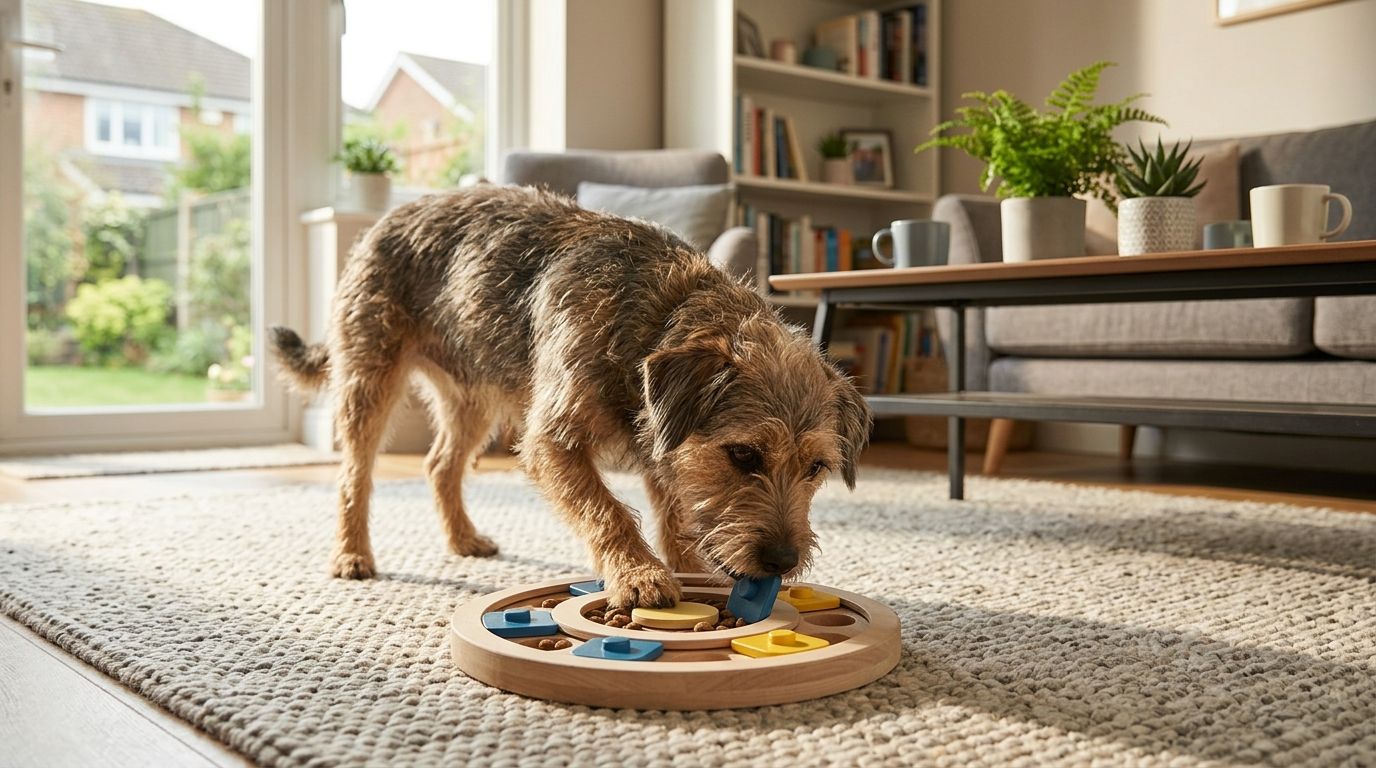
Interactive dog toys for dogs left home alone work by turning idle time into a food-seeking or problem-solving task, which cuts the barking, chewing, and pacing that shows up in the first 30 to 90 minutes after you leave. The right toy for this specific situation isn't the hardest puzzle on the shelf — it's the one matched to your dog's chewing strength, energy level, and how long you're actually gone during the day.
- Treat-dispensing puzzles and frozen stuffable toys outperform squeaky toys for dogs left alone in 2026.
- Rotate 3-4 toys weekly so novelty doesn't wear off after the first week of use.
- Match toy hardness to chewing style — power chewers need rubber-and-nylon builds, not plush.
- Separation anxiety needs calming support plus a toy, not a toy alone.
- Shop and Bark's interactive toy picks for bored dogs cover puzzle feeders through durable chew toys.
Why interactive dog toys matter for dogs left home alone
A dog left alone with nothing to do defaults to whatever behavior burns energy fastest — barking at the window, chewing the door frame, or shredding a couch cushion. An interactive toy for bored dogs redirects that energy into a task with a food payoff at the end, which is why trainers lean on food puzzles as a first-line fix before medication or behavior consults.
The home-alone segment has its own constraints that a general "best dog toys 2026" list ignores. Nobody is home to reload the toy, supervise a first-time chewer, or intervene if the dog gets frustrated and quits. That means durability, self-refill capacity, and difficulty calibration matter more here than novelty or price.
The verdict: a toy that's too easy gets solved in under five minutes and stops working; a toy that's too hard gets abandoned and the dog goes back to destructive behavior. Calibration, not toy quantity, is what separates a home-alone routine that works from one that doesn't.
Assess Your Dog's Alone-Time Triggers
Before buying anything, figure out whether your dog is bored, anxious, or under-exercised — each one needs a different fix.
- Record 10 minutes of your dog's behavior right after you leave using a phone or camera
- Note the timing of barking or destructive chewing (immediate vs. 30+ minutes in)
- Check whether the dog eats treats at all when alone — anxious dogs often refuse food
- Track how much physical exercise happened before you left
- Rule out a medical cause (UTI, GI upset) if the behavior is new and sudden
Build a Toy Rotation Schedule
A single toy left out every day stops working within a week because dogs habituate to a solved puzzle fast.
- Keep 3-4 toys in a closet and swap two out every Sunday
- Use a simple spreadsheet or phone note to track which toy has been out longest
- Freeze one stuffable toy per rotation cycle so at least one option takes longer to finish
- Retire any toy the dog solves in under two minutes — it's no longer doing its job
- Once the manual rotation is dialed in, an adjustable-difficulty puzzle from Shop and Bark's interactive toys for bored dogs lineup removes the guesswork on difficulty tiers
Match Toy Type to Your Dog's Chewing Style
A plush squeaky toy left with a determined chewer becomes a choking hazard within one unsupervised session.
- Soft chewers: rope toys, stuffed puzzle plush, snuffle mats
- Moderate chewers: rubber treat-dispensing balls, adjustable puzzle feeders
- Power chewers: nylon and solid rubber builds rated for aggressive use — see toys built for aggressive chewers if your dog destroys standard puzzles in one sitting
- Inspect every toy for cracks or missing chunks after each unsupervised session, regardless of category
- Size the toy to the dog's mouth — undersized pieces are a swallowing risk for large breeds
Address Separation Anxiety Before You Leave
A toy fixes boredom; it does not fix diagnosed separation anxiety, and treating the two the same is the most common mistake in this category.
- Watch for anxiety-specific signs: drooling, pacing, self-injury at exit points, refusal to eat treats
- Practice desensitization: pick up keys or put on shoes without leaving, repeated daily
- Leave a worn piece of your clothing near the dog's resting spot for scent comfort
- Pair a puzzle toy with a calming supplement routine — calming chews for anxious dogs work alongside enrichment, not instead of it
- Consult a vet or certified behaviorist if the dog won't eat or engage with any toy while alone
Set Up a Safe Containment Zone
Giving a dog free run of the house with an interactive toy invites both furniture damage and toy-related accidents when nobody's watching.
- Confine high-value chew sessions to a tiled or easy-clean room
- Remove cords, small objects, and anything the dog could shred alongside the toy
- Use baby gates or a playpen rather than a closed door for dogs with any anxiety history
- Leave water accessible within the confined zone at all times
- Test the setup for a 20-minute absence before trusting it for a full workday
Introduce New Toys With Short Practice Departures
Jumping straight to an 8-hour workday with a brand-new puzzle toy is how dogs end up frustrated and destructive instead of occupied.
- Start with 15-20 minute departures and a fresh toy the dog hasn't seen
- Extend departure length by 15-30 minutes every few days if the dog stays calm
- Only move to full-day absences once the dog reliably engages the toy solo for 30+ minutes
- Keep the first few practice sessions on a day you're nearby to check in
Track Engagement and Adjust Weekly
A toy rotation that worked in January can stop working by March as the dog gets faster at solving it.
- Log how long each toy holds attention using the same phone-camera method from step one
- Bump up difficulty tier once a toy is solved in under 5 minutes consistently
- Swap toy category (food puzzle to chew toy) if barking persists despite a full rotation
- Reassess the whole setup every 8-12 weeks as the dog ages or activity levels change
“If your dog empties a puzzle feeder in under two minutes, size up to a harder level, not a new toy.”
Comparing interactive toy options for home-alone dogs
| Option | Best for | Key limitation |
|---|---|---|
| Fixed-difficulty treat puzzle | Dogs new to puzzle toys | Solved too fast once the dog learns the pattern |
| Adjustable-difficulty puzzle feeder | Dogs who master toys in days | Costs more upfront than a basic fixed puzzle |
| Frozen stuffable toy | Absences of 4+ hours | Needs freezer prep the night before |
| Automatic treat or ball launcher | High-energy dogs with floor space | Requires open room and battery upkeep |
| Snuffle mat | Dogs who eat too fast | Not durable against aggressive shredders |
| Durable nylon/rubber chew toy | Power chewers left alone | Doesn't address boredom the way food puzzles do |
Bottom line: start with a fixed-difficulty puzzle or a frozen stuffable toy for a dog new to this routine — Buy. Skip automatic launchers for apartments without open floor space — Wait until the dog has a bigger room to work with.
Common mistakes owners make with home-alone dogs
- Leaving out the same toy every single day until the dog stops touching it entirely
- Choosing plush or squeaky toys for an anxious dog when the dog is stressed, not bored — the two need different fixes
- Sizing a puzzle for the owner's convenience (easy to fill fast in the morning) instead of the dog's actual skill level
- Skipping the practice-departure phase and going straight to a full 8-hour absence on day one
- Not inspecting toys after each session — cracked plastic and loose parts accumulate fastest with unsupervised chewing
Shop interactive toys for home-alone dogs
Puzzle feeders, treat dispensers, and durable chew toys picked for bored dogs.
FAQ
What are the best interactive dog toys for dogs left home alone in 2026?
Treat-dispensing puzzles, frozen stuffable toys, and adjustable-difficulty feeders top the list for 2026 because they hold attention longer than squeaky or plush toys. Match the specific toy to your dog's chewing strength rather than picking the most popular option.
How long do interactive toys keep a dog busy home alone?
Engagement time depends on puzzle difficulty and how food-motivated your dog is, not a fixed number of minutes. A hard puzzle for a determined chewer buys far more time than an easy one for a fast eater.
Are interactive toys enough to fix separation anxiety?
No — interactive toys address boredom, not diagnosed separation anxiety. Dogs with anxiety often refuse to engage with a toy at all and need desensitization work or vet guidance alongside enrichment.
Is a Kong-style stuffable toy or an automatic treat dispenser better for a dog left alone?
A frozen stuffable toy works better for absences over 4 hours since freezing extends solve time; an automatic dispenser suits high-energy dogs with open floor space to move around. Pick based on how long you're gone and how much room your dog has.
Are interactive dog toys safe to leave unsupervised?
Most are safe once you've verified the toy holds up to your dog's specific chewing style during a supervised trial run first. Inspect the toy for cracks or missing pieces after every session before leaving it out again.
Do puppies need different interactive toys than adult dogs?
Yes — puppies need softer, smaller puzzle toys and shorter practice departures since their attention span and jaw strength are both lower than an adult dog's. Scale up toy hardness and departure length together as the puppy matures.
How many toys should you leave out for a dog home alone?
One to two toys per session is enough — more than that dilutes focus and none of them get solved fully. Rotate a stored set of 3-4 toys weekly instead of leaving all of them out at once.
One last thing
Dogs habituate to a toy's solution faster than owners expect — usually within a week of daily use — so the fix isn't buying more toys, it's rotating storage. Keep three or four interactive toys in a closet, swap two out every Sunday, and you'll get more mileage out of the same toy budget than adding a fifth or sixth option to the pile in 2026.