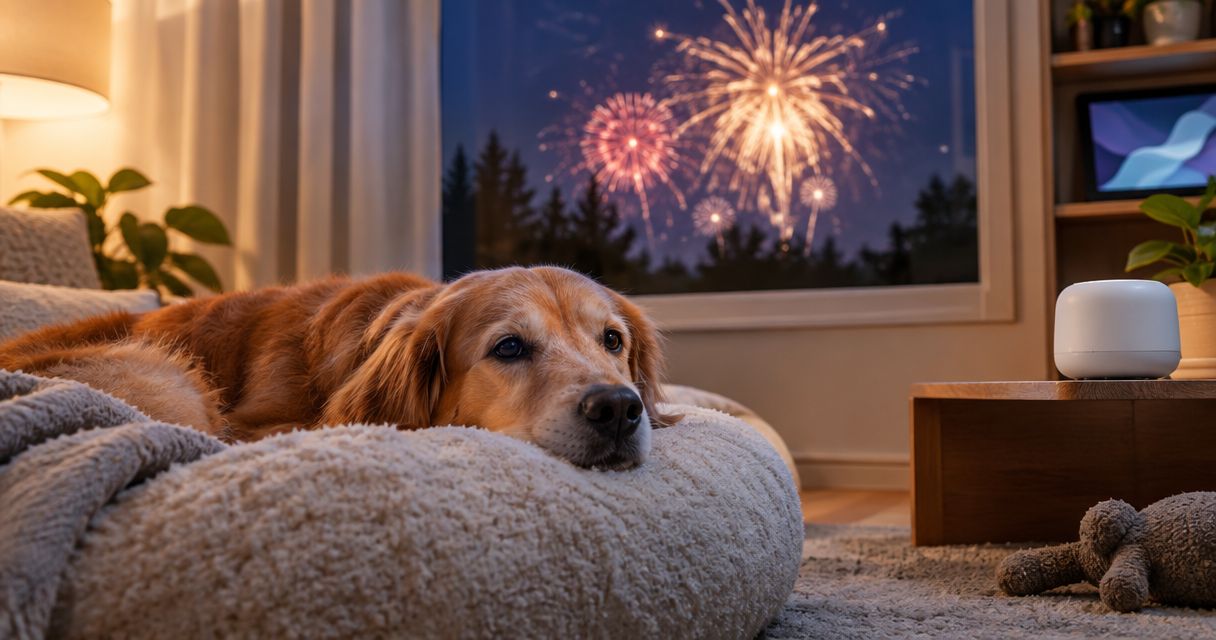
A dog that shakes, drools, and tries to hide under the bed during fireworks needs a system in place before the first boom, not a scramble once the sky lights up. Build a repeatable calm-down routine now, and by the time fireworks season or the next thunderstorm rolls through in 2026, your dog associates the setup with safety instead of panic.
- Learning how to calm a dog during fireworks works best as a routine set up 2-3 days ahead, not during the event.
- A dedicated safe den plus calming chews given before the noise starts cuts most dogs' panic response.
- Weather apps with storm alerts let you trigger the routine hours before thunder hits, since dogs sense pressure drops early.
- Crate-trained dogs recover faster because the den is already a positive space, not a new hiding spot introduced mid-panic.
Why this matters
Noise phobia in dogs gets worse with repeated exposure when nothing changes, not better. A dog that panics during the Fourth of July in 2026 without intervention is statistically more reactive by New Year's Eve. The goal of a calming routine isn't to eliminate fear entirely in one session — it's to build a predictable sequence of cues (den, scent, chew, white noise) that your dog's nervous system starts to associate with safety instead of threat.
Most owners treat fireworks anxiety as an emergency to manage in the moment. Treating it as a routine you set up in advance — the way you'd configure any recurring workflow — gets better results and needs less improvising when the noise actually starts. Shop and Bark carries the pieces most owners assemble for this: a den setup, calming chews, and distraction toys, but the sequence matters more than any single product.
Before you start
- A designated safe space — a crate, playpen, or closet corner your dog already knows, not one introduced for the first time during a storm.
- Calming chews or a comparable calming aid on hand — buying these after the fireworks start defeats the purpose, since most need time to take effect before the noise peaks.
- The gotcha: starting the routine when you already hear booms is too late for most dogs. The window that matters is 20-30 minutes before dusk on a known fireworks night, or the moment a storm alert hits your phone — not when the first firework goes off.
Set up the safe den
Dogs default to hiding when scared, so give them a good hiding spot instead of letting them pick their own (usually behind the toilet or under a bed, both bad for calming).
- Pick an interior room with no windows — a bathroom, closet, or hallway works better than a room with a view of the sky.
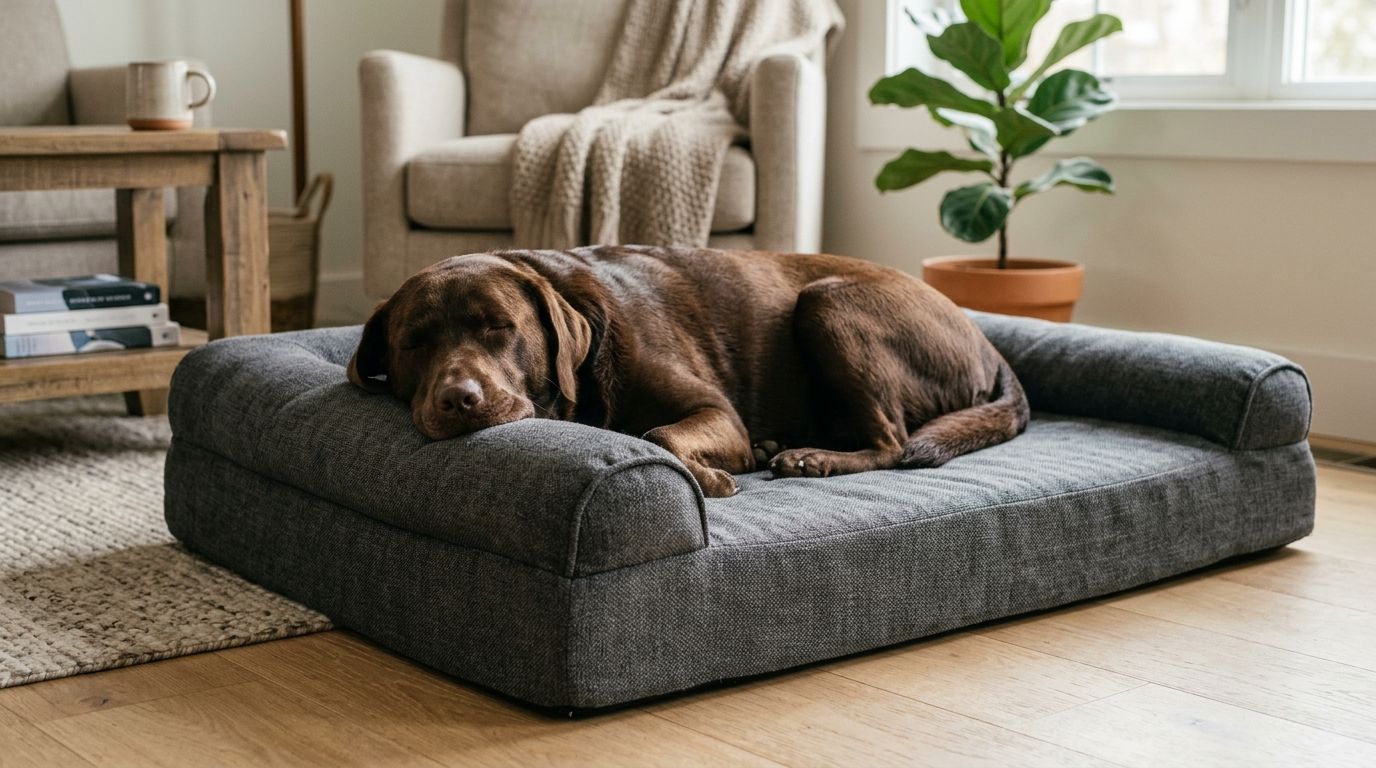
- Set up a crate or dog playpen lined with bedding your dog already sleeps on, so the scent is familiar, not new.
- Add a piece of your worn clothing to the den — familiar human scent lowers cortisol in most dogs during noise events.
- Turn on a fan, white noise machine, or TV at moderate volume to mask sudden booms rather than eliminate all sound.
Expected result: your dog voluntarily enters the den within a few sessions of practice on quiet nights, not just during storms.
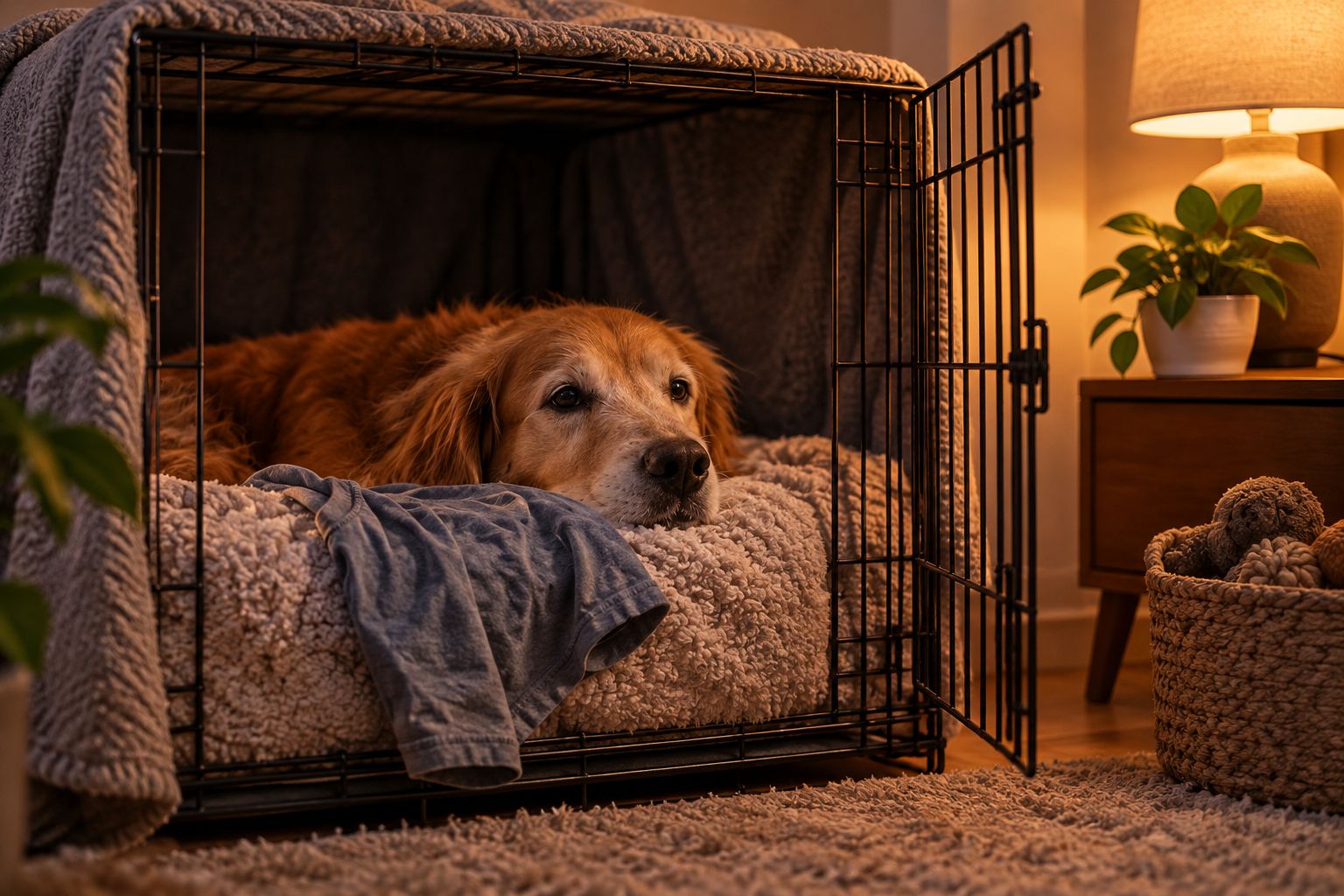
If your dog isn't crate-trained yet, building that habit on calm days pays off during every storm afterward — the crate training routine covers how to get a dog comfortable in a crate without forcing it.
Load the calming toolkit
Once the den exists, stock it with tools that work on separate channels — taste, touch, and distraction — so you're not relying on one method alone.
- Offer calming chews 20-30 minutes before a known fireworks event or as soon as a storm warning posts on your weather app.
- Add a compression wrap or snug t-shirt if your dog responds to gentle pressure — test this on a calm day first, not during the event itself.
- Keep a high-value chew toy or stuffed puzzle toy in the den reserved only for storm nights, so it carries its own positive association.
Expected result: your dog associates the chew and the wrap with the den itself within 3-4 uses, shortening the time it takes to settle.
Configure the routine
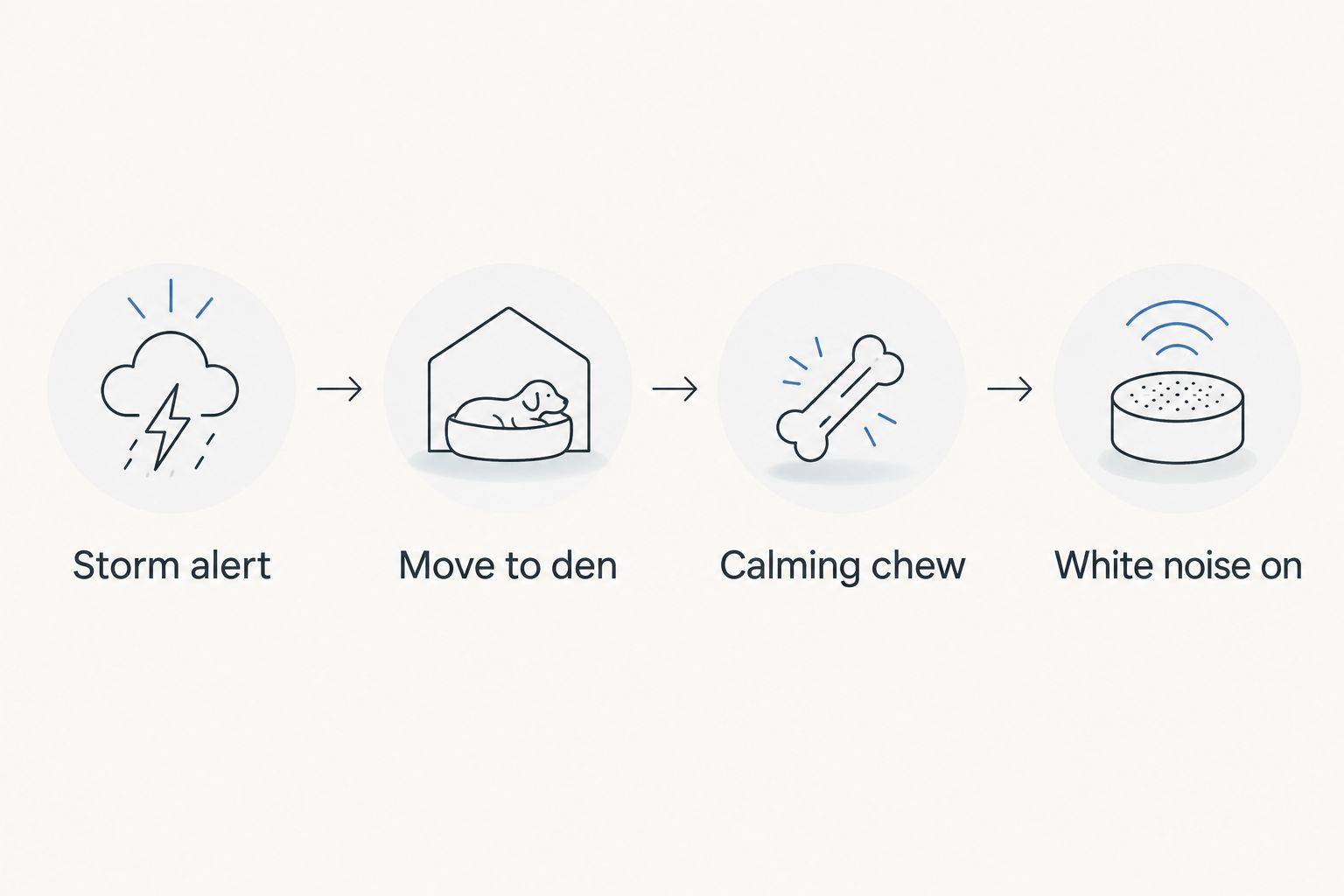
This is the sequence that turns separate tools into one workflow: alert triggers the den setup, den setup triggers the calming aid, calming aid triggers settling.
- Trigger: a fireworks show on the calendar (July 4th, New Year's Eve) or a severe thunderstorm alert on your phone.
- Action: move your dog to the den, turn on white noise, and offer the calming chew — in that order, every time.
- Reinforce: stay nearby for the first 10 minutes without hovering or comforting excessively, since anxious energy from you reads as confirmation that something's wrong.
- Repeat: run this same sequence on a quiet evening once a month so the routine isn't only linked to scary nights.
For thunderstorms specifically
Thunderstorms need an earlier trigger than fireworks because dogs detect the barometric pressure drop hours before thunder starts — that's why some dogs pace or pant well before you hear anything.
- Set a weather app alert for severe thunderstorm watches, not just warnings, so the den setup starts before the pressure change hits.
- Skip the fan/TV masking step if your dog is more reactive to static electricity than sound — a dryer sheet rubbed on their coat before the storm can reduce static buildup.
- Keep the same chew-and-den sequence as fireworks, just triggered earlier in the timeline.
Troubleshooting
- Dog won't take the calming chew during the event — offer it earlier next time, before any noise starts; once adrenaline spikes, most dogs lose interest in food entirely.
- Dog paces instead of settling in the den — the den may be too small or too exposed; add a cover over the crate or move it to an interior closet.
- Multiple dogs react differently — separate a noise-reactive dog from a calm one; a panicking dog can trigger anxiety in a housemate that would otherwise be fine.
- Dog destroys bedding or chews the crate — this is a stress behavior, not disobedience; add a chew toy specifically for storm nights and consider a sturdier crate liner.
- Routine works at home but not when traveling — bring the same blanket and chew brand on trips; the scent and taste consistency matters more than the location.
Build your dog's calming kit
Chews, dens, and distraction toys in one place before storm season hits.
Customize your routine
Once the base routine holds up through a few fireworks nights and storms, expand it rather than leaving it static. Rotate in new puzzle toys so the storm-night toy doesn't lose its novelty, and adjust the den setup seasonally — a closet works fine in spring but a dog may need better airflow during a hot July 4th in 2026.
For dogs that also struggle with anxiety when left home alone (not just during noise events), a separate distraction routine using interactive toys for dogs left home alone often overlaps well with the storm-night toolkit.
FAQ
What is the fastest way to calm a dog during fireworks?
Move your dog to a pre-established safe den, offer a calming chew before the noise starts, and add white noise to mask sudden booms. Starting this before the first firework works far better than reacting once panic sets in.
Do calming chews actually work for dog anxiety?
Calming chews help many dogs when given early, before adrenaline spikes from noise, but they work best combined with a den setup rather than alone. Timing matters more than the specific chew brand.
Should I comfort my dog during fireworks or ignore them?
Calm, low-key reassurance is fine, but excessive hovering or anxious energy from you can reinforce your dog's fear response. Stay nearby without dramatizing the situation.
Why does my dog react to thunderstorms before I hear thunder?
Dogs sense the barometric pressure drop that precedes a storm, often hours before audible thunder. This is why storm-specific routines should trigger off a weather alert, not the first clap of thunder.
Is crate training helpful for noise anxiety?
Yes, a crate a dog already sleeps in comfortably becomes a strong safe-space cue during storms. Introducing a crate for the first time during a fireworks event usually backfires.
Can two dogs calm each other down during fireworks?
Sometimes, but a panicking dog can also trigger anxiety in a calm housemate. Separate dens work better when one dog reacts significantly more than the other.
How long before fireworks should I start the calming routine?
Start 20-30 minutes before a scheduled fireworks show, or as soon as you know one is planned for the evening. For thunderstorms, start at the first storm watch alert, not the warning.
One last thing
The dogs that recover fastest from fireworks and thunderstorm panic are the ones whose owners run the exact same routine on calm nights too — not just during actual events. Practicing the den-and-chew sequence once a month, even with zero noise happening, is what turns it from a panic response into a habit your dog trusts by the time the next Fourth of July or thunderstorm season arrives in 2026.